Key takeaways
- Clean a grout-free solid-surface shower with mild soap, water and a soft cloth; the routine takes about ten minutes.
- Cincinnati's hard water is what leaves white spots, abrasive pads and harsh chemicals are the two things to keep off the walls, and running the fan for 20 minutes after a shower keeps mildew away.
The new shower went in yesterday, you took the first one this morning, and the care sheet the crew left is sitting on the vanity under a coffee mug. Congratulations. You own a shower with no grout lines, and the cleaning routine for it is shorter than the one you had. If you typed "how to clean acrylic shower walls" into Google this week, this is the long version of that sheet, with the two things that can hurt the walls up front.
The ten-minute routine for solid-surface shower walls
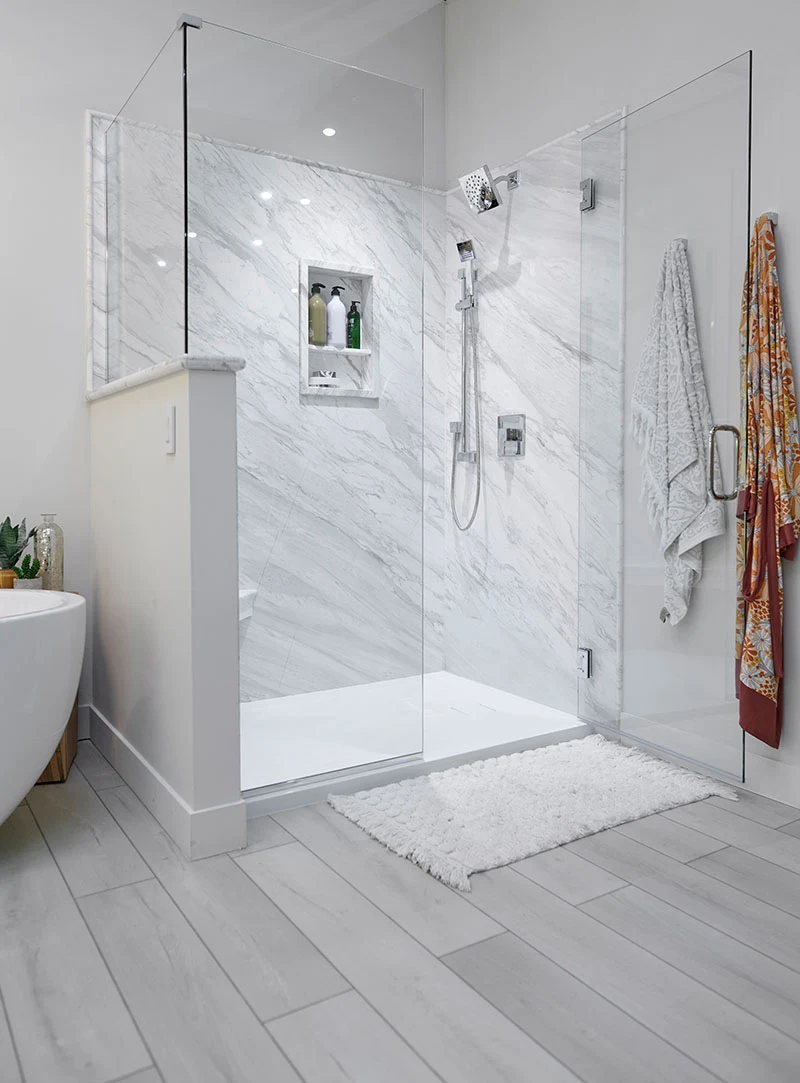
Our walls are solid-surface panels, a formed polymer with the marble or travertine look in the material. The surface is non-porous. Water and soap film sit on top of it instead of soaking in, which is why the care instructions are short.
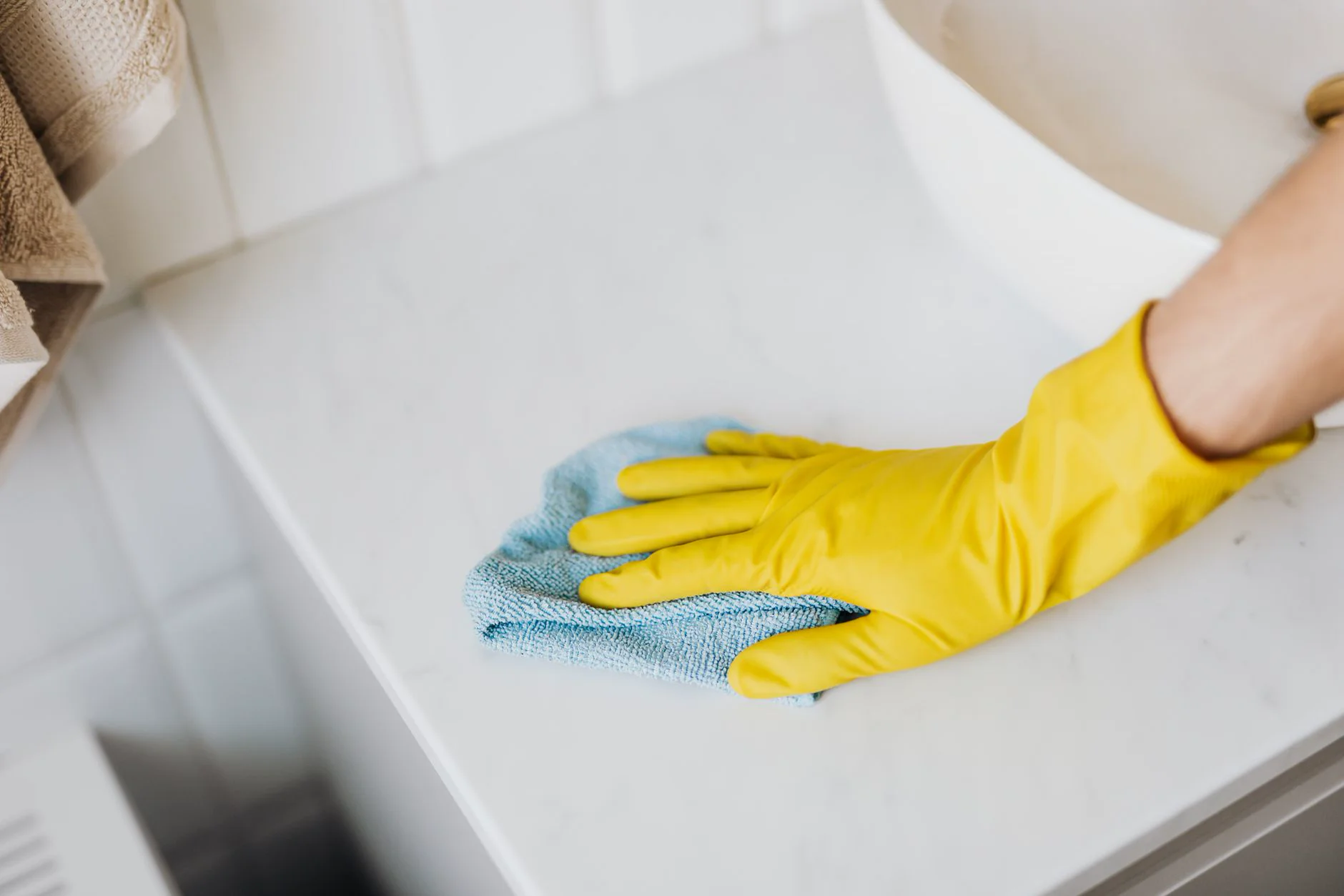
The weekly job is mild soap, warm water and a soft cloth or sponge. A mild liquid soap diluted in a spray bottle works, and so does a bathroom spray that says on the label it is safe for acrylic or plastic tub surrounds. Spray the walls and the base, wipe them down, rinse with the handheld, and you are done. On a Saturday in a hall bath that is ten minutes, including the glass.
Between Saturdays, a rinse after the last shower of the day takes care of most of the soap film. Spray it down, and walk away.
Hard water spots on a grout-free shower
Cincinnati's water is hard. The Greater Cincinnati Water Works' 2025 quality report puts the Miller plant's average at 126 milligrams of hardness per liter and the Bolton plant at 140, and both numbers sit in the "hard" band on the U.S. Geological Survey's scale. A drop that dries on the wall leaves its calcium behind as a white speck.
The specks wipe off the panels with the soap-and-water routine. On the glass door they build up faster, and the fix is plain white vinegar mixed half and half with water. Spray it on, give it five minutes, wipe, rinse. The vinegar softens the mineral so the cloth can lift it. A squeegee on a hook inside the door keeps the glass clear for months at a stretch.
Two cleaners to keep off solid-surface shower walls
The care sheet says no abrasive pads and no harsh chemicals. Two kinds of product cause the damage the manufacturer warns about.
The first is anything gritty: scouring powder from a can, the green side of a kitchen sponge, and the "scrub" versions of cream cleansers. Grit takes the gloss off the surface one pass at a time. After a year of Saturdays the wall where you scrubbed hardest has a dull patch that will not come back.
The second is any solvent: acetone, which is what most nail-polish remover is, and spray cleaners that list ammonia. Solvents attack the polymer itself and can leave a crazed or cracked spot. The manufacturer's care sheet lists these as warranty-voiding, so a bottle of nail-polish remover knocked over on the base is worth rinsing right away.
Bleach is a separate question. The EPA's mold guide says bleach is not recommended as a routine cleaning practice, and on a non-porous wall there is nothing for mildew to root in, so the soap-and-water routine does the job. If you want to disinfect, call us before you reach for the jug and we will tell you what the manufacturer allows and at what dilution.
Run the bathroom fan 20 minutes to stop mildew
A shower with no grout still steams up the room, and steam is what mildew needs. The Home Ventilating Institute recommends leaving the bathroom fan on for 20 minutes after you use the room, and the EPA guide above says to keep the house below 60 percent humidity. A timer switch in place of the fan switch takes the remembering out of it.
If the fan in your 1968 ranch rattles and moves about as much air as a hair dryer, that is the next small job. The right fan for a bathroom under 100 square feet pulls one cubic foot of air per minute for each square foot of floor, so a 5-by-8 bath needs a 40-CFM fan.
Cleaning the caulk line and the drain
The walls have no grout, but the crew seals the joint where the base meets the walls with caulk, and caulk is the one place soap film can still sit. Wipe that line when you do the walls. If the caulk ever starts to pull away or discolor, call us and ask your project coordinator what the workmanship warranty covers before anyone comes out.
Drain cleaner is the other thing to watch. Liquid drain cleaner is safer for the base than the crystal kind, and it should go straight down the drain through a funnel, not across the floor. A hair catcher over the drain means you may not need the bottle at all.
If something goes wrong: one call under the warranty
The warranty on the product and on our work runs for as long as you own the home, and the crew registered it before they left on install day. If a seam lifts, the door drags, or a wall does something you did not expect, one call to (513) 657-3750 brings out the company that built it. Keep the care sheet in the folder with the warranty paperwork.
Help the next homeowner find us
The best thing you can do for us is the thing you were going to do anyway: tell the neighbor who asked about the truck in the driveway, and the sister who is still scrubbing grout. A Google review with a photo of the finished shower helps the next couple in Anderson Township find us. And when the hall bath's turn comes, we already know your house.
Grout-free shower walls: an honest guide covers the look, the care and how they hold up, in one place.