Key takeaways
- A tiled shower takes several days to two weeks to install because of cure times, and its grout needs sealing about every two years.
- A made-to-fit solid-surface shower has no grout, goes in in one day and cleans with mild soap and water.
- Tile is still the better pick for a custom mosaic, a curbless wet room or a feature wall.
You have a tile contractor's card on the refrigerator and you're reading up on the other option on the iPad after dinner. The master shower in your ranch is original, you've regrouted it twice, and at some point you typed "tile vs acrylic shower walls" into Google. Bulldog used to sell tiled showers and stopped, and you should know that before you read a comparison we wrote. We'll give tile its due anyway, because a tile shower built right is a good shower.
What "acrylic shower walls" covers, and what we install
The search phrase lumps together three different products. The first is the glossy white tub kit from the hardware store, thin enough to flex when you lean on it. That one is the reason you picture a plastic insert. The second is the liner some franchise companies glue over the old tub and tile, which leaves the old wall, and whatever is wet behind it, in place.
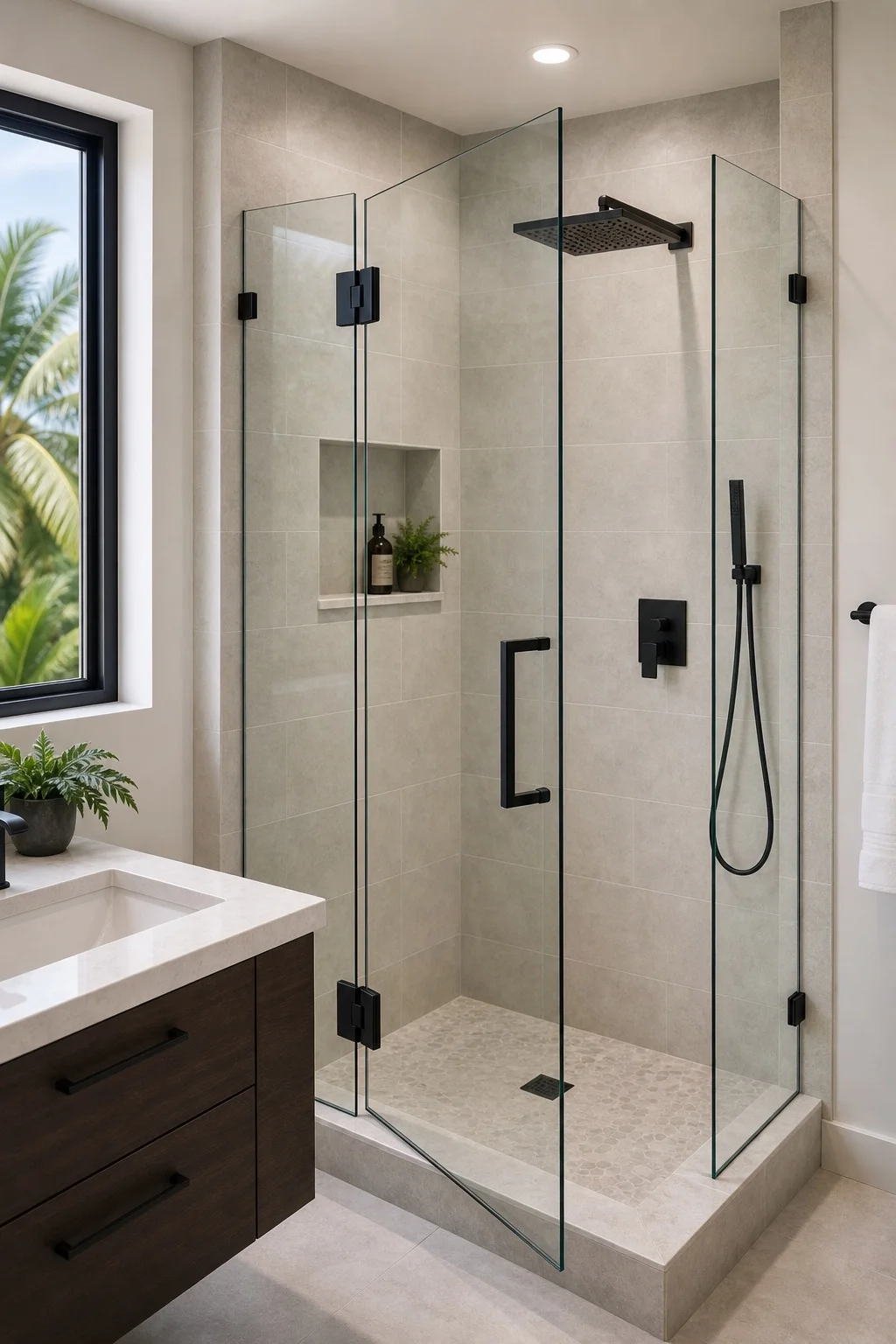
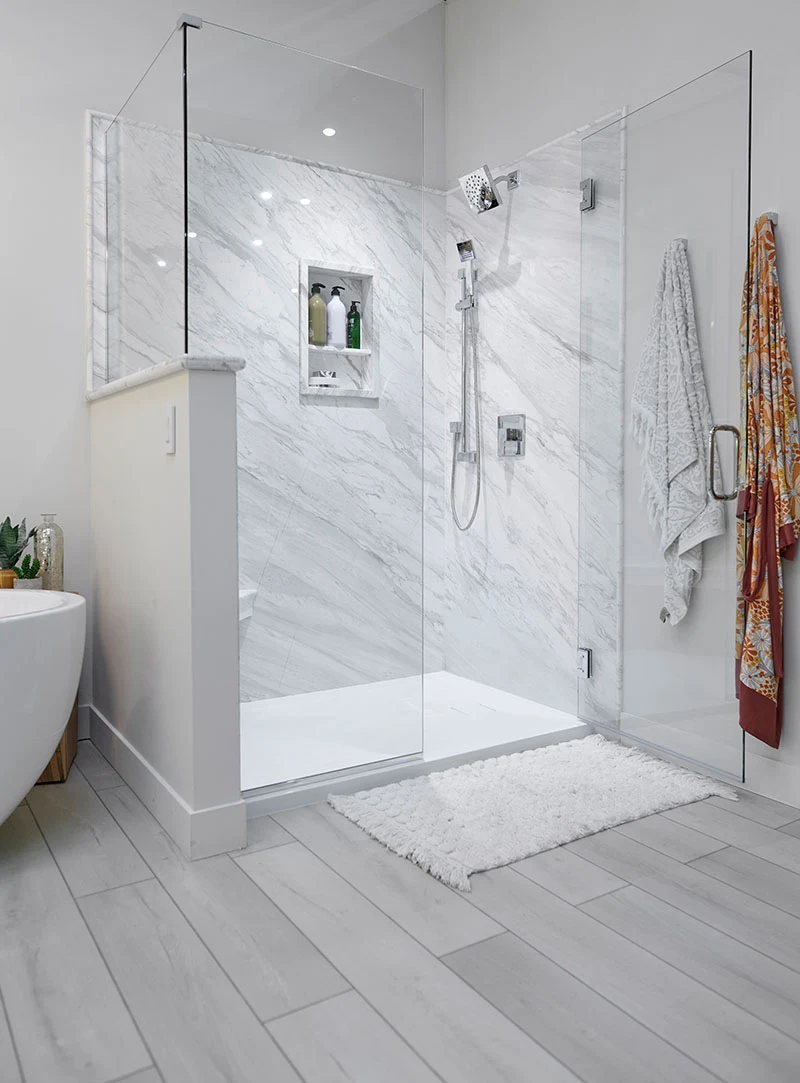
The third is a made-to-fit solid-surface wall system, and that is what Bulldog installs. A consultant measures your tub or shower area, the walls and base are fabricated to those numbers, and our crew takes the old tile out to the studs and puts the new panels in over a prepared substrate. The material is non-porous, with no grout lines. The finishes most of our customers pick are the marble and travertine looks, and the same material comes in subway, herringbone and hexagonal patterns with the lines molded into one panel, so a tile look is on the table without tile's joints.
This post compares tile with that third product. The first two are not worth your money, and we'd say so at your kitchen table.
What a tiled shower asks of you over 20 years
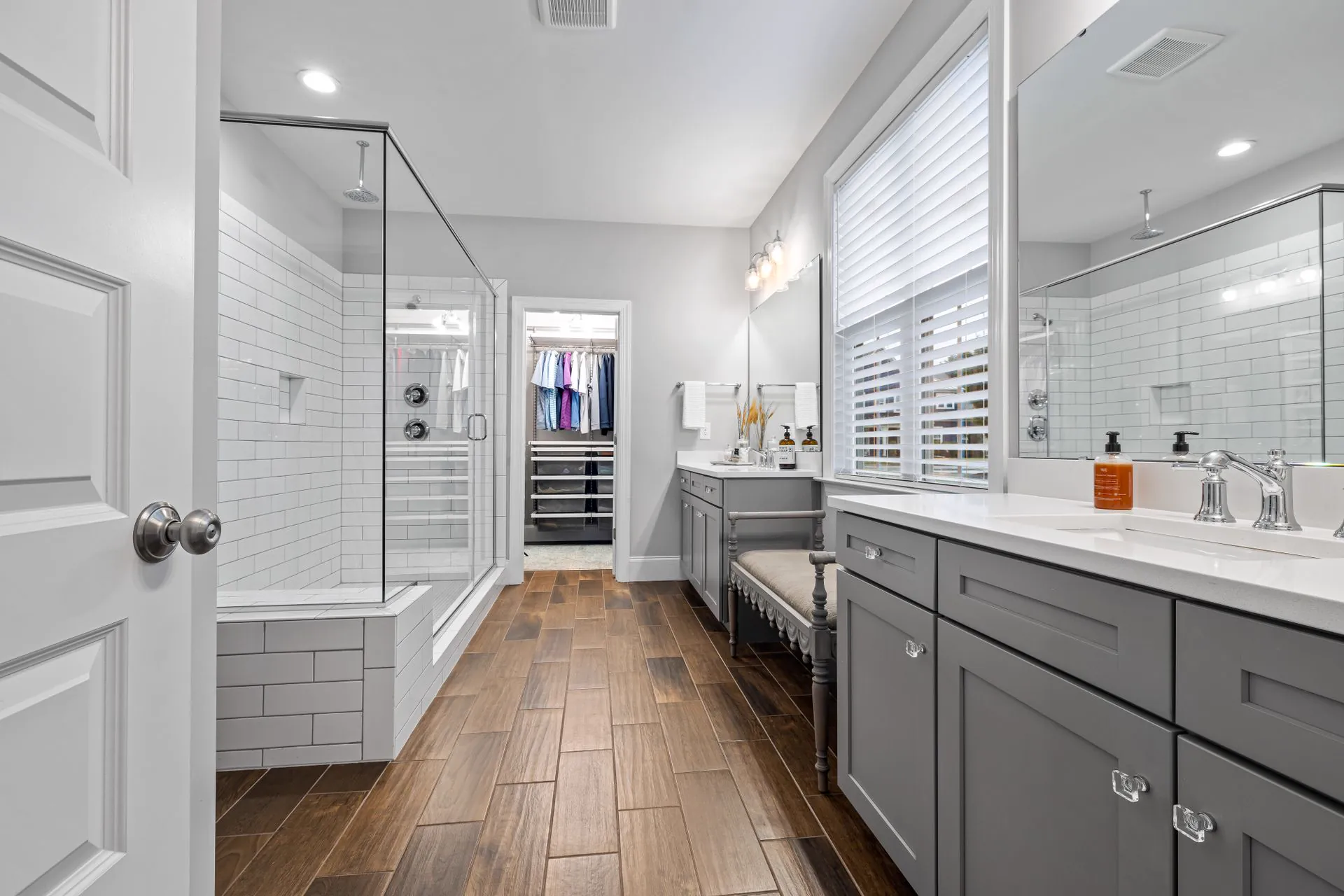
A tile contractor builds a shower in layers. Demo to the studs. Cement backerboard, the water-resistant panel that replaces the old drywall. A waterproofing membrane over that, either a sheet or a paint-on coat. A sloped mortar bed or a preformed pan for the floor. Then the tile, set in thin-set mortar, then grout in the joints, then caulk where the walls meet the base, and then, if the contractor is thorough, a penetrating sealer over the grout.
Each of those layers needs time before the next one goes on, and the schedule comes from the product labels rather than the contractor. Custom Building Products' data sheet for Polyblend Plus, a common sanded grout, asks that the installation be enclosed and protected for 72 hours to cure. The data sheet for the same company's grout sealer says to wait 48 hours after grouting before sealing, and Miracle Sealants' 511, another common sealer, asks for 72 dry hours after it goes on. Count from the day the grout goes in and you are at five days before the first shower, on top of the days of demo, board, membrane and setting tile that came before. A tiled tub wall in a hall bath is a week or two of a bathroom you can't use.
The 20 years after that are where tile asks the most. Grout is cement, sand and water, and once it cures it is hard on the face and porous underneath. Water, soap and the minerals in Cincinnati tap water go into those pores with every shower, and the bottom row stays wet longest. We wrote a whole post on why grout goes gray again a year after you clean it. A sealer buys you a season or two (the maker above says its sealer protects for up to 2 years), most people skip the resealing, and mildew settles into the joints in between. A modern tiled shower with a real membrane behind it keeps that water out of the wall. It does not keep it out of the grout.
Tile is the right call for some bathrooms. A hand-set mosaic you've had your eye on. A curbless wet room with a tiled floor that runs out into the bathroom. A feature wall in a house where you want a design story. If that's you, hire a tile contractor who will show you the waterproofing before the tile covers it, and plan for a longer install and, in most bids, a higher price. We mean that. Most people reading this are not that person, and you know by now which one you are.
What a solid-surface shower asks of you over 20 years
The reason our install is one day is that the work that takes a week in tile happens in the shop. The walls, base and trim are fabricated to your measurements before the truck shows up. On install day, the crew gutting your shower area to the studs is the same crew that measured it. They take out the old tub or tile and the wet board behind it, deal with what they find, set the new base, set the walls, hang the door, put in the valve and trim, caulk, clean up and register your warranty. The shower is in by evening. You take your first shower in it the next morning, once the caulk has set, because there is no mortar to cure and no grout to seal.
Be clear about what "one day" covers. It is the wet area: the tub or shower, its walls and its fixtures. If you also want the floor, the vanity and the toilet replaced, that is a longer job, and we'll tell you how long before you sign.
The 20 years after install day are the easy part. Mild soap and water, a spray-down after the last shower of the morning, no abrasive pads, no harsh cleaners. There is no grout to seal because there is no grout. The seams sit at the corners rather than across a wall, and the caulk at those corners and along the base is the one thing to keep an eye on, the way you would on any shower. Bulldog's warranty covers the product and the workmanship for as long as you own the home, and if something is wrong in year six, you make one phone call to one company.
The fair worry here is the material. You have had a cultured-marble vanity top yellow on you, or a fiberglass insert in a rental crack along the floor. Those were thin fiberglass and old cultured marble. The solid-surface polymer we install is a different material, made in the USA by a manufacturer that has built it since 1999, and the manufacturer's claim is that it resists scratches, chips, stains and fading. We don't put our own number on that. We put the lifetime warranty behind it.
Tile vs. solid-surface shower walls compared
| Tiled shower | Solid-surface shower | |
|---|---|---|
| Install time | Several days to two weeks, set by cure times | One day for the wet area; first shower the next morning |
| Grout and sealing | Grout in every joint; sealer recommended, reapplied about every 2 years | No grout, no sealer |
| Cleaning | Scrub brush, grout cleaner, a spring regrout ritual | Mild soap and water |
| Warranty | Varies by contractor; ask what it covers and for how long | Lifetime on product and workmanship, for as long as you own the home |
| Best for | A specific mosaic, a curbless wet room, a feature wall | A shower you clean in ten minutes and don't think about again |
If your house still has its original 1960s shower
If you've regrouted the master shower at least once and the thing you want is to spray it down after the morning showers and be done, the solid-surface shower is built for you. Pick the Calcutta marble look or the travertine, and if you miss the lines, pick the subway pattern and get the look without the joints. The soft spot in the floor by the tub comes up on install day, and we would rather find it with the tub out than have you find it later.
If you're selling the house in two or three years
You have a 1994 two-story in West Chester with a yellowed cultured-marble surround in the master bath, you're listing in two or three years, and you don't want to spend tile money on a bathroom you're leaving. Buyers and home inspectors flag water stains, soft floors and mildew in the joints. A new grout-free shower takes those off the list, and it goes in without a month of a torn-up master bath while you're trying to keep the house showable. The warranty stays with you rather than the house, so tell the buyer they're getting a shower with nothing to regrout and leave the warranty out of the listing.
If you live alone in an older house with stairs
You're in a 1920s Tudor in Hyde Park with a clawfoot tub upstairs, and you do not want a crew in the house for two weeks. One day, one crew, and the same people who came to measure. Ask for the low-threshold base and the built-in seat. The seat reads as a shelf, and the threshold is easier for anyone carrying laundry up those stairs. If the house's original hex tile floor is staying, the walls above it can match it in the hexagonal pattern, which is one panel and no joints.
Why a solid-surface shower is not a plastic insert
The cheap ones do look like that. You have seen one in a rental or a lake house, high-gloss white with the tub and walls in one molded piece and a gap where it meets the drywall. A made-to-fit surround is a different thing to look at: a matte or low-sheen marble pattern, cut to your room's dimensions so the corners meet, trim at the edges, and a niche or a shelf built into the wall rather than stuck on afterward.
Judge it the way you'd judge a countertop. Stand in the doorway, then go stand six inches from it. The colors and patterns page has the finishes. Ask us to see a finished shower in a ranch like yours before you decide.
Cost and financing for a solid-surface shower
We don't publish job prices. A consultant measures your bathroom and you get a written quote, free. With promotional financing, qualified buyers get the new shower, the wet area gutted to the studs, new base, walls, fixtures and the lifetime warranty, for as low as $150 a month, or 12 months no interest on approved credit. Get the shower now and pay later.
If you want to see how install day runs, the one-day remodel page walks through it. If you're still weighing tile, call the number on the refrigerator and ask that contractor two things: what goes behind the tile, and when you can shower. Then call us and ask the same two.
Grout-free shower walls: an honest guide covers the look, the care and how they hold up, in one place.