Key takeaways
- Shower grout turns gray again because cement grout is porous, so soap, minerals and mildew live below the surface your brush reaches.
- Sealer makers sell their products as stain protection and warn that harsh cleaners shorten their life.
- A pink line on the caulk is a common bacterium feeding on soap film.
- Grout that grays fast can mean water is reaching the wall behind it, and past about 20 years regrouting stops being worth it.
You regrouted the master shower last spring, or paid a handyman to do it. By fall the lines along the bottom row are gray again, and a pink stripe is back where the tub meets the wall. You did the work right. The gray comes from what's going on inside the grout, and once you know where it lives, you can tell which fixes last a year and which last a month.
Why grout turns gray: a sponge with a hard face
Grout is the cement-based filler packed into the joints between tiles. Polyblend Plus, a common sanded grout, is a polymer-modified, cement-based grout that cures hard, and the same maker's sealer sheet lists "porous grout" among the surfaces it's made for. Think of a brick: hard face, full of tiny pores.
Every shower sends water into those pores, with soap, skin oils and tap-water minerals along for the ride. Scrubbing cleans the face of the joint. It can't reach the pores. The gray that comes back is that soap and mineral load working to the surface, with mildew growing on top because the joint stays damp.
The bottom row goes first because it stays wet longest. The EPA's home mold guide says wet materials should dry within 24 to 48 hours to keep mold from growing. A bottom joint that gets wet every morning doesn't get a dry day in between.
The pink stain on shower caulk is bacteria
The pink stripe along the tub edge is a bacterium called Serratia marcescens. North Dakota State University Extension says it shows up in shower stalls and tub enclosures, anywhere with "materials containing phosphorus or fatty substances," and soap residue is one of them. Caulk and the bottom grout joint hold that film, so that's where the stripe settles.
NDSU's fix is a household cleaner, then a chlorine bleach solution for 10 to 20 minutes before rinsing. NDSU also calls the bacteria hard to remove from a house for good, and the stripe returns with the soap film. Wiping the tub ledge and caulk dry after showers keeps it away longer.
Grout sealer is rated for stains, and bleach wears it down
A penetrating sealer is a clear liquid that soaks into grout and lines its pores so spills bead up instead of sinking in. It's the right step, and the data sheets spell out its limits.
Custom Building Products rates its TileLab SurfaceGard for up to 2 years of stain protection. Its Aqua Mix Sealer's Choice Gold is rated for up to 10 years, with top stain resistance for spills that sit up to 1 hour. A shower floor that stays wet for hours every day asks more than a spill on a counter.
The bigger catch is in the maintenance section. The Gold sheet warns that high-alkalinity cleaners and harsh chemicals shorten how long the sealer protects, and asks for a pH-neutral cleaner. Chlorine bleach is not pH-neutral. So the soak that clears the pink stripe wears down the sealer that keeps the gray out. For example, a shower sealed in April and bleached every few weeks for pink can look tired by October. Regrouting vs. resealing vs. replacing compares the data sheets in more detail.
Regrouting resets the clock further, with fresh grout and fresh sealer. It also takes days: Polyblend Plus asks for 72 hours of protection to cure. In an older shower, the new grout can end up on a wall that's wet behind it.
What gray grout says about the wall behind it
Fast-graying grout and caulk that keeps growing pink both point to water getting into the joints and staying there. In many older showers the backing is greenboard, which is gypsum board with a water-repellent green paper face. Philadelphia's Department of Licenses and Inspections says in a code bulletin that greenboard "is not a waterproof material and will deteriorate if subjected to extended or repeated application of water".
Water that gets past the grout can soak that board, wick into the studs and reach the subfloor next to the tub. That soft spot you've been stepping around may be the same water. What's behind the tile in a 1960s Cincinnati bathroom covers the backings you're likely to find and how each one fails.
What each sign points to
| What you see | What it points to | What to do |
|---|---|---|
| Gray that scrubs off, then returns within months | Soap and minerals in the grout pores | Deep clean, dry, then seal |
| Pink stripe on the caulk at the tub | Serratia bacteria feeding on soap film | Bleach soak, then wipe dry after showers |
| Black spots that come back within weeks | Mildew in grout that stays damp | Run the fan longer, for example on a timer |
| Cracked, crumbling or missing grout | Joints open to water | Regrout |
| Hollow-sounding tile, or a floor that gives by the tub | Tile has lost its bond; water may be past the grout | Stop cleaning and have the wall looked at |
A weekend plan for gray grout
If the shower is otherwise sound, the weekend goes like this, by the clock. Plan on the hall bath Saturday night and Sunday.
- Saturday morning. Scrub the joints with a household cleaner and a stiff nylon brush. Put a chlorine bleach solution on pink areas and black spots for 10 to 20 minutes, then rinse. Open a window, and don't mix bleach with any other cleaner.
- Saturday afternoon. Cut out the old caulk at the tub line. That joint doesn't get grout; the Polyblend Plus sheet calls for a silicone caulk or sealant where the wall meets the tub.
- Saturday night. Leave the fan running and the door open. The surface must be dry and clean before sealing.
- Sunday morning. Brush two coats of penetrating sealer onto every joint, the second at least 30 minutes after the first, heaviest on the bottom row and floor.
- Sunday afternoon. Run a bead of silicone kitchen-and-bath caulk along the tub line.
- Monday. Keep the shower dry for 24 hours after sealing, and follow the caulk tube's cure time.
After that, wash the grout once a week with a pH-neutral cleaner and save the bleach for pink spots. The Department of Energy's Building America Solution Center says to run the fan one hour after a shower, vented outdoors, not into the attic. If black spots keep coming back, shower mildew that keeps coming back explains where it hides.
When regrouting stops being worth it
Regrouting and sealing make sense for a shower under about 20 years old with a solid wall behind it. That's the line we use, since most showers we replace are 20 or older. Past that, each round of fixes buys less time while any water behind the tile keeps working. If you've regrouted twice, the floor near the tub moves underfoot, or the tile sounds hollow, a better cleaner won't help. The wall needs a look.
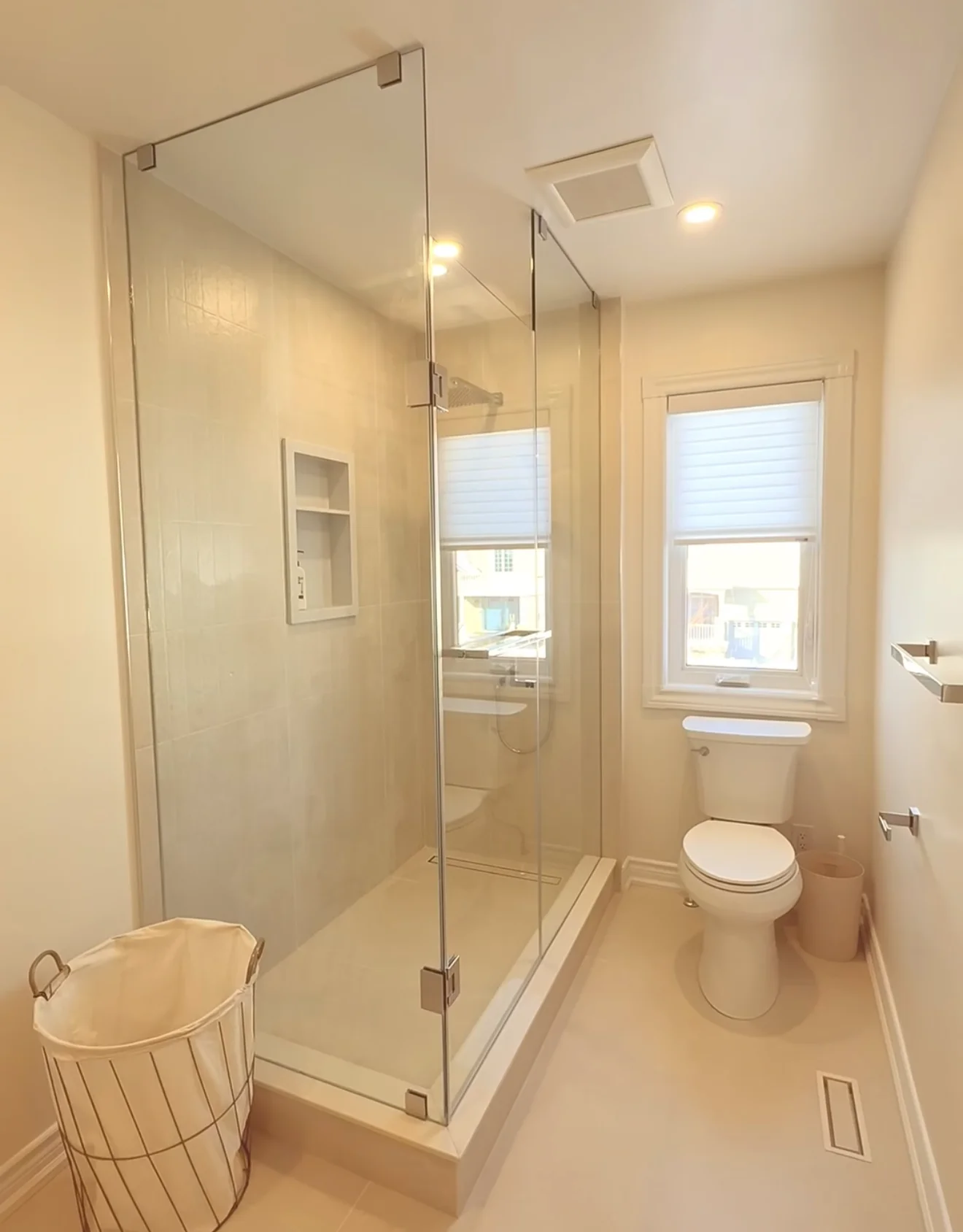
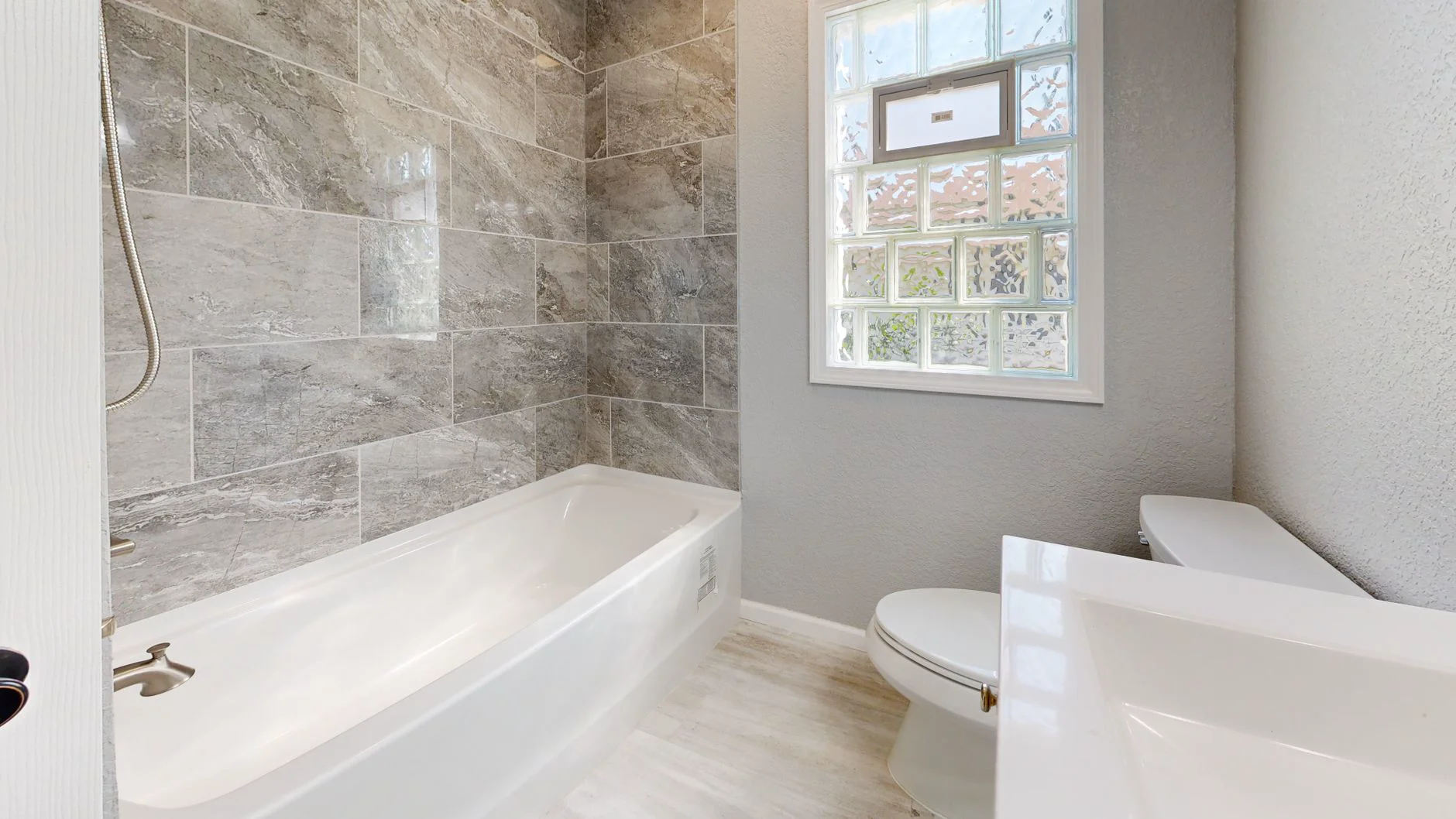
At that point you're choosing between a new tiled shower from a tile contractor, built with a waterproof layer behind it, and a shower with no grout. Tile done right lasts. It will still have joints that need the weekend above.
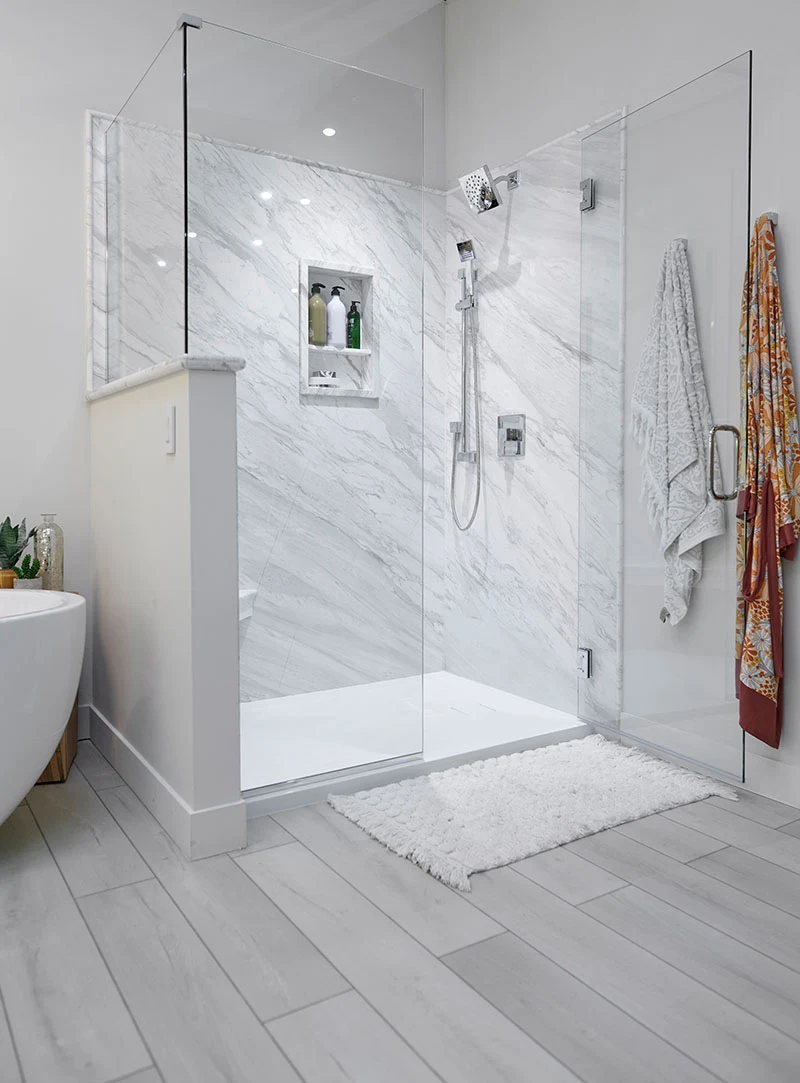
Bulldog builds the second kind. Our grout-free walls are solid-surface panels measured to your bathroom and fabricated to fit, with no grout lines and a non-porous face, so there are no pores for the gray to come back through. Care is mild soap and water, no abrasive pads or harsh cleaners. If you like the look of tile, the same material comes in subway, herringbone and hexagon patterns. We gut the shower area to the studs and rebuild it in a day: in by evening, first shower the next morning. The floor and vanity are a separate, longer job.
If you're not there yet, try the weekend plan and see how long it holds. For how an older shower wears out, read your 20-year-old shower: what fails first.