Key takeaways
- Resealing protects grout that is still whole, and it lasts anywhere from a season to several years depending on the sealer and how hard the shower works.
- Regrouting replaces cracked or missing grout, and it holds only on tile that is still bonded tight to a dry wall.
- Replacing is the fix once tiles sound dull, the floor by the tub gives, or a 20-year-old shower has been regrouted twice.
- A tap test and a heel test tell you which side of that line you are on.
The bottom row of grout in the master shower is gray again, there's a hairline crack in the joint under the soap dish, and the caulk at the tub has its pink stripe back. If that's your shower, you have three fixes to pick from: a bottle of sealer, a weekend with a grout saw, or a new shower. Each one fixes a different problem, and two checks you can do in ten minutes tell you which problem you have.
Three fixes for a tired tiled shower, side by side
Resealing treats the grout you have. Regrouting replaces the grout. Replacing takes the tile and the board behind it out to the studs. The further down that list you go, the more of the shower the fix reaches.
| Fix | What it fixes | How long it lasts | Shower out of use |
|---|---|---|---|
| Reseal | Grout that's whole but stains and grays | A season to several years, set by the sealer and the shower | About a day |
| Regrout | Grout that's cracked, crumbling or missing | As long as the wall behind it stays sound | About three days |
| Replace | Wet board, loose tile, a soft floor | Tile: a long time with a membrane. Grout-free: lifetime warranty while you own the home | Tile: days to weeks. Grout-free wet area: one day |
Resealing: what it fixes and how often to do it
A penetrating sealer soaks into the grout and slows down how fast water, soap and the minerals in the water get into the pores. It doesn't fill cracks, and it doesn't do anything for a wall that's already wet. On grout that's whole and tile that's solid, it's the smallest fix in this post, and it's the right first move.
The question everybody asks is how often. The honest answer depends on the product and how hard the shower works. Why your shower grout turns gray again covers what wears a sealer down.
The manufacturer data sheets show the spread. Custom Building Products makes three common grout sealers, and its own sheets give three different numbers:
- TileLab SurfaceGard "protects for up to 2 years under natural exposure and routine wear."
- Aqua Mix Grout Sealer lists its expected wear as up to 5 years.
- Aqua Mix Sealer's Choice Gold "protects for up to 10 years under natural exposure and routine wear."
"Up to" is doing a lot of work in each of those. The Sealer's Choice Gold sheet says consistent cleaning with a pH-neutral cleaner extends the protection, and that high-alkaline cleaners, harsh chemicals and steam cleaning cut it short. The bottom row of a shower used twice a day, scrubbed with whatever's under the sink, is a harder life than "routine wear." That's why our crews see the bottom row go gray within a year on showers where the rest of the wall still looks fine.
Skip the calendar and test the grout. The Aqua Mix Grout Sealer sheet checks a fresh coat by putting a few drops of water on the grout and watching: if the water soaks in, it calls for another coat. Run the same test on the bottom row every few months. Drops that bead up mean the sealer's still working. Drops that darken the grout and disappear mean it's time.
Clean the grout and let the shower dry for a full day with the fan running before you reseal. Every sheet above asks for a clean, dry surface, and sealer brushed over damp grout holds the dirt in.
Regrouting: what it fixes and how long it lasts
Regrouting means cutting the old grout out of the joints with a grout saw or an oscillating tool, packing new grout in, and sealing it once it cures. It fixes grout that's cracked, crumbling or missing, and it resets the color, which is why it feels like a new shower for a while.
The cure times are what make it a three-day job. The data sheet for Polyblend Plus, a common sanded grout, says to keep foot traffic off for 16 hours and to enclose and protect the installation for at least 72 hours for a proper cure. The sealer sheets above ask for 48 hours after grouting before the sealer goes on.
The same Polyblend sheet has a line that matters more than the cure times. Before grout goes in, it says the tile "must be firmly bonded to a sound substrate." Substrate is the board or mortar bed the tile is stuck to. New grout locks tile into a wall; it can't make a loose tile stick or dry out a wet board. Regrouting a wall that fails that test buys you new-looking joints over the same problem.
On a sound wall, new grout lasts as long as the wall stays sound, with the sealer on its own schedule on top. One more thing to get right: the corner where the tub meets the tile and the inside corners of the shower move a little, and the Polyblend sheet says not to grout those joints. They get caulk, a bead of 100 percent silicone.
Two checks before you regrout or replace a shower
Both fixes above work from the face of the wall. These two checks tell you whether the face is the problem.
- The tap test. Tap every tile on the tub wall with a knuckle, top to bottom, and mark dull spots with painter's tape. A solid click means the tile is still bonded. A dull or hollow sound means the tile has let go of the board behind it, and in a shower 20 years or older that's usually water.
- The heel test. Press your heel along the floor next to the tub apron and around the toilet. If the floor gives, water has most likely reached the subfloor, the plywood under the finish floor.
If you can get to the basement, look at the ceiling under the bathroom with a flashlight too. A ring around the drain or a stain on the joist is the same water from below. Your 20-year-old shower: what fails first goes through all five stages an older shower fails in and what each one looks like.
Solid tap and firm floor: reseal or regrout. A dull tap or a soft floor: the grout isn't the problem anymore, and neither fix will hold.
Replacing: the fix when the wall behind the tile is wet
Once the board behind the tile is wet, the shower comes out to the studs. Either way you go, someone takes out the tile and the board, looks at the subfloor and the pipes with the wall open, and builds the wet area back.
A tile contractor rebuilds with cement backerboard, a waterproofing membrane and new tile. Tile is a good product, and a tiled shower built that way lasts a long time. It still has grout, the grout still goes on the sealing schedule above, and the cure times stretch the job across several days or more.
Grout-free solid-surface walls
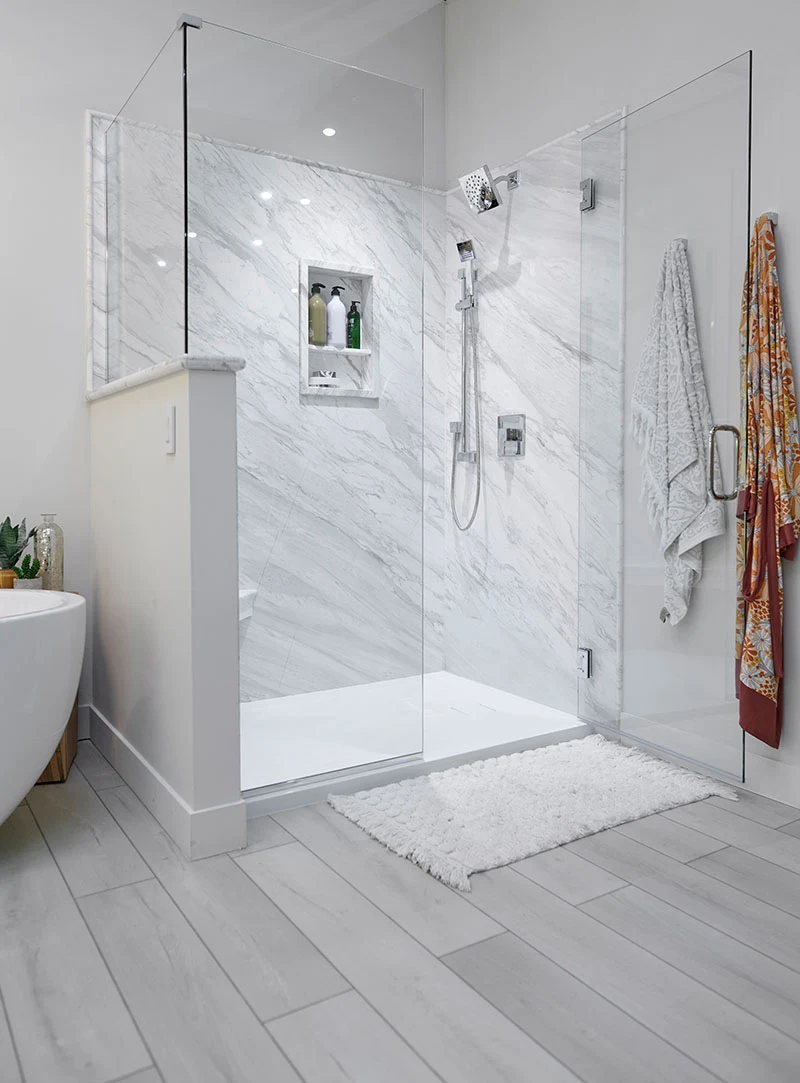
The other way is a grout-free shower, one solid-surface panel per wall, measured in your bathroom and made to those numbers before install day. There's no grout to seal, regrout or test with water drops. Care is mild soap and water, no abrasive pads, no harsh cleaners. If you like the look of tile, the same material comes in subway, herringbone and hexagon patterns with the look of grout lines and no grout.
That's the kind Bulldog builds. Our crew guts the tub or shower area to the studs and has the new base, walls and fixtures in by evening, and you take your first shower the next morning. The rest of the room (floor, vanity, toilet) is a separate, longer job, and we tell you that before you sign. The product and the work carry a lifetime warranty for as long as you own the home. With promotional financing, qualified buyers get the new shower for as low as $150 a month, or 12 months no interest, on approved credit.
The one-day part comes from where the waiting happens. A design consultant measures the shower at your kitchen-table visit, and the walls, base and trim are made to those numbers before install day. On install day there's no mortar to set and no 72-hour grout cure, so the three days a regrout costs you, and the week or more a new tile job costs you, don't apply. With the wall open, the crew sees the subfloor and the pipes before the new walls go up.
Which fix fits your shower
If your shower is under about 20 years old, the tiles click when you tap them and the grout is whole but gray, reseal it. Do the water-drop test every few months and recoat when the drops soak in. That's the whole job, and nobody should talk you into more.
If the tiles are solid and the floor is firm but the grout is cracked or missing in places, regrout. Plan for three days without that shower, seal it after the 48-hour wait, and caulk the corners and the tub line with silicone.
If the shower is 20 years or older and you've regrouted it twice, or a tile sounds dull, or the floor by the tub gives, replace it. Most of the showers our crews take out are 20 years and older, and in those the wall behind the tile is the job.
"Am I replacing a shower that only needs cleaning?"
That's a fair worry, and the two checks answer it better than any salesperson can. If the tap test is solid and the floor is firm, you don't need a new shower this year. Clean the grout, reseal it, cut out the old caulk and run a new bead, and see how the bottom row looks next spring. Soft floor next to your bathtub has a fill test for the floor if you're not sure what you felt under your heel.
If the checks come back the other way, the colors and patterns page shows the marble and travertine looks most of our customers pick, and the one-day remodel page walks through install day hour by hour. What sets the price of a one-day shower explains what moves the number, and a design consultant measures and gives a written quote.