Key takeaways
- A drop-in sink sits on top of the counter on its own rim, works with almost any countertop including laminate, and is the easier one to swap out later.
- An undermount sink hangs under the counter, so you wipe crumbs and water off the counter straight into the bowl, with no rim to clean around.
- An undermount needs a countertop with a solid edge at the cutout, such as granite, quartz or solid surface, and laminate can take one only with a special sink and adhesive.
- If you're replacing an old laminate top with stone or solid surface anyway, undermount is the one to look at first, and Bulldog's tops come with undermount sink cutouts.
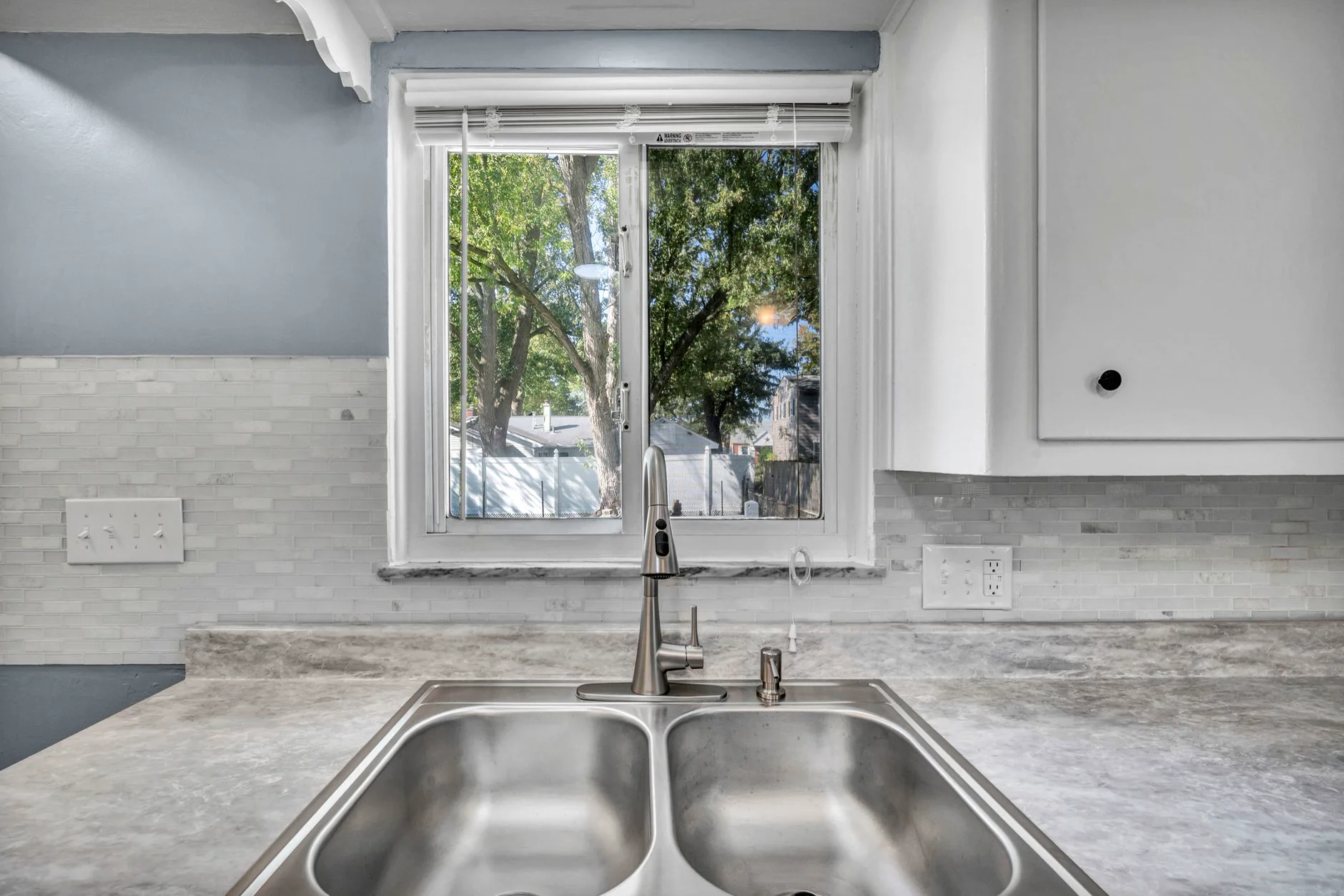
The sink in your Anderson Township kitchen is a stainless double bowl that went in with the laminate around 1992. It drains, the faucet works, and nobody has ever complained about it. But when you wipe the counter after dinner, the crumbs stop at the lip of the sink and you push them over it with your hand. There's a gray line in the caulk where the rim meets the laminate, and an old toothbrush lives under the sink for that line.
That lip is the whole difference between the two kinds of sink. A drop-in sink sits on top of the counter, on its own rim. An undermount sink hangs under the counter, and the counter's cut edge is what you see around the bowl. For cleaning, undermount wins. For fitting any countertop and for swapping the sink out later, drop-in wins. If you're keeping your laminate, keep a drop-in. If the laminate is coming out for granite, quartz or solid surface, undermount is the one to look at first.
Drop-in and undermount, side by side
| Drop-in sink | Undermount sink | |
|---|---|---|
| Where it sits | On top of the counter, on its own rim | Under the counter, held from below |
| Wiping the counter | Crumbs stop at the rim | Crumbs go straight into the bowl |
| Countertops it works with | Almost any, including laminate | Granite, quartz, solid surface; laminate only with a special sink |
| Replacing it later | Lift it out, drop a new one in | Work from inside the cabinet; the new sink has to fit the old hole |
How each one is held in place
A drop-in sink hangs from its rim. Elkay's installation instructions for one of its drop-in sinks have the installer trace the rim on the counter and cut the opening 5/16 inch inside that line, so the rim overlaps the counter all the way around. A bead of silicone goes under the rim, the sink drops into the hole, and clips underneath pull it down tight. The countertop carries the weight, and the rim covers the cut edge of the counter.
An undermount sink goes in from below. Mounting clips fasten into holes drilled in the underside of the countertop, silicone goes on the top of the sink's flange, and the sink gets pressed up and clamped against the counter. Elkay's instructions for a stainless undermount recommend that the sink cutout and mounting holes be cut by the countertop fabricator before installation, and that a professional installer do the job. The cut edge of the countertop is out in the open around the bowl, and you see it every time you rinse a plate.
That one difference decides everything below.
Cleaning: undermount wins
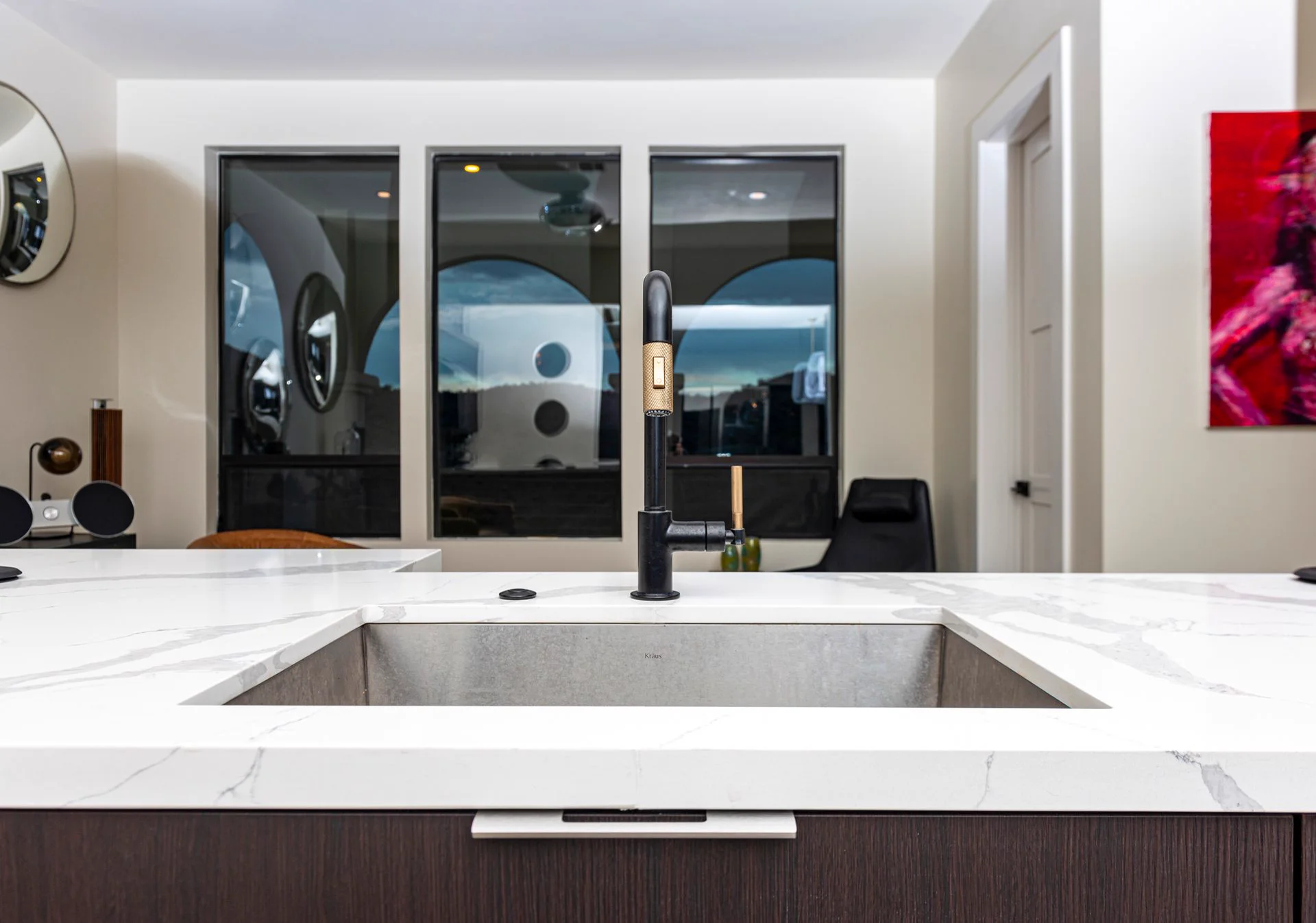
With an undermount, there's nothing between the counter and the bowl. You wipe the counter toward the sink and the crumbs, the coffee grounds and the puddle from the dish rack go in. You don't scrub around a rim.
A drop-in rim stands up above the counter. Crumbs stop against it. The caulk joint where the rim meets the countertop holds a film of grease and soap, and it's the line that turns gray and needs the toothbrush. On an older stainless sink, the rim itself also collects grime in the stamped edge where it curves down into the bowl.
An undermount has a spot of its own. Depending on how the counter was cut, a narrow ledge of the sink rim may show inside the counter edge. Elkay's template for one stainless model leaves the countertop recessed about 1/2 inch from the bowl, and its granite-composite sink's template exposes about 1/8 inch of rim ledge. You can see that ledge and wipe it. You can't see the joint under the counter edge where the sink meets the stone, so run a sponge under the lip now and then.
Verdict: undermount, by a wide margin, for anyone who wipes the counter after every meal.
Countertops: drop-in wins on range
A drop-in sink goes into almost any countertop: laminate, butcher block, stone, solid surface. The rim covers the cut, so the counter's edge at the hole never has to look good or stay dry on its own.
An undermount leaves that cut edge exposed, right where water hits all day. Stone and solid surface are the same material all the way through, so the edge at the cutout gets polished to match the top and doesn't swell when it gets wet. Laminate is different. As our post on replacing laminate countertops in an older kitchen explains, a laminate top is a thin plastic sheet glued over a particleboard core, and that core swells when it gets wet.
Laminate makers say it can be done with the right parts. Formica's own article on sink options says you can have an undermount sink with a laminate countertop, but only with a sink approved for use as a laminate undermount: one with a flat, 1-inch resin rim that meets the bowl at a sharp 90-degree angle. The article describes the sink being set with a permanent two-part acrylic adhesive, and it recommends a professional, since the job takes special tools. That's a specialty job with a specialty sink. Sink makers draw the line tighter. Elkay's instructions say its undermount sinks should only be fastened to a solid surface countertop, not laminate.
Verdict: drop-in, if you're keeping the laminate. With a new stone or solid-surface top, both sinks work and the choice comes down to cleaning.
Where the water goes
On a drop-in in a laminate top, the silicone under the rim is what keeps water off the raw particleboard at the cutout. When that caulk wears out, water from the faucet and the dish rack can wick under the rim and into the board. If the counter around your sink has a ridge, or the underside looks dark from inside the cabinet, that's usually where it started. The soft floor under your kitchen sink covers how to check the sink base for leaks.
On an undermount, the counter sheds water into the bowl. The joint that matters is the silicone between the sink and the underside of the counter, along with the clips holding it there. You can check both with a flashlight from inside the sink cabinet. If you see a gap or a drip line, a fabricator or installer can reset and reseal it.
Verdict: undermount in stone or solid surface keeps water off the counter's core. A drop-in in laminate does fine as long as the caulk does.
The faucet
A drop-in sink usually has its faucet holes in the sink's own deck, behind the bowls. Your faucet choice has to match the number of holes the sink came with.
An undermount has no deck, so the faucet holes get drilled in the countertop. With a new stone or solid-surface top, that means the holes are cut for the faucet you pick, a single-handle pull-down or a separate sprayer and soap dispenser. Pick the faucet before the top is cut.
Verdict: undermount, for the freedom to choose the faucet at the same time as the top.
Replacing the sink later: drop-in wins
Sinks don't wear out often, but they do get replaced: a chipped composite bowl, a stainless sink that's dented, or a switch from two bowls to one big one.
A drop-in comes out from above. Someone backs off the clips, cuts the silicone, lifts the sink out and sets a new one in. The new rim has to cover the old hole, so a sink the same size or larger is the easy swap. A smaller one would leave the edge of the cutout showing.
An undermount comes out from below, with someone lying in the sink cabinet. The bigger catch is the hole. The countertop opening was cut to that sink's template, so a new sink needs a bowl that fits it. A smaller bowl leaves the clips and the counter's underside in view, and a bigger bowl means a stone fabricator has to enlarge the cutout in place.
Verdict: drop-in. With an undermount, pick the sink you'll want for as long as you have the countertop.
What sets the price
We don't post prices for countertop jobs. On any countertop quote, the sink adds a few line items: the cutout, polishing its edge for an undermount, the sink itself, the faucet holes and resetting the plumbing. The countertop material, square footage, number of pieces and edge profile set most of the rest. A consultant measures your kitchen and gives you a written quote. Financing is available on approved credit; the financing page has the details.
Which sink fits your kitchen
You're keeping the laminate and want a new sink: a drop-in. It covers the cutout, it suits the counter you have, and swapping one in doesn't touch the countertop.
Your laminate is worn out and the top is coming off: undermount. With granite, quartz or solid surface, you get a counter you wipe into the sink and a faucet chosen at the same time as the top.
You're getting stone but you don't mind a rim: a drop-in still works in stone and makes a later sink swap simpler. Some people like the look of a rim, and it's a fair choice.
What Bulldog installs
Bulldog installs quartz, granite and solid-surface countertops, and our tops come with undermount sink cutouts, along with islands, breakfast bars and the edge profile you pick. We install undermount, drop-in, farmhouse and double-bowl kitchen sinks, so the choice in this post is yours to make. We digitally template your existing layout before fabrication, for a tight, accurate fit. One team handles the countertop, the backsplash, and the sink and faucet, and many kitchen updates take a few days, not months. The work carries our lifetime warranty on products and workmanship, for as long as you own the home. You can also start with only a sink and faucet. Our own crews do the install, and a dedicated project coordinator keeps you informed from start to finish.
If you're still deciding on the top itself, quartz, granite or solid surface compares how each handles heat, stains, scratches and seams over 20 years of cooking. When you want to see countertop samples in your own light, request a consultation and a consultant will come out, measure and leave you a written quote.
A new-looking kitchen in days, not months walks through every part of the kitchen in order: what to keep and what to replace.