Key takeaways
- A soft floor next to a bathtub is usually wet subfloor, the plywood or boards under the finish floor, soaked by water getting past the tub's joints.
- The soft spot spreads while you wait, and fixing it means lifting the tub out because the damage runs under it.
- Bulldog replaces the tub area and the wet subfloor in its footprint in one day.
You step out of the tub onto the same square of floor each morning, and under the bath mat it gives, the way a porch board does. In a 1968 ranch in Anderson Township that square is a piece of wet wood under the vinyl, and the water came from the tub beside it. This is what a soft floor next to the bathtub is made of, where the water got in, and what changes if you leave it another winter.
What is under a soft bathroom floor: three layers of wood
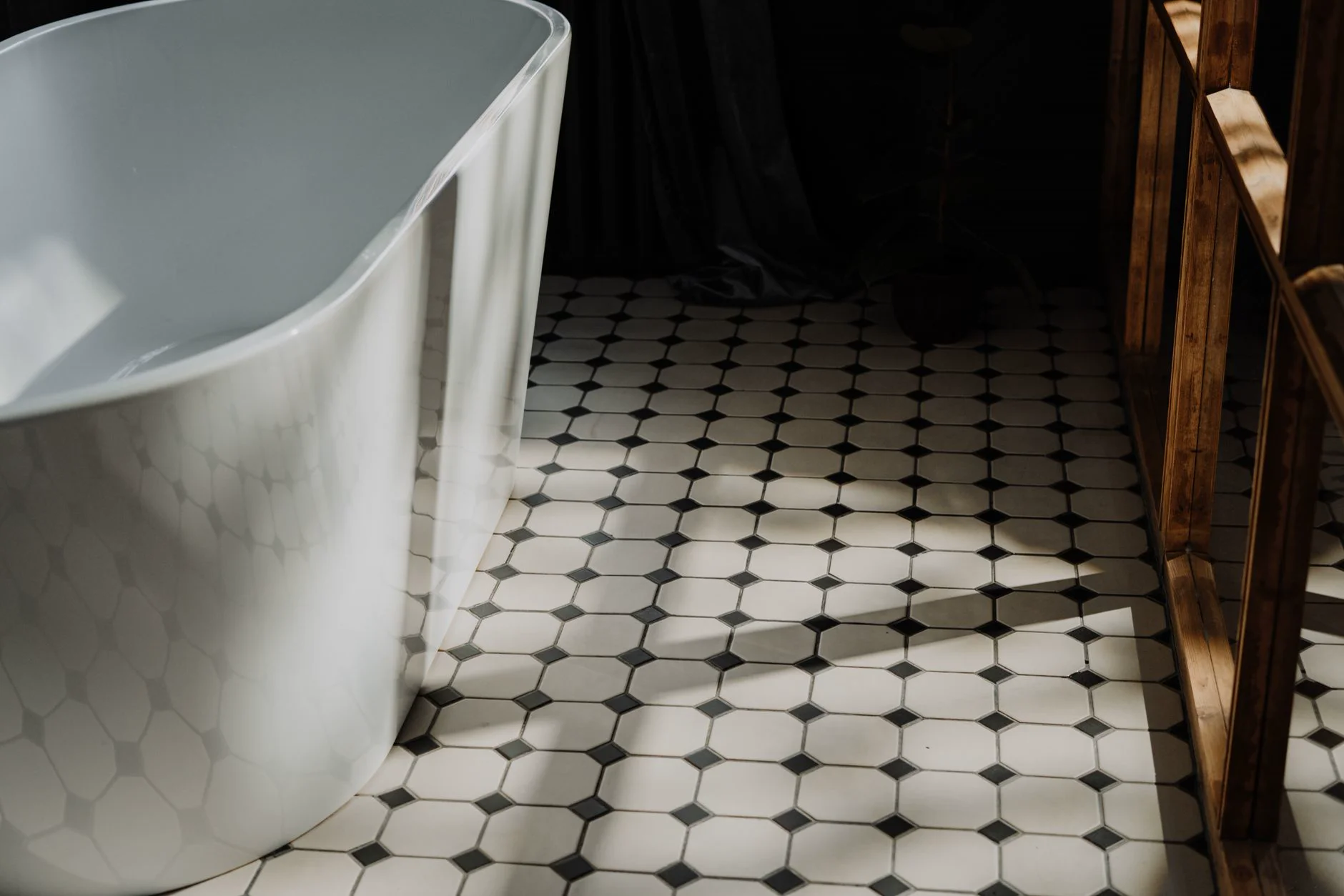
Under the vinyl or the little hex tile there is an underlayment, a thin sheet that gives the finish floor a smooth bed. Under that is the subfloor, plywood in most houses built after 1960 and 1-by-6 boards laid on a diagonal in the older ones. The subfloor sits on the joists you can see from the basement.
The give you feel is the underlayment and the top of the subfloor losing their stiffness because they stay wet. The Forest Products Laboratory's figures, in a 2014 chapter on decayed wood, put the line at about 25 to 30 percent moisture content, where rot fungi start, and air-dried wood at 20 percent or under, where they cannot. A bathroom floor that takes water twice a day does not get back under 20.
In many 1970s and 80s houses the underlayment is particleboard, which Bill and Kevin Burnett described in an Inman column as "little more than glued, compressed sawdust." Particleboard swells the first season it gets wet and crumbles the next. Plywood holds longer.
Where the water gets in around a bathtub
Water reaches that floor through three joints, in the order our installers find them.
The first is the caulk line where the tub meets the tile, and the bottom row of grout above it. Grout is porous, and the gray that comes back a year after you clean it is water moving through it. Some of that water runs down the back of the tub and onto the subfloor under the apron, the finished front panel of the tub, where you cannot see it.
The second is the joint between the apron and the floor. Water that drips off you, and the mop water that follows, runs to that crack and under the tub, since the vinyl was cut to the apron with nothing sealing the gap.
The third is under the tub itself. The drain has a rubber gasket where it passes through the tub bottom, and the overflow, the round plate under the spout, has another one behind it. Those gaskets went in with the tub. After 50 years the foam ones have hardened and shrunk, and they leak when you fill the tub deep enough to reach the overflow. A floor can stay dry through a decade of showers and go soft the winter a grandchild starts taking baths.
Three ways to check a soft floor this weekend
You can learn most of this without pulling anything up.
- Press with your heel along the full length of the tub apron and around the base of the toilet. Mark where it gives with painter's tape. A spot that runs past the toilet has a second source.
- Go to the basement or crawlspace with a flashlight and look at the underside of the floor where the tub drain comes through. A dark ring on the subfloor or a rust stain on the joist next to the drain tells you how long this has been going on.
- Plug the tub and fill it until water runs into the overflow. Leave it 20 minutes, then pull the plug, with someone watching the drain and overflow from below the whole time. A drip that starts when the water reaches the overflow plate is the gasket. A drip that starts when you pull the plug is the drain.
If the floor gives but the basement is dry and the fill test shows nothing, the water is coming through the wall or the apron joint. The grout post's weekend routine, plus a bead of silicone along the apron, buys you time.
What happens to a soft spot if you wait
A wet patch of subfloor spreads along the grain of the plywood, which is why a soft spot the size of a bath mat is a 4-foot sheet by the time someone opens the floor. Water that reaches the joist softens its top edge first, the part the subfloor nails hold onto.
The toilet is a foot or two from the tub in most of these bathrooms, and its flange, the ring that holds it to the floor, is screwed into the same subfloor. Once that goes soft the toilet rocks, the wax ring under it loses its seal, and you have a second leak feeding the first.
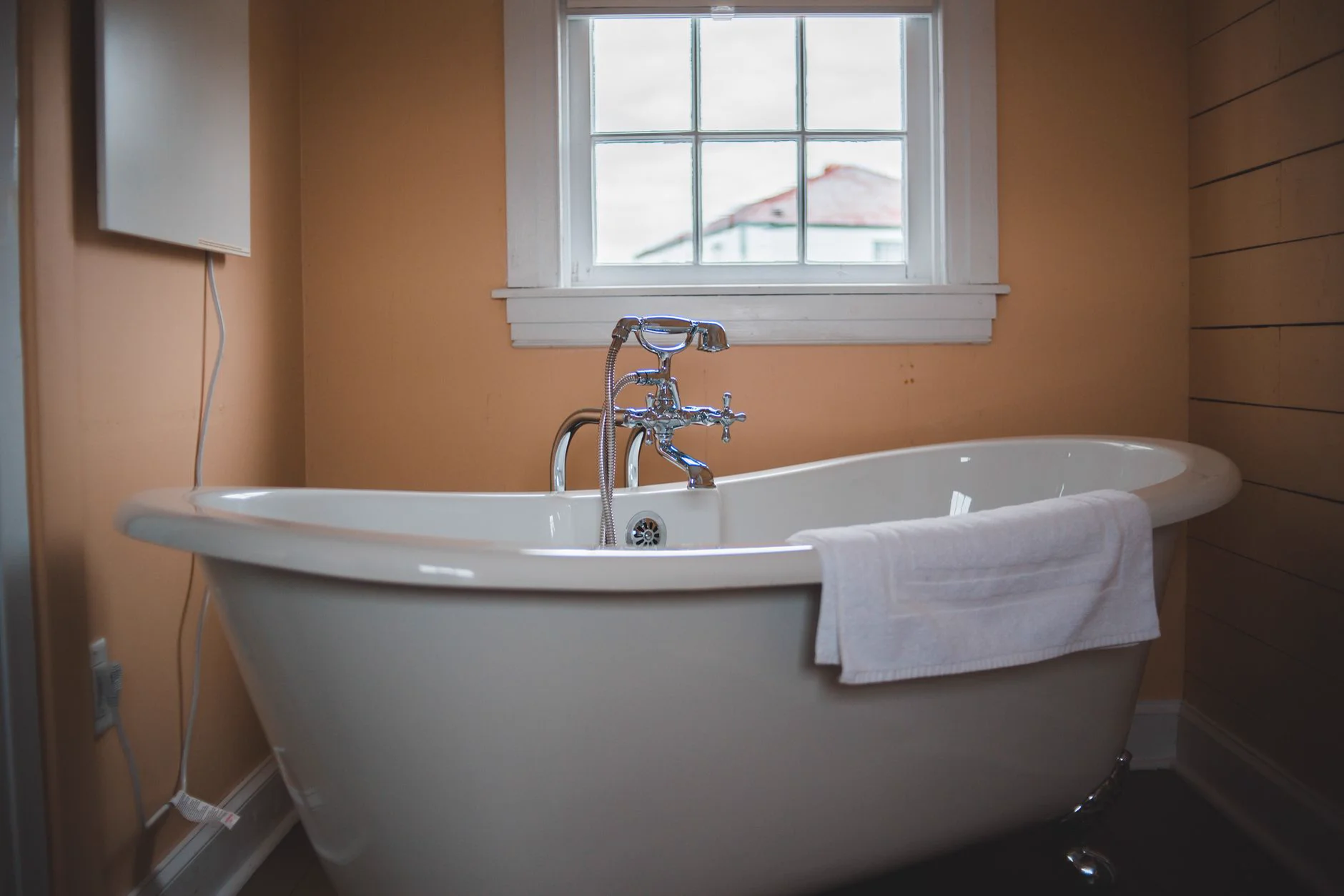
Then there is the tub. A 60-inch cast-iron alcove tub weighs about 327 pounds empty, by the manufacturer's spec sheet, and the water in a full tub weighs about as much again. All of that sits on the wet wood. The tub settles, the caulk line at the tile opens, and more water gets through the joint that started this. Our crews have pulled cast-iron tubs out of ranches in Montgomery and Fort Thomas, Kentucky that sat lower at the front than at the back.
None of this drops the tub through the ceiling. It turns a one-sheet patch into a floor, and a floor into a joist repair, over a few years of stepping around the spot.
Why fixing the subfloor means the tub comes out
The soft piece runs under the tub apron, where a patch cut from the open floor cannot reach it. To replace it, someone lifts the tub out. The bottom row of tile sits on the tub rim, so the tile on the tub wall comes with it, and the plumber disconnects the valve and drain to do it.
A soft floor next to the bathtub is a shower job with a floor repair inside it. Regrout the wall this spring and leave the floor, and you have put new grout over a tub that is still settling. Fix the floor and set the old tub back, and you have paid a carpenter and a plumber to reinstall a 1968 tub. Our advice to a couple in that spot is to stop spending on the old tub wall and plan the replacement, with the floor done the day the tub comes out.
Replacing the tub and subfloor in one day
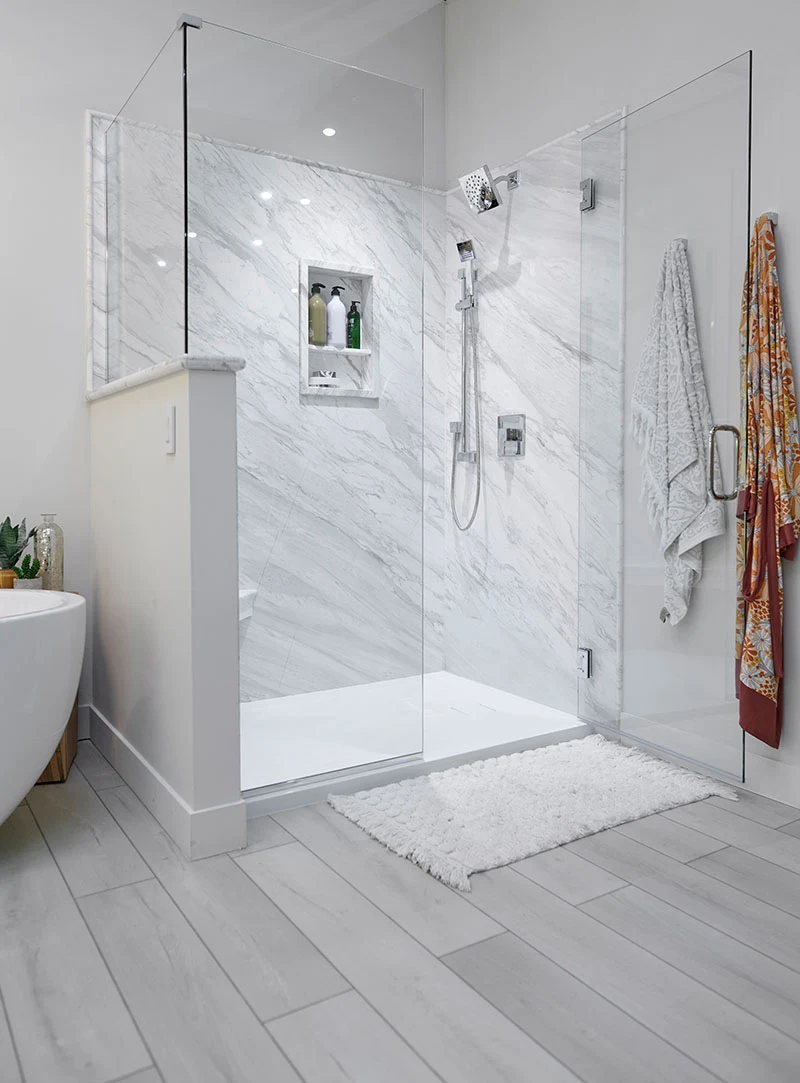
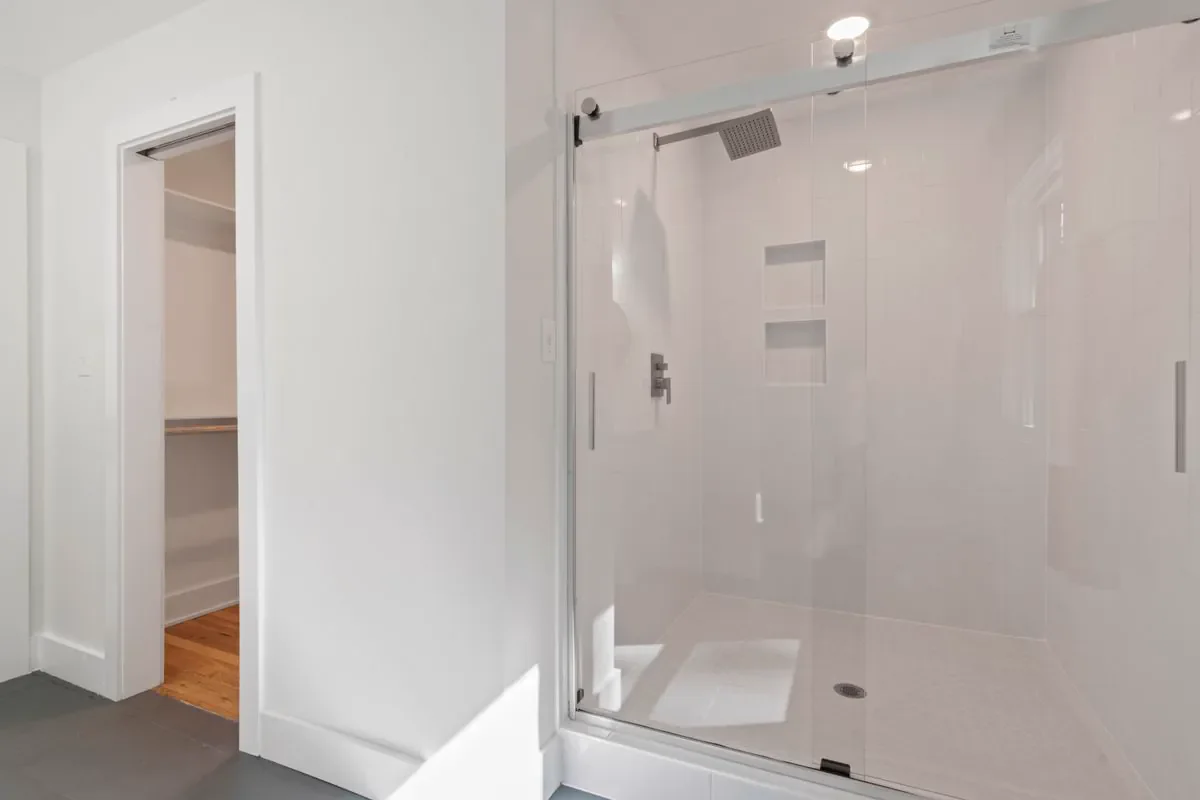
Our installers take the tub or shower area down to the studs in the morning and lift the old tub out, and the lead installer looks at the subfloor with the tub gone. Wet wood in the footprint of the tub comes out and new goes in before the new base goes down. The walls are solid-surface panels measured to your bathroom and made before install day, with no grout for water to move through. The crew has the walls, base and fixtures in by evening, and you take the first shower the next morning once the caulk has set. The floor, vanity and toilet in the rest of the room are a separate, longer job, and we tell you that before you sign.
With promotional financing, qualified buyers get that new grout-free shower for as low as $150 a month, or 12 months no interest, on approved credit. The one-day remodel page walks through install day hour by hour.
If you are not there yet, do the three checks and write down what you found. The post on what sits behind the shower tile covers the wall side of the same water, and what to do about bathroom mildew that keeps coming back covers the damp air that keeps it going.
For the full picture of how an older shower fails, and when to stop fixing it, start with your 20-year-old shower: what fails first.