Key takeaways
- A walk-in tub suits someone who takes a bath most nights and would miss it, as long as they're fine sitting in the tub while it fills and drains.
- A walk-in shower with a low-threshold base suits someone who showers standing and wants the tub wall gone.
- A low-threshold base with a built-in seat suits someone who wants to sit while they wash without waiting on a tub of water to fill and drain.
- All three replace a high tub wall with a low step.
You've been getting out of the clawfoot upstairs by sitting on the rim and swinging one leg over, then the other. You have two brochures on the counter, one for a walk-in tub and one for a walk-in shower, and you'd like to know which one a sensible person picks. Which one fits comes down to how you bathe now: whether you sit in water, stand under it, or would like to sit under it. There's a third option that gets less attention, a low-threshold shower base with a built-in seat, and it may be the one that fits.
The three options, in plain terms
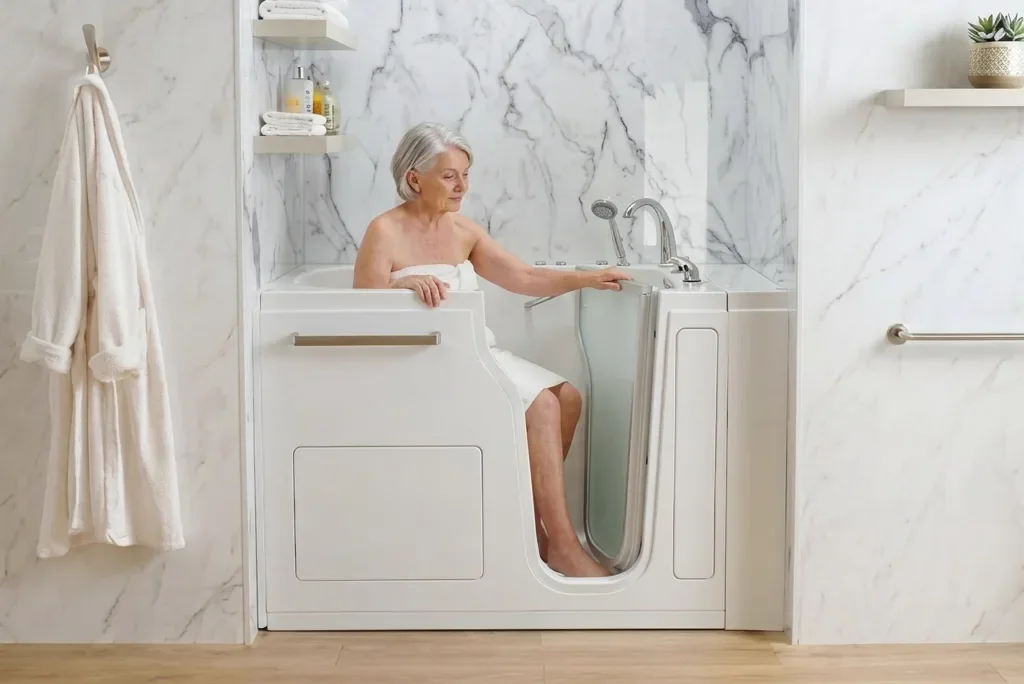
A walk-in tub is a deep tub with a watertight door in the side. You open the door, step over a low sill, sit on a molded seat, close the door and fill the tub around you. After the bath, the tub drains and then you open the door.
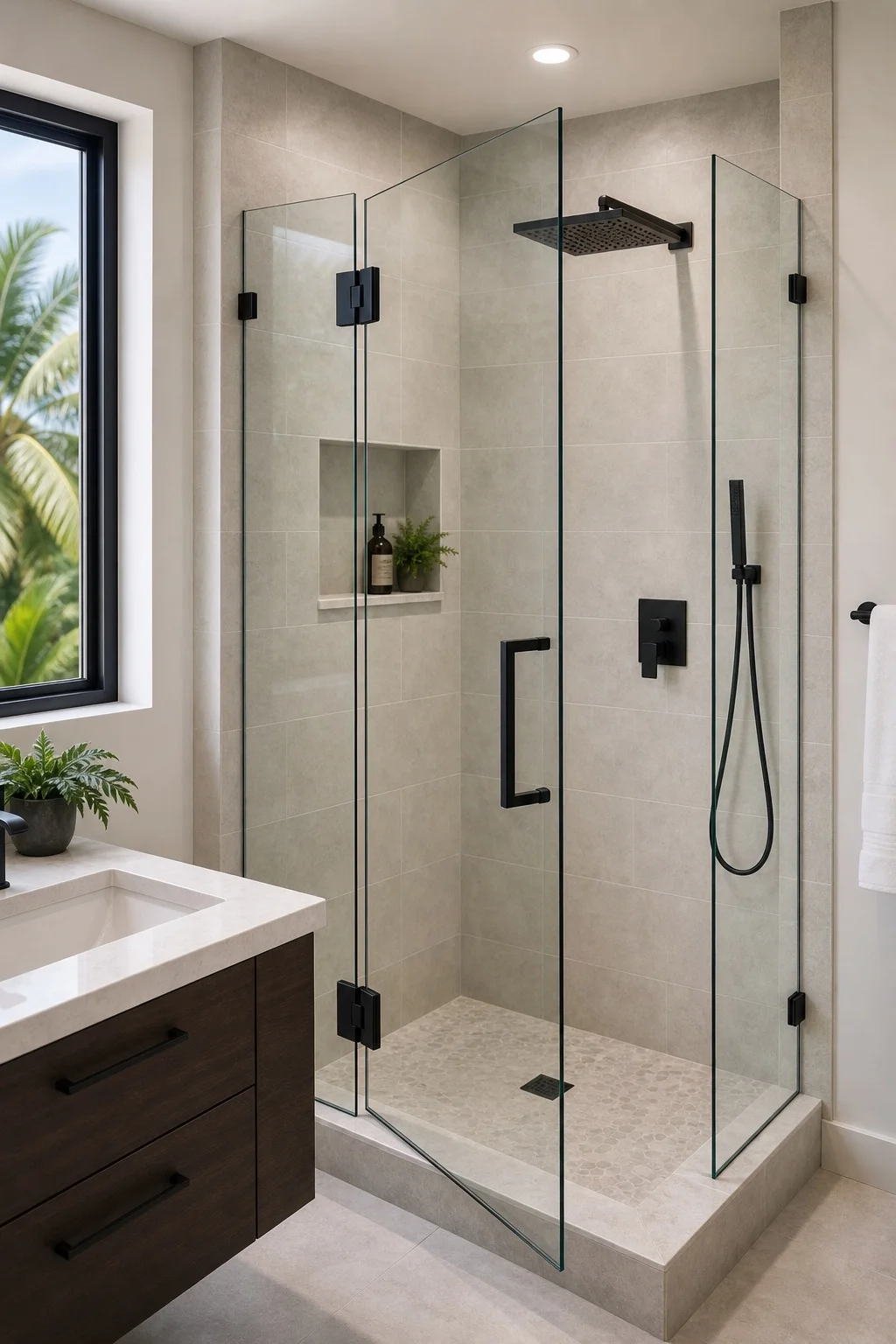
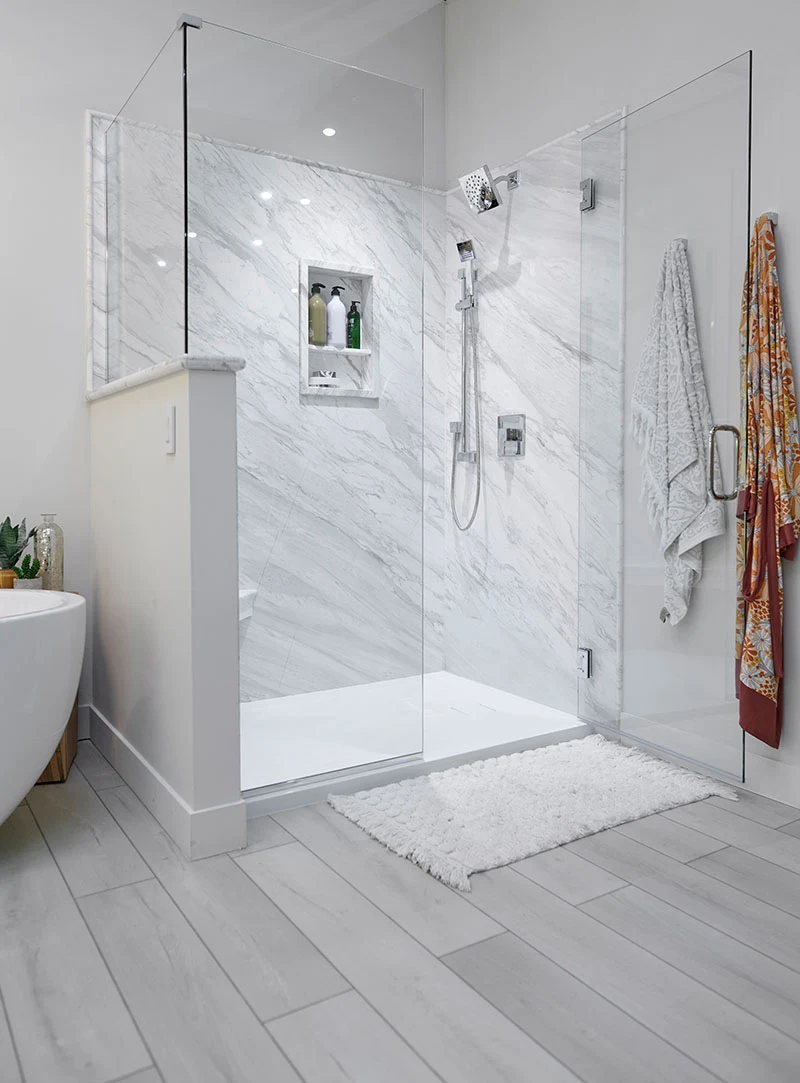
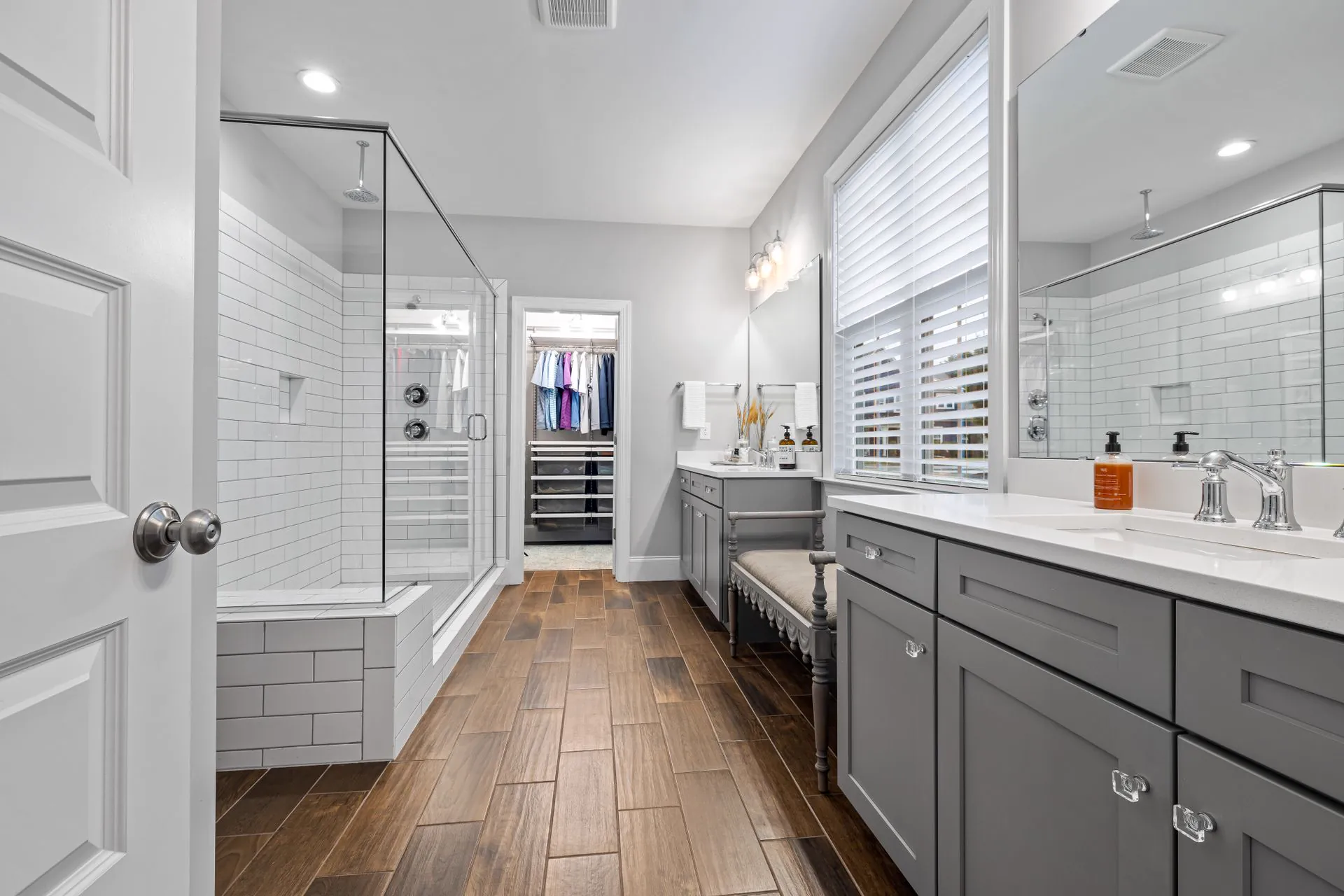
A walk-in shower with a low-threshold base takes the old tub out and puts a shower base in its footprint. The threshold, the lip you step over at the entry, sits lower than a standard curbed base, so you walk in and stand.
A low-threshold base with a built-in seat is the same shower with a bench built into the base at the end wall. You walk in, sit down, and wash with a handheld shower head.
Bulldog installs all three. The bases we offer come standard curbed, low-threshold or with a built-in seat, and a slip-resistant textured floor is available.
Walk-in tub vs. walk-in shower, side by side
| Walk-in shower | Shower with a seat | Walk-in tub | |
|---|---|---|---|
| Getting in | Low lip, then stand | Low lip, then sit | Low sill, then sit and close the door |
| During a wash | Stand | Sit or stand | Sit in deep water |
| Waiting on water | None | None | You fill it and drain it with you inside |
| A real bath | No | No | Yes |
| Best for | Steady on your feet, shower daily | Want to sit, don't want to wait | Bathes most nights and would miss it |
Step-in heights compared
The step is the reason you're reading this, so start there. In the CDC's look at bathroom injuries treated in emergency rooms in 2008, 9.8 percent happened getting out of the tub or shower and 2.2 percent getting in. You go in dry and come out wet. Our post on grab bars measures how high a cast-iron tub wall and a clawfoot rim stand.
A walk-in tub cuts that step to a sill. One 26-by-53-inch model's spec sheet lists a 7-inch step-in height, with a 17-inch seat and a 30-inch soaking depth. That's a low sill, though you still lift your foot over it and then turn to sit.
A low-threshold shower base takes the step lower than a standard curbed base, and there's no door to close behind you. For a sense of what "low" can mean, the federal accessibility standards for public and commercial buildings cap a transfer shower threshold at half an inch, or 2 inches in some existing buildings. A house isn't held to that code, and your consultant measures what your floor and drain allow before anyone promises a number.
Verdict on the step: the shower wins. There's no door to open and close behind you.
Fill and drain time with a walk-in tub
This is the part the brochures go light on. You sit in a walk-in tub before the water goes in, and you stay there until it's out, because the door seals against the water. Opening it with a full tub would put the bath on your bathroom floor.
Fill time depends on your plumbing more than the tub. One maker's fast-fill faucet is rated at up to 16 gallons a minute at 60 PSI, and the sheet says that's under ideal in-home plumbing conditions. The same sheet puts the drain at about 130 seconds, again under ideal conditions, with nobody in the tub. A 1920s house in Hyde Park or a 1960s ranch in Anderson Township may not deliver ideal anything, and a plumber can tell you what yours will.
Then there's the hot water. The 26-by-53 tub above holds an estimated 60 to 70 gallons with someone in it, and the same sheet notes its optional inline heater keeps water warm but won't heat cold water up to bathing temperature. Your water heater does that job, so check its size before you settle on a deep tub.
The walk-in tubs we install have a handheld shower wand, so you can rinse off before you open the door, and you can add a heated seat and backrest that keep you warm while the tub fills and drains.
Verdict on time: the shower wins. Nothing to fill, nothing to wait for.
Who needs a soak
The walk-in tub wins one category on its own: it's the only one of the three that gives you a bath. If a hot bath is part of how you end the evening, and you'd miss it, a shower of any kind takes something from you. Some walk-in tubs add water jets or air jets; others are a plain soaker.
The other two win if you've been taking showers standing in the tub for years and the last real bath was when the kids were small. In that case a walk-in tub is a lot of water and waiting to buy back something you don't use.
Verdict on bathing: the tub, for the person who bathes.
Sitting down: the shower with a seat
If the seat is what draws you to a walk-in tub more than the soak, look at the third option before you decide.
A low-threshold base with a built-in seat gives you the seat without the water. You walk over a low lip, sit on a bench built into the base at the end wall, and wash with a handheld shower head you can reach from the seat. Afterward you stand up and step out. No door to wait on, no drain to wait for. The accessibility standards put a shower seat 17 to 19 inches above the floor, and the walk-in tub above puts its seat at 17 inches.
The seat is part of the base, so it reads as a bench you set the shampoo on. Add a slip-resistant floor and a grab bar in the same finish as the faucet, and the shower looks like any other new shower.
Verdict on sitting: a tie, and the shower doesn't make you wait.
Space, the old tub and the rest of the bathroom
All three go in the alcove where your tub sits now. A walk-in tub sits in that space, and the consultant measures to make sure the model fits the alcove and swings its door the right way. A shower base fills the alcove wall to wall, with solid-surface walls and no grout lines.
A clawfoot freestanding in the middle of a room is a different job (keep the clawfoot or take it out covers that choice). Taking it out leaves a bare floor and pipes coming up through it, and either a shower or a walk-in tub means building an alcove or moving plumbing. That's a longer job than a straight swap, and we say so at the kitchen table.
How to pick, for the person in your bathroom
- You take a bath most nights and you'd miss it. A walk-in tub, as long as you're fine sitting in it while it fills and drains, and your water heater keeps up.
- You shower standing, but the tub wall worries you. A walk-in shower with a low-threshold base and a grab bar by the entry.
- You'd like to sit while you wash. A low-threshold base with a built-in seat and a handheld shower head.
If more than one person uses the bathroom, plan for the one with the bad knee. A seat in the shower doesn't get in the way of anyone who prefers to stand. If you're the grown child doing the looking, the bathroom safety check for your parent's house covers the rest of the room.
What Bulldog installs, and how long it takes
For the two shower options, our installers take the tub and its walls out to the studs in the morning, look at the subfloor and the pipes with the wall open, and have the new base, solid-surface walls and fixtures in by evening. You take your first shower the next morning. The rest of the room (floor, vanity, toilet) is a separate, longer job, and we tell you that before you sign. With promotional financing, qualified buyers get a new grout-free shower for as low as $150 a month, or 12 months no interest, on approved credit. What to expect on install day goes through it hour by hour.
Walk-in tubs go in without a major remodel, often in one day, and your consultant confirms the timeline after measuring. Homeowners 65 and older get a discount too; the consultant has the details, and current promotions lists what's running.
The same person who measures can show you a walk-in tub, a low-threshold base and a seat in one visit. Our walk-in tubs and accessibility page shows the tubs, seats and grab bars, and the tub-to-shower conversion page shows what the swap to a shower involves.
Staying in your house: a bathroom plan for the next 15 years puts these changes in order.