Key takeaways
- Most falls among people 65 and older happen at home, and in the bathroom most injuries happen in or around the tub or shower, with getting out far more common than getting in.
- On your next visit, measure the tub wall, watch what your parent holds onto, check the bath mat, walk the path from bed to bathroom in the dark, and look at the toilet.
- Night-lights, non-slip strips in the tub and a rubber-backed bath mat fix a lot that same afternoon.
- Talk about the house and the tub, not about your parent.
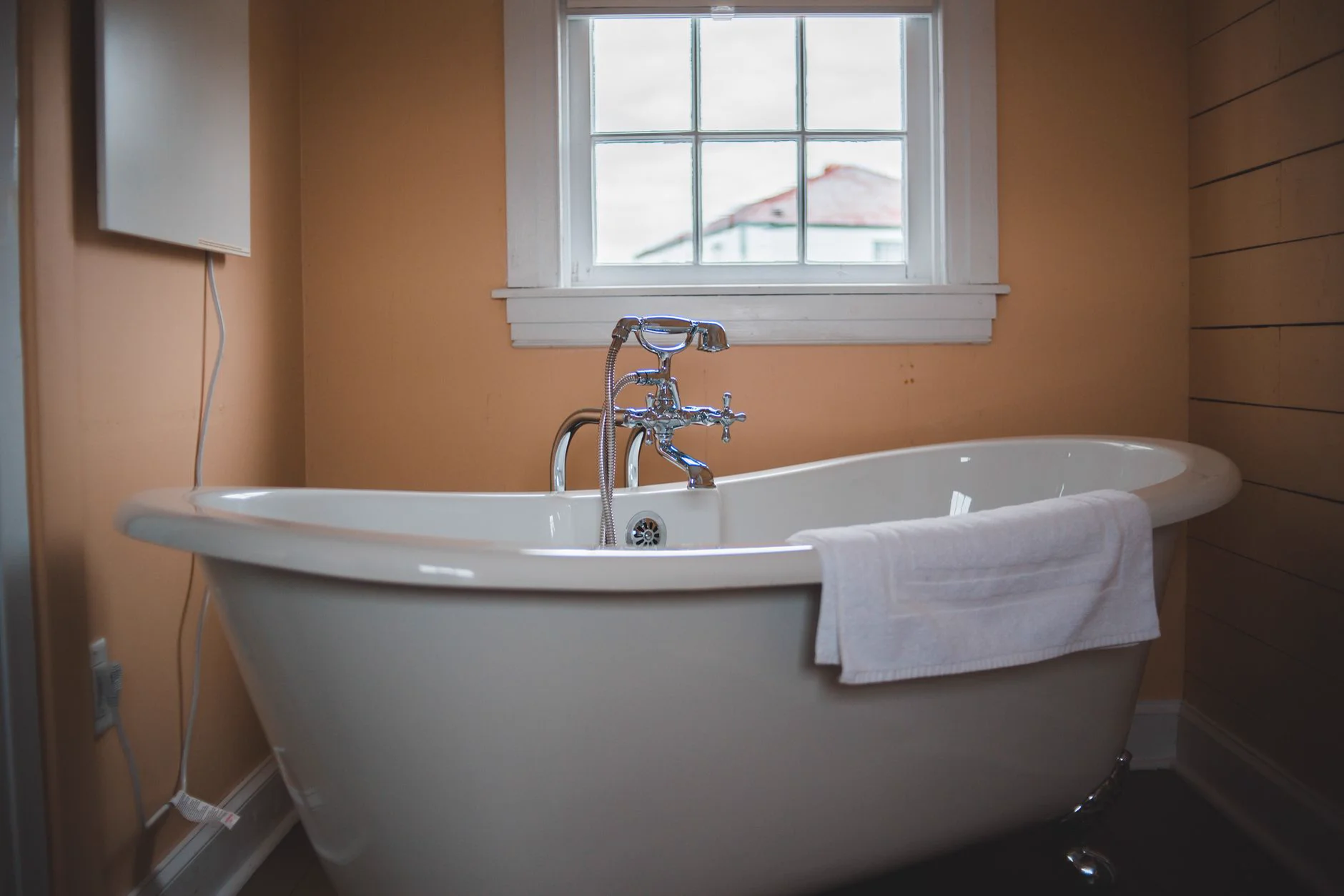
You drive over to your mom's on a Sunday, the 1920s Tudor in Hyde Park she has lived in since 1990, and she mentions that she has been taking sponge baths "for a while now." She says it the way she'd mention the weather. The upstairs bathroom has a clawfoot tub, a towel bar she has started using as a handle, and a bath mat that slides when you step on it. None of that is a crisis yet. It is the room to look at before it becomes one, and you can do it on your next visit with a tape measure and fifteen minutes.
Why the bathroom is the room to check first
The CDC says that about one in four people 65 and older reports a fall each year. Its guide for family caregivers says most falls happen at home.
Inside the home, the bathroom is where wet floors meet a high step. A CDC study of bathroom injuries among people 15 and older treated in emergency rooms in 2008 found that 68 percent happened in or around the tub or shower. Getting out of the tub or shower accounted for 9.8 percent of the injuries, and getting in accounted for 2.2 percent, by the same report. Your parent goes in dry and comes out wet, on one foot, holding a curtain.
What to bring
- A tape measure
- Your phone, for photos and a flashlight
- A pack of plug-in night-lights (the kind with a dusk sensor)
- Fifteen minutes in the evening, so you see the room at the light your parent uses it in
Step 1: Measure the tub wall
Run the tape from the bathroom floor to the top rim of the tub, on the side your parent steps over. Write it down.
That number is the height your mom lifts a wet foot every time she bathes. A standard alcove tub in a 1960s ranch and a clawfoot in a 1920s house sit at different heights, and our post on grab bars and tub walls gives the spec-sheet heights for both. If she sits on the rim and swings her legs over, or waits until someone is in the house to bathe, the rim is the problem, whatever the tape says.
Look at the tub floor too. The CDC's home safety checklist says to put a non-slip rubber mat or self-stick strips on the tub or shower floor. A smooth enamel floor with no mat is the smallest fix on this list.
Step 2: Watch what she grabs to get out
Ask your parent to show you how she gets out of the tub, dry and with her shoes on. Watch her hands. The usual answers in an older house:
- A towel bar, which hangs on two small screws in drywall or plaster
- The soap dish set into the tile
- The aluminum track of a sliding glass door
- The edge of the sink, a step away
None of those were made to be a handhold. The CDC checklist calls for grab bars next to and inside the tub, and next to the toilet. A grab bar should go into a stud or blocking, so it's a job for a handyman with a stud finder, not a suction cup. Take a photo of where her hand goes. That's where the bar belongs.
Step 3: The bath mat and the floor by the tub
Step on the bath mat with one foot and push sideways. If it slides on the floor, it's a hazard. The CDC's advice for throw rugs is to remove them, or use double-sided tape or a non-slip backing so they stay put. A mat with a rubber back that grips the floor is a ten-minute swap.
Then press your heel along the floor next to the tub. A spot that gives, or a finish floor that has lifted at the tub's edge, can mean water has been getting under there. Soft floor next to your bathtub covers the likely causes and a check from the basement.
Step 4: Walk the path from the bed at night
Turn off the lights and walk from your parent's side of the bed to the toilet, the way she would at 3 a.m. Count the light switches she'd have to find and the things she'd pass: a rug in the hall, a laundry basket, the step down into a bathroom some 1920s houses have.
The CDC checklist asks whether the path from bed to bathroom is dark and says to put in a night-light so you can see where you're walking. This is the step you can finish before you leave. Plug one in by the bed, one in the hall and one in the bathroom.
Step 5: The toilet
Have your parent sit down and stand up. Notice what she pushes off: the sink, the tub rim, the toilet paper holder, her knees.
The 2008 CDC study found that in people 85 and older, more than half of bathroom injuries happened on or near the toilet. Measure from the floor to the top of the seat. Section 604.4 of the ADA standards puts an accessible toilet seat at 17 to 19 inches, and allows 15 to 19 inches in the residential units it covers. A toilet near the low end is a long way down and a long way up. A taller toilet, or a bar beside the one she has, is a plumber's or handyman's job, not a remodel.
How to bring it up without saying "you're old now"
Your mom has used that tub since before you were born, and she knows it better than you do. What helps:
- Talk about the house. "That tub is a tall step for anybody" is a fact about a 1920s tub. "You're not steady anymore" is a verdict on her. The first one she can agree with.
- Ask her to show you. "Show me how you get out" gets a better answer than "do you ever slip," and you'll see the towel bar for yourself.
- Fix one thing that day. Plug in the night-lights and swap the mat before you leave. It turns the talk into an afternoon's help instead of a list of things wrong.
- Let her pick. Grab bars come in brushed nickel, matte black and chrome. If it matches her faucet, it reads as a towel bar to visitors.
- Have it one on one. Not at the dinner table with your brother and the grandkids listening.
If she tells you she has fallen, or that she's worried about falling, the CDC's caregiver guide says to talk to a healthcare provider.
What you can fix this visit, and what takes a pro
Night-lights, a rubber-backed mat and non-slip strips in the tub cost an afternoon. A grab bar into the framing is a short visit from a handyman. The tub wall itself stays where it is until someone takes the tub out.
That last one is where we come in. Bulldog guts the tub or shower area to the studs and has the new base, grout-free walls and fixtures in by evening, with the first shower the next morning. You can pick a low-threshold base and a built-in seat. The floor, vanity and toilet are a separate, longer job. If your parent's tub is past 20 years and you're weighing it, what fails first in an older shower helps you tell a tub worth keeping from one worth replacing, and our walk-in tubs and accessibility page shows the seats, bars and low-entry showers we install.
Staying in your house: a bathroom plan for the next 15 years puts these changes in order.