Key takeaways
- Modern grab bars come in finishes that match your faucet and shower head, and a walk-in shower with a low threshold and a built-in seat looks like any other new shower.
- The step that causes trouble is the tub wall, 14 inches high on a standard cast-iron tub.
- Two small changes make a tub safer this weekend, and a one-day shower replacement removes the step.
Your son sends you a link to a walk-in shower and you close it before the photos load. You live in a 1920s Tudor in Hyde Park with a clawfoot tub upstairs, you get in and out of it every morning without help, and you are not shopping for anything with the word "accessible" on it. Our installers hear a version of that in a lot of kitchens, and the people saying it are right about the feeling. Below are the five lines that come next, and what we say back.
"Grab bars are for old people": what grab bars look like now
The ones you are picturing are the hospital kind. White powder coat, a plate at each end with four screw heads showing, bolted beside a toilet at a height a nurse chose. Nobody wants that in a bathroom they paid to redo.
The reason for a grab bar is the floor. A shower floor is wet, you have soap on your hands, and getting out means putting your whole weight on one foot while the other clears the tub wall. The CDC counted bathroom injuries treated in emergency rooms in 2008 and found about 234,000 of them among people 15 and older, with two thirds in or around the tub or shower. Those numbers include people in their twenties.
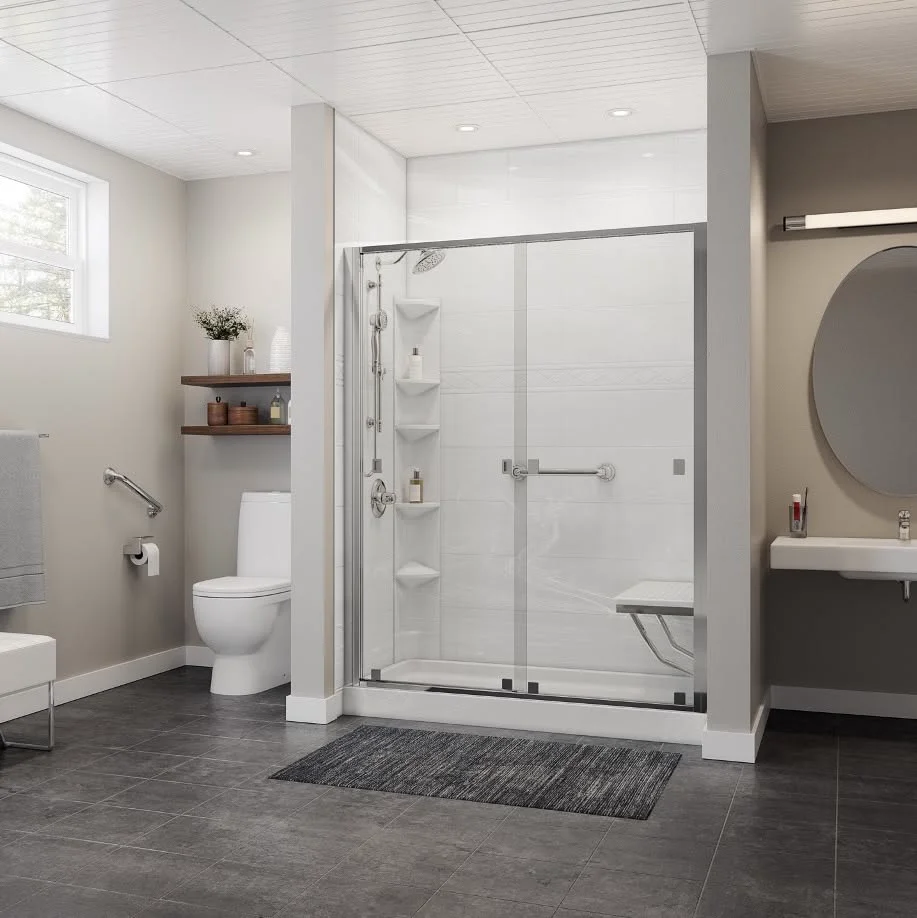
The bar we install differs from the hospital one in two places: the finish and the fastening. A bar in matte black or brushed nickel, the same finish as the shower head, mounted level with where your hand falls when you step out, reads as a towel bar to anyone who does not know. A towel bar hangs on two small screws; our installers anchor a grab bar to the framing, and the commercial standard for one, ADA section 609.8, calls for it to hold a 250-pound pull at any point along its length. A towel bar will not do that, which is the lesson in every bent towel bar our crews take off a tub wall.
"It will look like a nursing home": walk-in showers at home
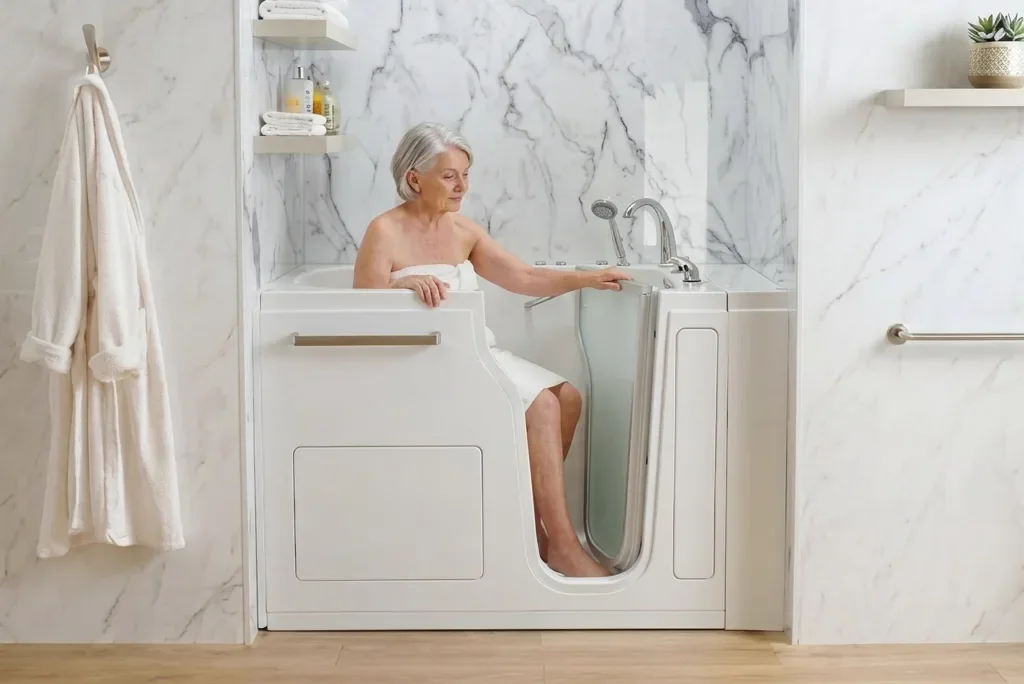
Some do. The ones in care facilities are white fiberglass with a fold-down plastic seat and a curtain on a ceiling track. If that is what "walk-in shower" means to you, you are right to want no part of it.
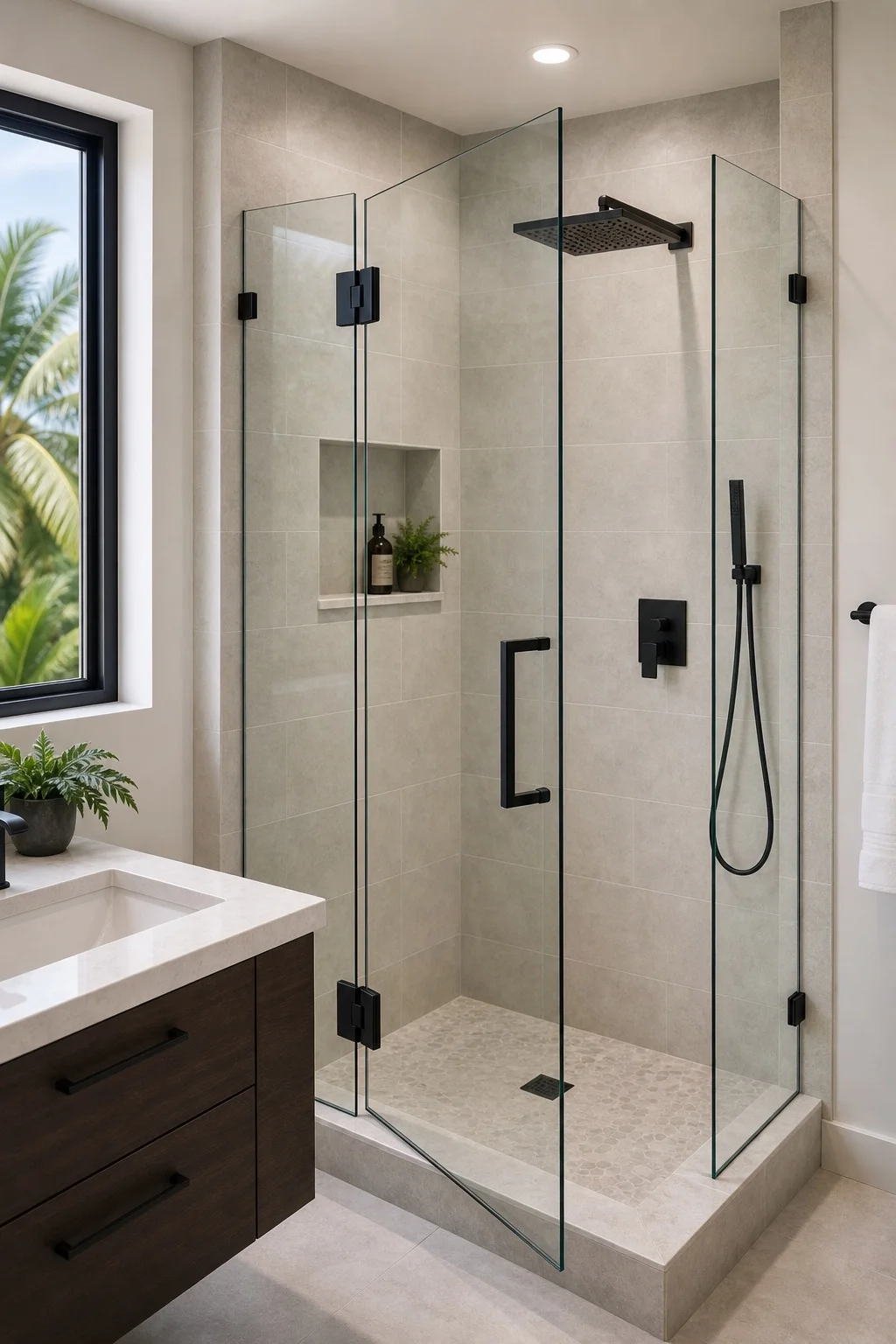
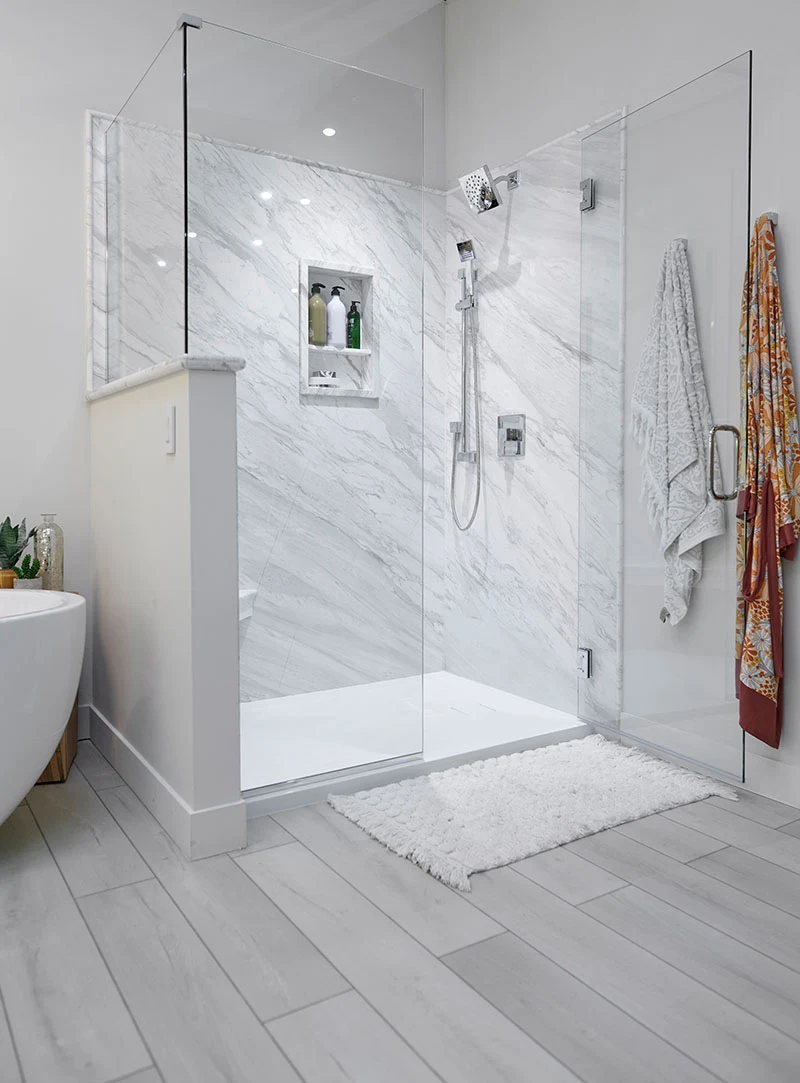
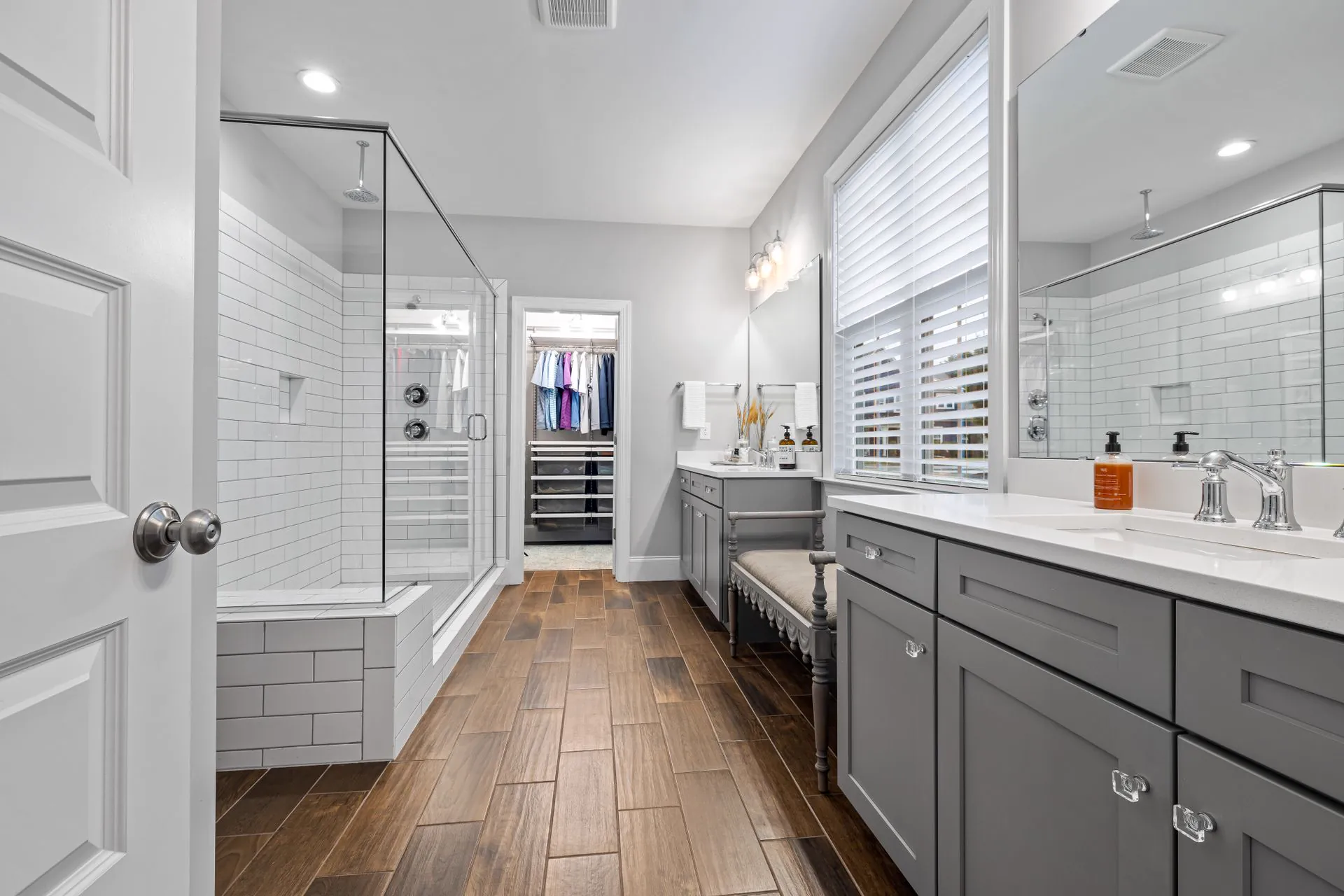
The look comes from the parts, and each part has a version that says nothing about who lives there. The threshold, the lip you step over to get in, runs a few inches on a standard base; a low-threshold base brings it down to a lip you step over rather than climb. A built-in seat at the end wall, in the same marble-look material as the walls, reads as a bench you set the shampoo on. A hinged glass door takes the place of the curtain, and walls in a Calcutta Marble or travertine pattern, the two looks most of our customers pick, take the place of white gloss. People who walk into that bathroom see a bathroom somebody redid.
"We'll do it when we need it": why waiting is the risk
This is the most reasonable line on the list, and the timing is the problem with it. The day you need it arrives as a knee replacement with a six-week recovery, or a spouse coming home from the hospital on Thursday. You are then choosing a shower in a hurry, from whatever can go in fastest, with a bathroom you cannot use in the meantime. Plan it a year ahead and the same job is a decision you make at your kitchen table, with the samples spread out and time to argue about the color.
There is a plainer reason too. Most of the showers we replace are 20 years old or older, and at that age you will be putting in a new base anyway. Picking the low-threshold version of it is one decision inside a job you are doing regardless.
"The tub is fine": how high your tub wall is
Say you are careful. The tub wall is still worth measuring. A standard cast-iron alcove tub, the 60-by-30 kind in a 1960s or 70s ranch in Anderson Township or Fairfield, stands 14 inches at the rim by Kohler's spec sheet for its Villager model. A 5-foot cast-iron clawfoot, the kind in a 1920s house in Hyde Park or Fort Thomas, Kentucky, puts its rim at about 23 and a half inches. Stepping out of one means lifting a wet foot close to two feet in the air onto a tile floor, while holding a shower curtain.
The CDC report splits the tub numbers the way our crews would. Getting into the tub accounted for 2.2 percent of the injuries. Getting out accounted for 9.8 percent, more than four times as many. You go in dry and awake; you come out wet and tired. The report also found the injury rate climbing with age, from about 112 per 100,000 people between 65 and 74 to 241 between 75 and 84, and the rim does not get any lower.
"Walk-in showers are for people who need help": who they suit
A low threshold and a seat suit the person who rinses a grandchild off after the sprinkler and the person who spent one winter on crutches in their fifties, and neither of them would call it medical equipment.
AARP asked adults 50 and older in its 2024 Home and Community Preferences Survey where they plan to live as they get older, and 75 percent said the house they are in now. Asked about changes they expect to need, 72 percent named grab bars. Three quarters of people your age plan to stay put, and most of them have thought about the bar.
Two ways to make your tub safer this weekend
Both make the tub you have safer.
- Take the sliding glass door off the tub. The bottom track is an aluminum rail screwed to the tub rim, it is the thing people grab when they slip, and the frame bends under a hand. Four screws and a putty knife for the old caulk, and a curtain goes on a tension rod. The tub rim is then the one thing to step over.
- Have a handyman screw a real grab bar into the framing, level with where your hand falls when you step out. Skip the suction-cup bars, which hold until the day they do not. A bar with a stud behind it is an hour's work, and the finish can match the faucet.
When to replace the tub with a walk-in shower
A bar and a curtain make a sound tub safer, and they leave the 14 inches, or the 23 and a half, where they were. If anyone in the house sits on the rim and swings their legs over to get in, or waits for someone else to be home before showering, the tub wall is the thing to replace. The same goes when the shower is past 20 years and you are pricing a regrout: new grout over the old tub keeps the step. Our tub-to-shower conversions page walks through what the swap involves.
How Bulldog builds a safer shower in one day
Bulldog's one-day wet-area gut takes the tub or shower area to the studs in the morning and rebuilds it by evening: a low-threshold base with a slip-resistant floor, solid-surface walls in the marble or travertine look you picked, a built-in seat if you want one, and grab bars in a finish that matches the fixtures. Our own crew, the same people who measured, does it in one visit, and you take the first shower the next morning. With promotional financing, qualified buyers get it for as low as $150 a month, or 12 months no interest, on approved credit. The floor, vanity and toilet in the rest of the room are a separate, longer job, and we say so before you sign.
If you are not there yet, and most people reading this are not, start with the two weekend steps above and keep this page for later. Our walk-in tubs and accessibility page shows the grab bars, seats and low-entry showers we install.
Staying in your house: a bathroom plan for the next 15 years puts these changes in order.