
Key takeaways
- A franchise one-day bath company and a local remodeler can both put in a good shower.
- The bids differ in five places: who installs, whether the old wall comes out or gets covered, how the price is presented, what the warranty says in writing and who you call later.
- Ask every company the same five questions and get the answers on paper.
- If you sign at your kitchen table, the FTC's Cooling-Off Rule gives you three business days to change your mind.
The postcard had a national name on it, and a salesperson came out on a Tuesday evening and sat at your dining table for two hours. The photos looked good. The price on the sheet came with a discount that ended when the visit did. Now you're wondering whether to call a local remodeler too, and what you would even compare once you have the second bid.
Either kind of company can put in a good shower. The difference between a one-day bath company and a local contractor shows up in five places on the bid: who installs it, what happens to the old wall, how the price reaches you, what the warranty says on paper, and who answers the phone in year six. Ask every company the same five questions and you'll see which bid fits your house.
We're a local remodeler, Bulldog Kitchen & Bath, in Cincinnati since 1993. Read this knowing which side of the table we sit on. The franchises do a few things better than we do, and we'll start there.
What a franchise one-day bath company does well
A national brand can buy bases, wall panels and doors for many locations at once. Ask to see the catalog; a big one can mean a wide choice of colors and shapes.
The process is usually standardized. When a brand sets the steps, the training and the product list, you have a fair idea of what you're getting before anyone parks, in Fort Thomas, Kentucky, or in Ohio.
A franchise location belongs to a business owner who pays for the name and the playbook. The people who come to your house work out of that local location.
What a local remodeler does well
A local company makes its decisions in town. If something about your job needs an answer, the person who can give it is a phone call away, not a regional office. A local remodeler can also adjust to the house in front of it, which counts in a 1920s Tudor in Hyde Park where nothing is square.
The fair concession: local remodelers vary more from one to the next than franchise locations of one brand do. No national office checks their work or their paperwork. A good one answers to you, and a bad one answers to nobody. That's why the five questions below matter most with a local bid.
The five things to compare in any bid
Put the bids side by side and ask each company the same questions. The answers in the table are what you may hear from either kind of company; the point is to get each company's own answer in writing.
| Question | Franchise one-day bath company | Local remodeler |
|---|---|---|
| Who installs? | Depends on the location: employees or subcontracted installers | Same split: own crews or subcontractors |
| Old wall out or covered? | Some install a liner over the old tub or wall; others tear out | Varies by company; ask |
| How is the price presented? | An in-home visit; style varies by location; ask if the price holds past today | An in-home visit; style varies by company; ask if the price holds past today |
| What does the warranty cover? | Set by the brand and the location; ask who honors it | Set by the company; ask how long it has been in business |
| Who do you call later? | The local location; ask who honors the warranty if it changes hands | The company itself |
Who installs: employees or subcontractors
Some franchise locations send their own employees. Others hire independent installers by the job. Local remodelers split the same way, and plenty of small local outfits subcontract the work too. Either can work; you should know which one you're getting.
Ask two things. Are the installers your employees? And will the person who measured my bathroom be there on install day? The FTC's advice is to hire only licensed and insured contractors and ask for proof of insurance. If the installers are subcontractors, ask whose insurance covers them in your house.
The old wall: gutted or covered with a liner
A liner is a formed acrylic shell set over the existing tub or wall. Demo is light and the job goes fast. On a sound wall with a dry floor, a liner can serve for years.
A gut takes the old tile and the board behind it out to the studs. The crew sees the subfloor and the pipes with the wall open. On a 25-year-old shower where the tile sounds dull when you tap it, or the floor by the tub gives under your heel, that look behind the wall is the reason to choose a gut. A liner covers whatever is back there.
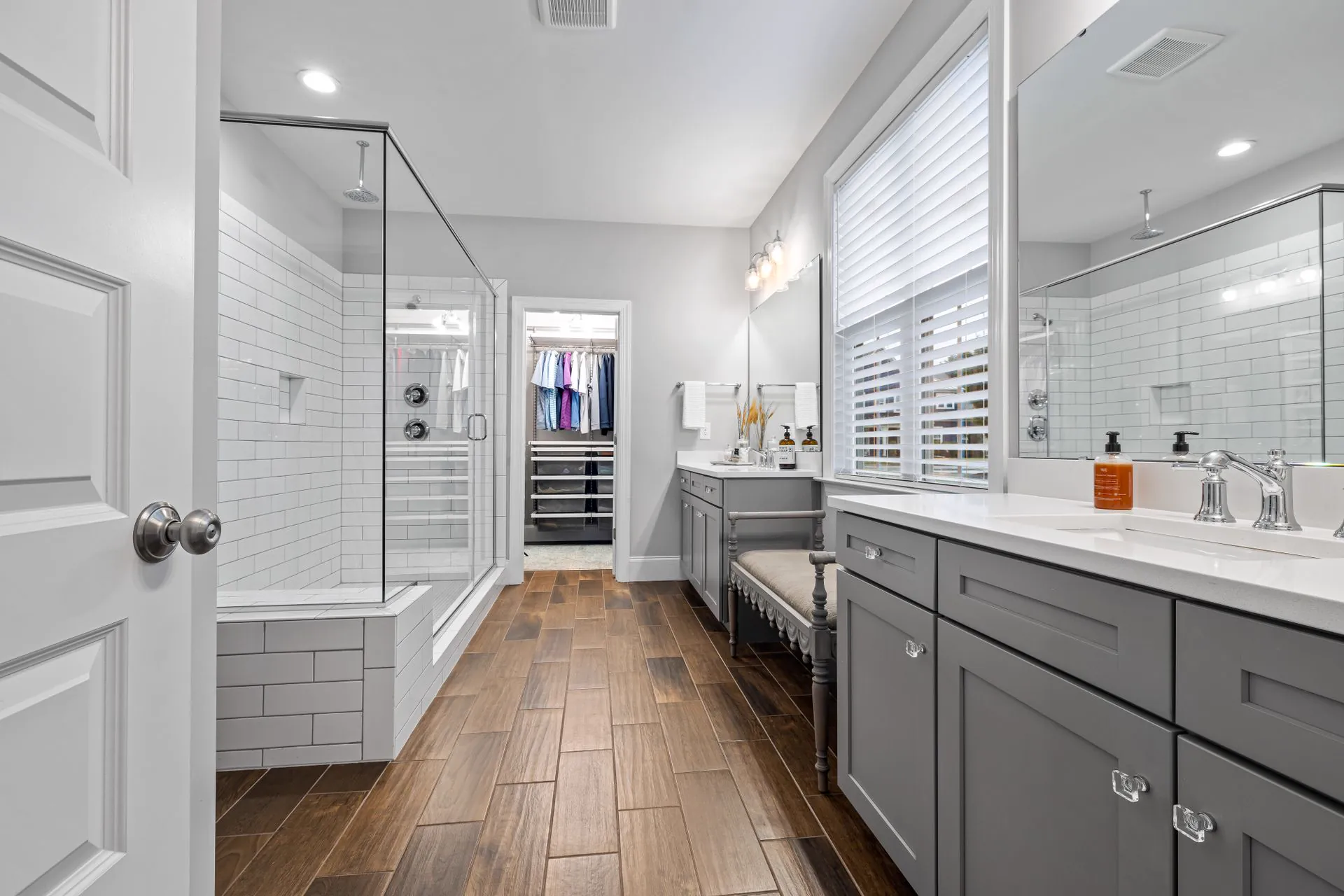
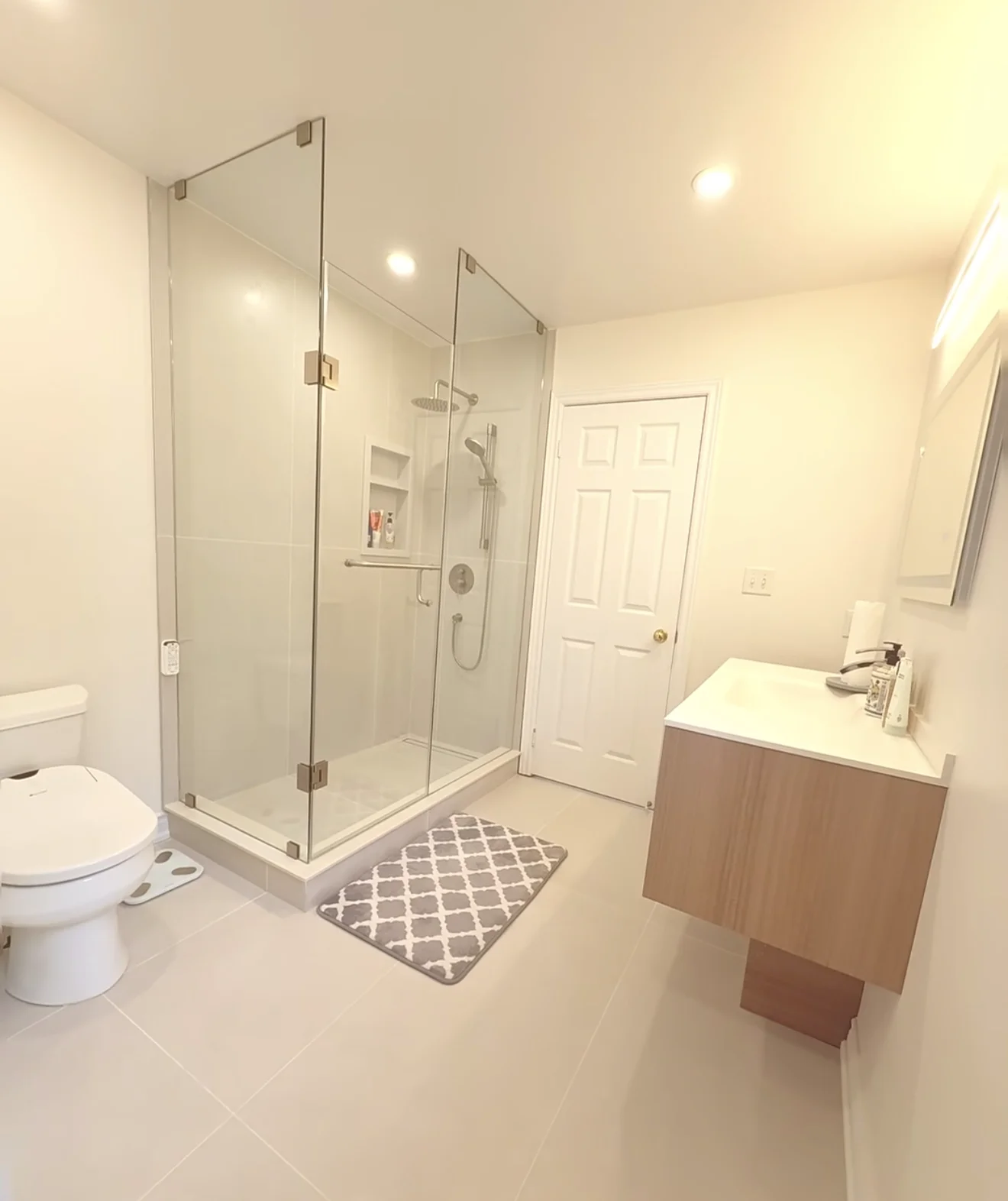
Either kind of company may offer either method, so ask which one this bid is, and get it written on the quote. A liner over old tile vs. a gut to the studs shows how the two look different once they're in.
How the price is presented
An in-home visit is normal for both kinds of company, and it makes sense: somebody has to measure the bathroom. The part to watch is a price that's only good tonight. The FTC lists pressure for an immediate decision among the tactics home improvement scammers use. A same-day discount doesn't make a company dishonest. It does give you a number you can't compare with anyone else's, and it puts the clock on their side. How to read a bathroom remodel quote shows what each line on a written number should tell you.
Three FTC points to hold onto before you sign anything:
- Don't pick the lowest bid by default, and ask why when two estimates are far apart, per the FTC's home improvement scam guidance.
- Don't pay the full cost up front, and hold the final payment until the work is done, from the same FTC page.
- Compare loan terms before you accept financing the contractor offers, which applies to our financing as much as anyone's, per the FTC.
If you do sign at the kitchen table, the FTC's Cooling-Off Rule gives you until midnight of the third business day to cancel a home sale of $25 or more for a full refund. Saturday counts as a business day; Sunday and federal holidays don't. The seller has to tell you about that right when you sign and hand you two cancellation forms and a dated contract with the company's name and address. A sale at a temporary location the seller rents, such as a convention center or fairground, is covered too, at $130 or more. Mail the cancellation before the deadline; the FTC suggests certified mail with a return receipt.
Warranty terms in writing
"Lifetime warranty" means different things on different contracts. Ask four questions and get the answers on paper:
- Does it cover the product, the labor, or both?
- Whose lifetime: yours, the house's, or the product's?
- Does it stay with you if the company changes owners?
- Who comes out when you call?
The FTC says to write any verbal promises about the work and the costs into the contract. A warranty the salesperson described and the contract doesn't mention is one you'll have trouble using.
Who you call later
With a franchise, you call the local location. If that location closes or sells to a new owner, ask now who honors the warranty then: the new owner, the national office, or nobody. With a local remodeler, you call the company. Local companies close too, so ask how long this one has been around and where its office is.
Where Bulldog lands on those five
Here are our answers, so you can hold them up against the other bids.
Who installs. Our own crews, background-checked. The same people who come for the consultation come back to install.
The old wall. We gut the shower or tub area to the studs and rebuild it in a day. The base, walls and trim are custom-measured at the consultation and made before install day. The crew sees the subfloor and the pipes with the wall open. The new base, grout-free solid-surface walls and fixtures are in by evening, and you take your first shower the next morning. The rest of the room (floor, vanity, toilet) is a separate, longer job, and we tell you that before you sign. What a wet-area gut is goes through what comes out and what stays.
The price. A design consultant comes to the house, measures, brings samples of colors and finishes, walks you through the options and recommends what fits. Then you get a written quote, which you can read after we've left.
The warranty. Lifetime, on the product and the work, for as long as you own the home. Each job also gets a dedicated project coordinator.
Who you call. Us. Our showroom is at 1776 Mentor Ave in Cincinnati, and the number is (513) 657-3750. We're licensed and insured, and we've been answering that phone since 1993.
If you are...
Leaning toward the franchise bid you already have. Ask the five questions, get the answers written into the contract, and sign if you like them. A good franchise location puts in a good shower. Our only ask is that you compare it against a second written number first.
Still uneasy after a long pitch in your living room. You're not stuck. If you signed, you have the three business days. If you didn't, get a second bid from a company that leaves a written quote and goes home.
Living in a 1960s ranch with a soft spot by the tub. The brand matters less than the method. Ask both companies whether they take the wall to the studs and look at the subfloor, and pick the one that says yes in writing. We've pulled a lot of almond tile out of Anderson Township, and the floor under it is the part nobody can see from the dining table.
"Isn't the bigger company the safer one?"
Size buys a system, a catalog and a name you've seen on TV. It doesn't change who stands in your bathroom on install day; that's a local crew either way, employees or subcontractors. The five answers on paper tell you more than the size of the ad spend.
Before anyone measures, read the three questions to ask a bathroom contractor before a deposit, and bring them to every visit, ours included. If you want to see what our install day looks like, the one-day remodel page walks through it, and the estimate form puts a consultant at your kitchen table with a tape measure and samples.
One-day shower replacement in Cincinnati puts the whole job in one place: what it covers, what it doesn't, and how to judge a bid.