Key takeaways
- A wet-area gut takes out the old tub or shower, the tile and the wall surface behind it, down to the studs.
- The new base, solid-surface walls and fixtures go in the same day, and you shower the next morning.
- The floor, vanity, toilet and layout stay as they are.
- The wet area is the part of an older bathroom that takes on water every day, so it is the part worth taking all the way back.
You've had two or three people out to look at the master bath, and each one used a different word: "remodel," "liner," "full gut." Ours is "wet-area gut," and it's worth five minutes to know what it covers before you compare bids.
A wet-area gut renovation takes the tub or shower area of your bathroom down to the studs and rebuilds it in one day. The rest of the room, meaning the floor, the vanity, the toilet and the layout, stays where it is. Below are the questions homeowners ask us most about it, grouped by what comes out, what goes in, what stays and what to ask.
What a wet-area gut renovation means
What is the "wet area"?
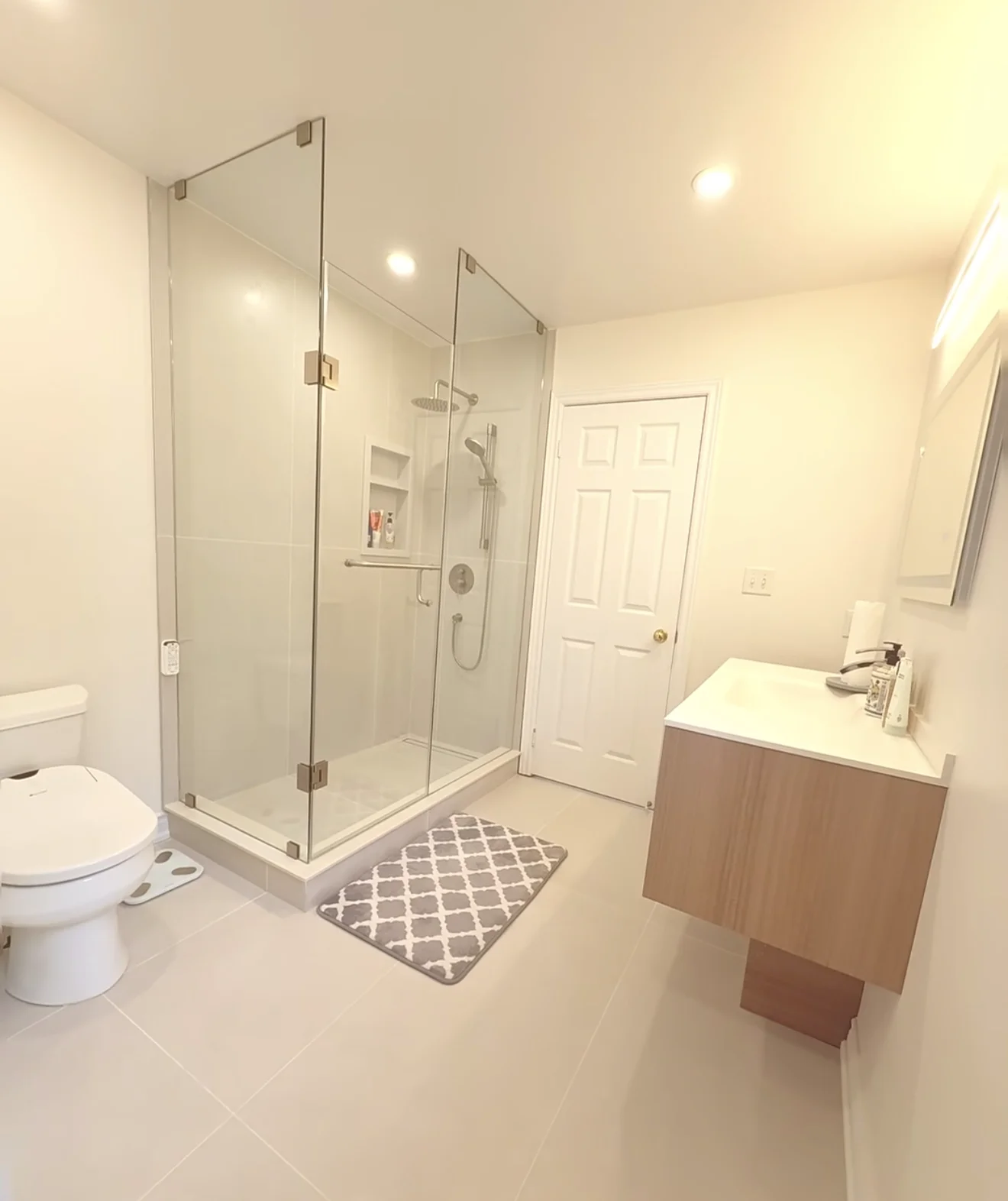
The wet area is the part of the bathroom that gets wet every day: the tub or shower base, the walls around it up to the ceiling or the top of the old tile, and the plumbing fixtures in that wall. In a 1968 ranch in Anderson Township, it's the five-foot alcove with the almond tile and the sliding glass door.
Why "gut" and not "replace"?
"Gut" means the wall comes back to the framing. Some products go over the old tile or slide a new shell into the old tub. A gut takes the tile and the wall surface behind it out, so no old tile or wallboard stays hidden under the new wall. That's the difference you're paying for, and it's the first thing to ask anyone who bids the job: does the old tile come out, or does something go over it?
Is this the same as a full bathroom remodel?
No. A full gut of the whole room includes the floor, the vanity, the toilet and sometimes a new layout, and that takes longer than a day. We say so up front, before anyone signs. The one-day job is the wet area.
What comes out on install day
The crew that measured your bathroom is the crew that shows up. In the morning they remove:
- The old tub or shower base.
- The tile on the tub or shower walls.
- The wall surface the tile was stuck to, whether that's a mortar bed, greenboard or plaster, down to the studs.
- The old fixtures in that wall, such as the spout, the handle and the showerhead.
What does the crew find behind the wall?
With the wall open, the crew sees the subfloor under where the tub sat and the pipes in the wall. In a house from the 1960s, that's often the first time anyone has seen either one since the house was built. What's behind the shower tile in a 1960s Cincinnati bathroom goes through what those walls are made of, layer by layer.
Timing is why a slow leak behind tile does damage. The EPA says water-damaged materials need to be dried within 24 to 48 hours to keep mold from growing, and that porous materials that turn moldy may have to be thrown away. A wall that takes in water through the grout every morning can get wet again before it has dried.
What happens if they find rot or old pipe?
Ask this one at the kitchen table, not on install day. Have the consultant show you how your written quote handles wet subfloor under the old tub, old pipe in the wall, or anything else the crew finds once the wall is open, and whether the quote can change after demo. Get the answer in writing with the quote.
What goes in the same day
The new pieces are measured in your bathroom at the consultation and made to those numbers before install day.
- The base. A standard curbed base, a low-threshold base, a base with a built-in seat, or a neo-angle corner base. A slip-resistant textured floor is available.
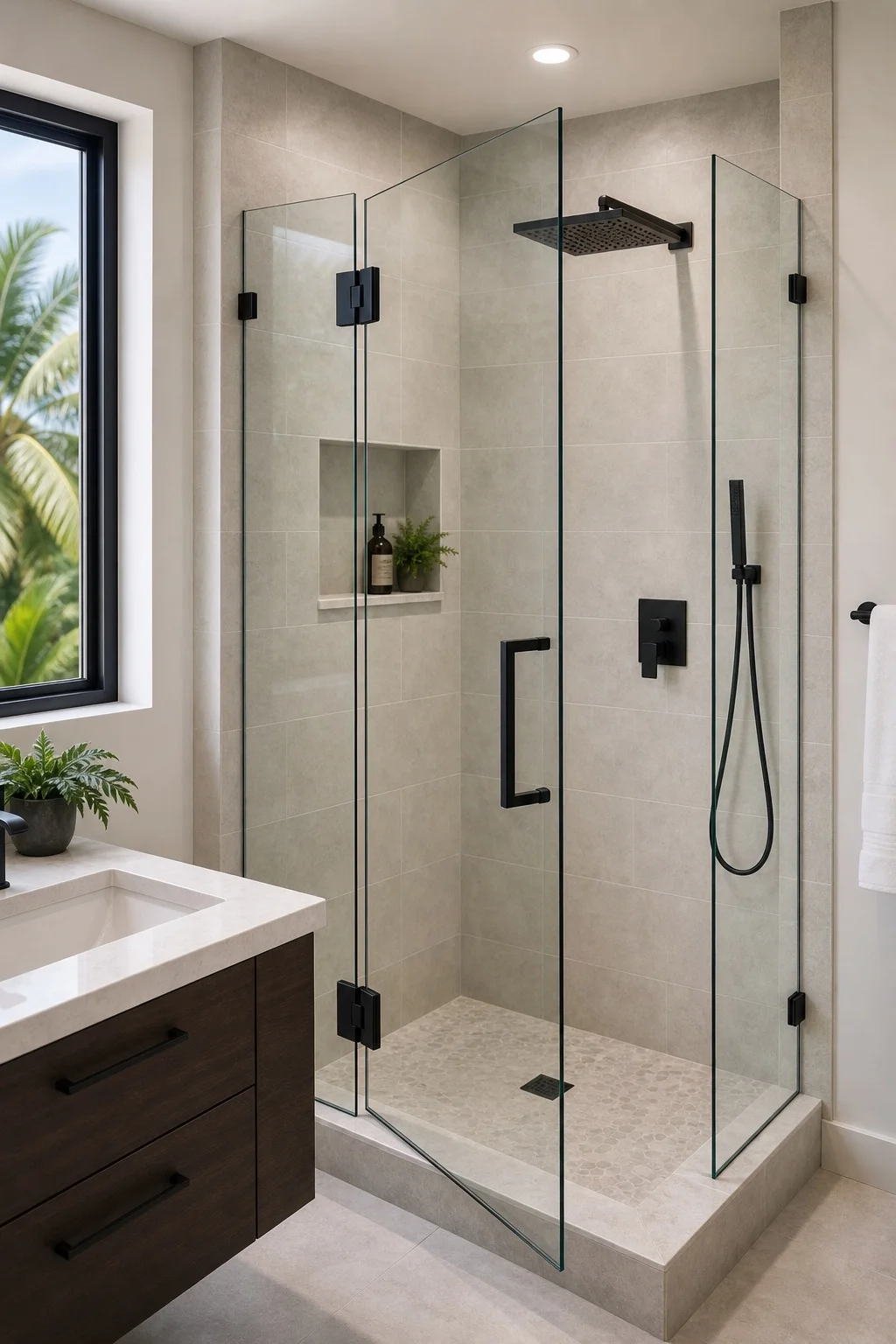
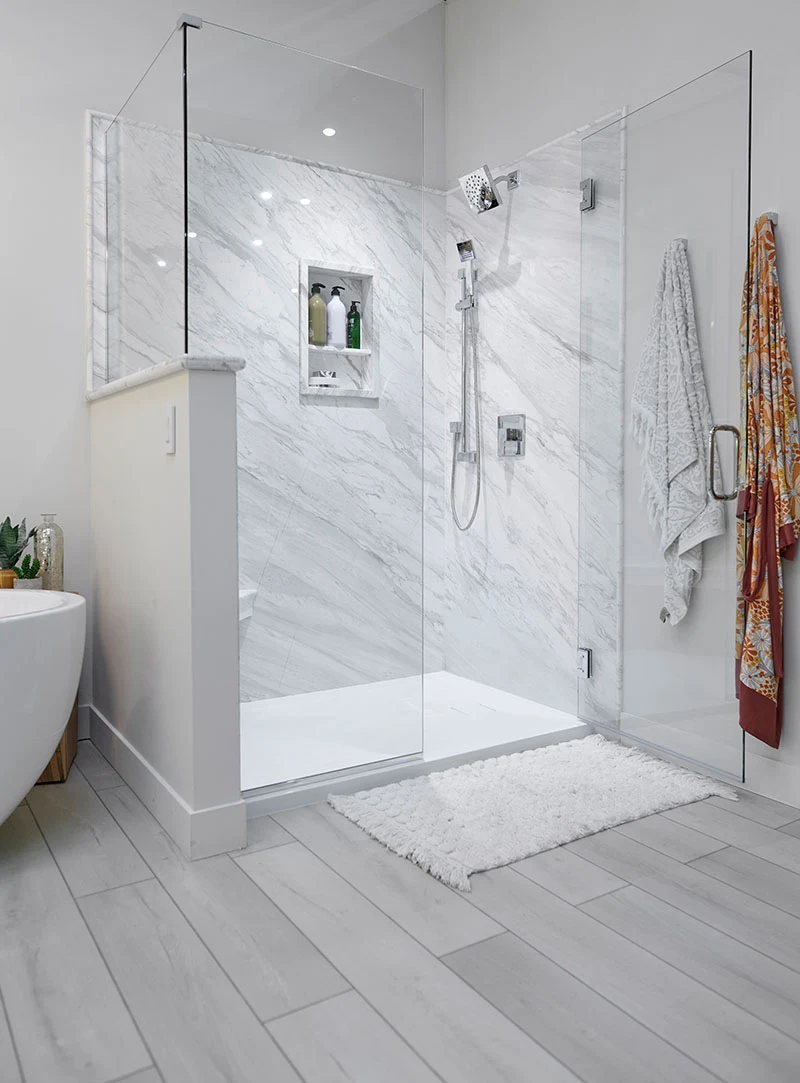
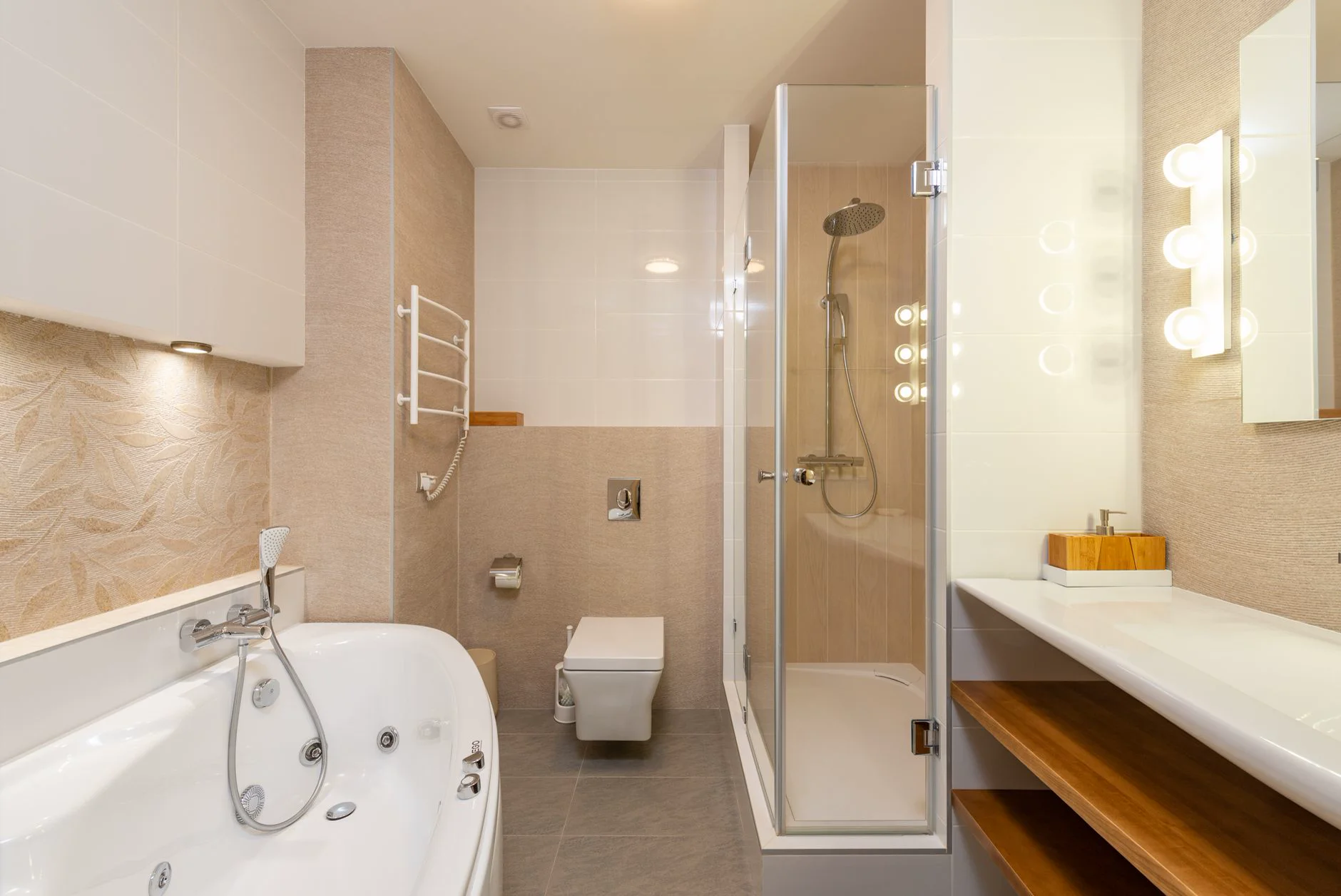
- The walls. Solid-surface panels, installed over a prepared substrate. They're non-porous with no grout lines, so there's nothing for mildew to grow in, and they resist mold, mildew and stains.
- The showerhead and door. A rain or handheld showerhead, and the door: sliding, hinged, frameless, or a curtain rod if you'd rather.
- The extras you picked. A recessed niche, shelves, a built-in seat, towel bars.
The marble and travertine looks are what most of our customers pick. If you want the look of tile, the same material comes in subway, herringbone and hexagon patterns, as one panel with no grout to scrub or seal. Colors and patterns shows all of them.
By evening the new base, walls and fixtures are in. The crew cleans up, walks you through the shower, leaves written care instructions and registers your warranty. You don't shower that night. Your first shower is the next morning. Care from then on is mild soap and water, with no abrasive pads and no harsh cleaners.
What to expect on a one-day bathroom remodel walks through that day with the clock on it.
What stays the same
| Part of the room | In a wet-area gut | How long |
|---|---|---|
| Tub or shower area | Gutted to the studs, rebuilt | One day |
| Floor | Stays | Changing it is a separate, longer job |
| Vanity and toilet | Stay | Changing them is a separate job |
| Layout and plumbing walls | Stay | Moving them takes longer, said up front |
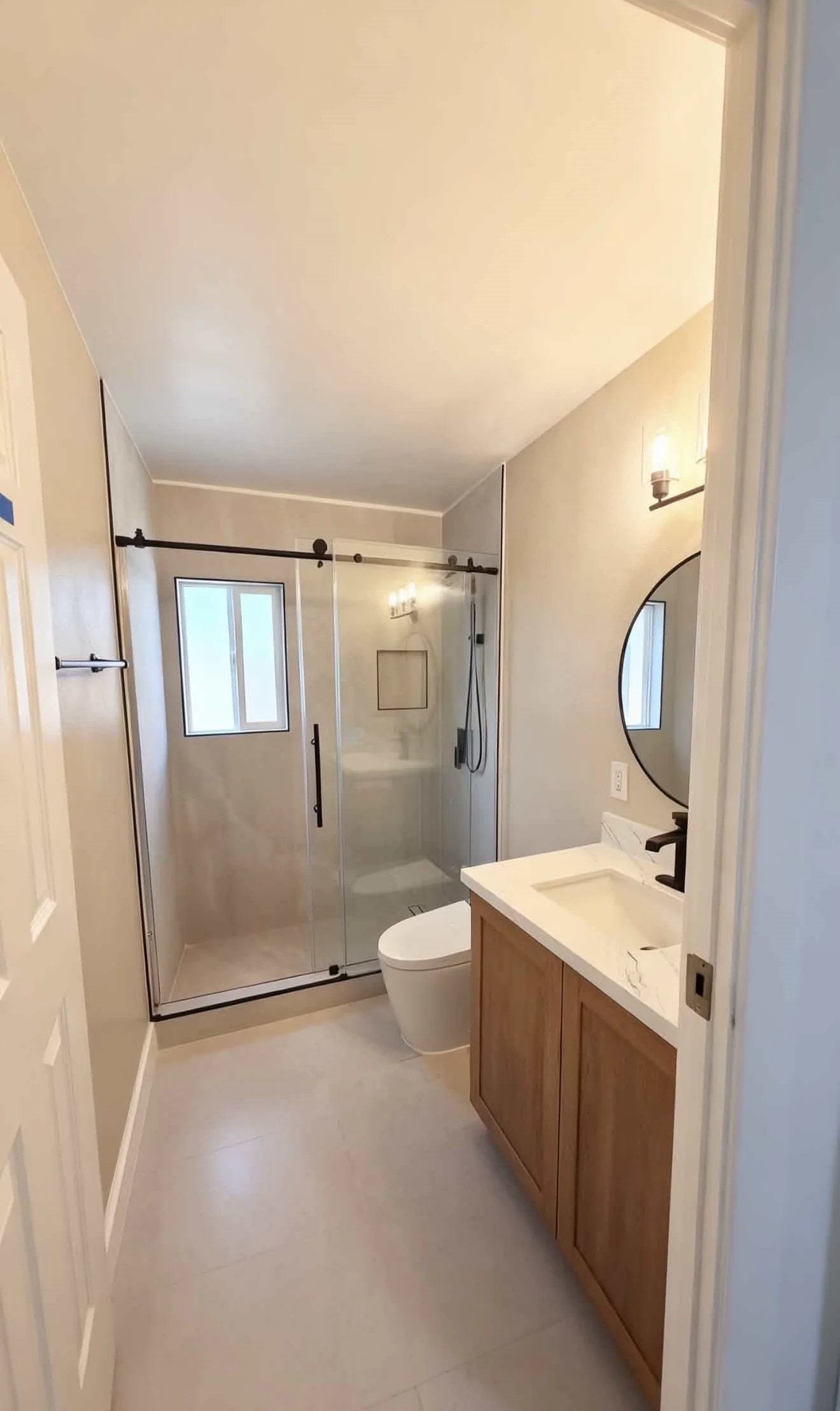
The floor, vanity and toilet stay where they are and stay in use. The shower stays in the same alcove, with the plumbing on the same wall. If you want the shower on a different wall, or the alcove pushed into a linen closet, that's a layout change and it runs longer.
Can I keep a vanity I put in five years ago?
Yes, if you like it. Pick the wall color with the vanity top and the floor in the room, in your own bathroom light. Can you replace only the shower and keep the vanity and floor? covers when that works, when it doesn't, and the strip of floor at the tub edge to ask about. If the floor gives farther out than the tub, or around the toilet, the floor is its own job and shouldn't wait.
Why the wet area is the part that matters
When an older tiled shower fails, it usually goes from the face inward: grout first, then the caulk at the tub, then the board behind the tile, then the subfloor under the tub. Every one of those steps happens inside the wet area. The vanity and the floor in the rest of the room don't sit under a shower head every morning, so in many 1960s and 70s bathrooms they're in better shape than the shower.
The showers our crews replace are mostly 20 years old and older. Past that point, new grout on the front of the wall is new grout on whatever is behind it. Taking the wet area to the studs is how the crew gets to see what's back there, without tearing up a floor that's fine. The signs your shower needs replacing lists the checks, in the order a shower fails, if you're not sure you're there yet.
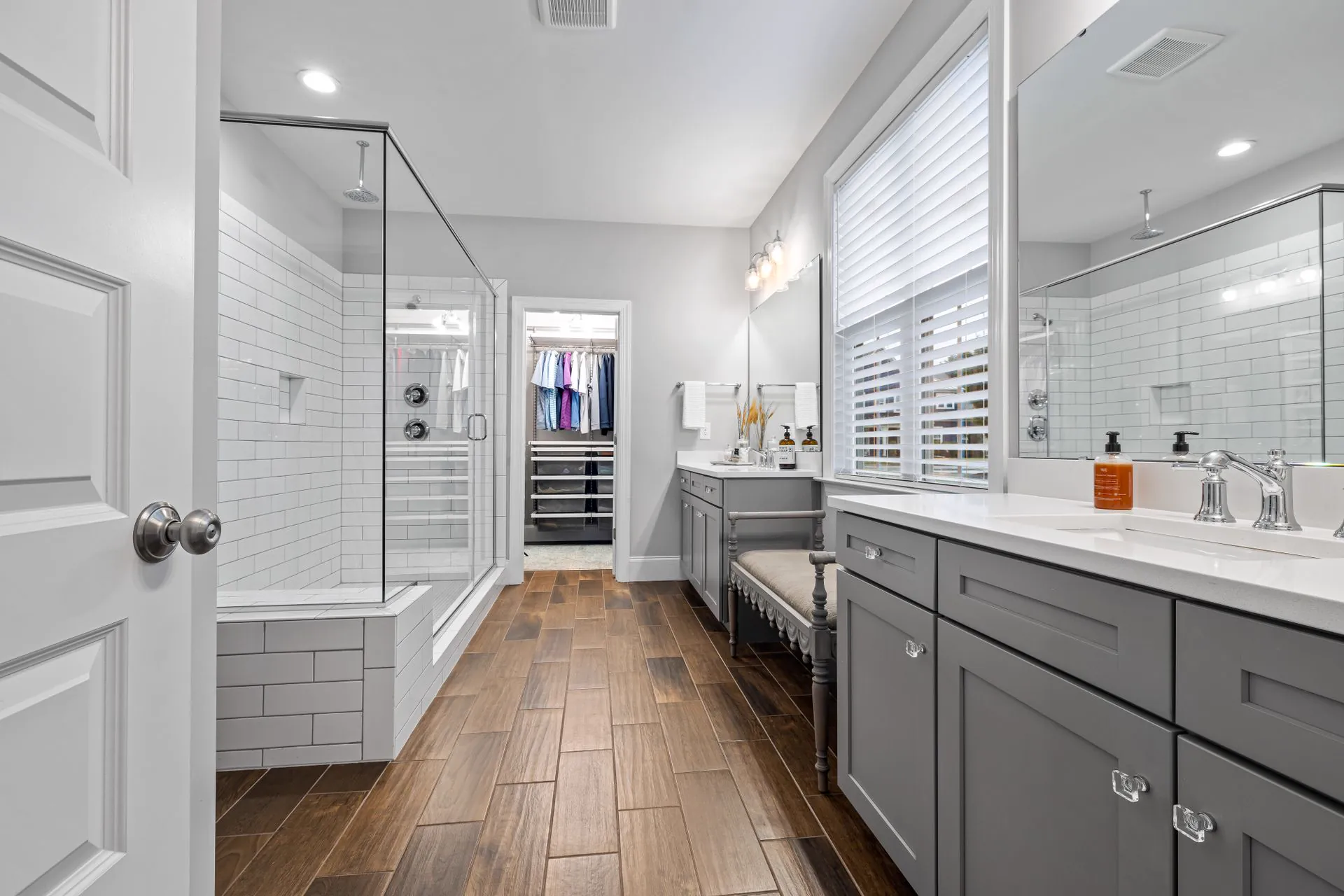
Tile set by a good tile contractor over cement board and a waterproofing layer is a sound shower too. It has grout joints that need sealing, and the setting and grout cure times usually spread the job across several days. We build the grout-free kind, in a day.
What to ask before you book a wet-area gut
Bring these to any estimate, ours included:
- Do the old tile and the wall behind it come out to the studs, or does something go over it?
- Are the base and walls measured in my bathroom and made to those numbers?
- How does the written quote handle what the crew finds once the wall is open, and can it change after demo?
- Is the same crew measuring and installing?
- What does the warranty cover, and for how long?
Here's how we answer them. The old tile and the wall behind it come out to the studs. Number 3 is one to ask our consultant at the estimate, and get the answer in writing. Our consultant measures the tub or shower area at the first visit and gives you a written quote. The base, walls and trim are made to those numbers. The same background-checked crew that measured comes back to install, and a project coordinator is your contact from start to finish. The lifetime warranty covers the product and the work for as long as you own the home.
With promotional financing, qualified buyers get a new grout-free, mold-resistant shower for as low as $150 a month, or 12 months no interest. Both are on approved credit.
To get your wet area measured, book a free in-home estimate on the contact form or call (513) 657-3750. We've worked in Cincinnati bathrooms since 1993, and the quote is written and free.
One-day shower replacement in Cincinnati puts the whole job in one place: what it covers, what it doesn't, and how to judge a bid.