Key takeaways
- The panel showers that look like a plastic insert are most often stock kits or liners glued over the old tile.
- A made-to-fit solid-surface wall is measured in your bathroom, comes in marble, travertine and tile-look patterns, and goes up after the old wall comes out to the studs.
- Judge any panel from the doorway and from six inches away, look at the samples in your own bathroom light, and ask whether the old wall stays or goes.
Your daughter-in-law has nice taste, and the last panel shower you stood in was the one at the lake house your brother rents every July: white, shiny, and a little hollow when you leaned on it. So when the hall bath in your ranch came up at dinner and your spouse said "one of those wall systems," you picked up the iPad and typed "acrylic shower walls look cheap." That's a fair worry. Some of them do look that way, and the reasons are specific enough that you can spot them from the bathroom door.
Why some acrylic shower walls look like a plastic insert
The shower you're picturing is one of two products, and neither one is what we install.
The first is the stock tub surround kit from the home store. It comes in a box in a few standard sizes, and the installer trims it to fit whatever alcove you have. The kit doesn't know your walls are out of square, and the top edge stops where the box says it stops, with painted drywall above it. Gloss white plastic, a stock size trimmed to an alcove it wasn't made for, and painted drywall above the top edge: that combination is what reads as "rental."
The second is the liner. A liner is a formed shell set over your old tub and tile walls instead of replacing them. It looks newer than what was there, and it goes in fast. The old wall stays behind it, along with anything wet in it, . Look at the edges around the window casing and at the end of the wall: that's where you can see whether a new surface sits on top of an old one.
A liner over old tile vs. a gut to the studs
This part has nothing to do with looks, and it matters more than looks. The board behind old tile can be wet, and a shell set over it leaves that board, and whatever is in it, in place. The Environmental Protection Agency's homeowner guide says to dry water-damaged areas within 24 to 48 hours to prevent mold, and it tells homeowners, "Do not paint or caulk moldy surfaces." The same guide says porous materials that have gone moldy may have to be thrown away. With a liner, nobody looks at that board before it's covered.
Our crews take the tub or shower area to the studs. The old tile, the board behind it and the old tub or base come out, the crew sees the subfloor and the pipes with the wall open, and the new walls go up over a prepared substrate. If you want to know what's likely back there in a house your age, the signs your shower needs replacing walks through it in the order it fails, with a tap test you can do this weekend.
What makes a made-to-fit wall look different from a kit
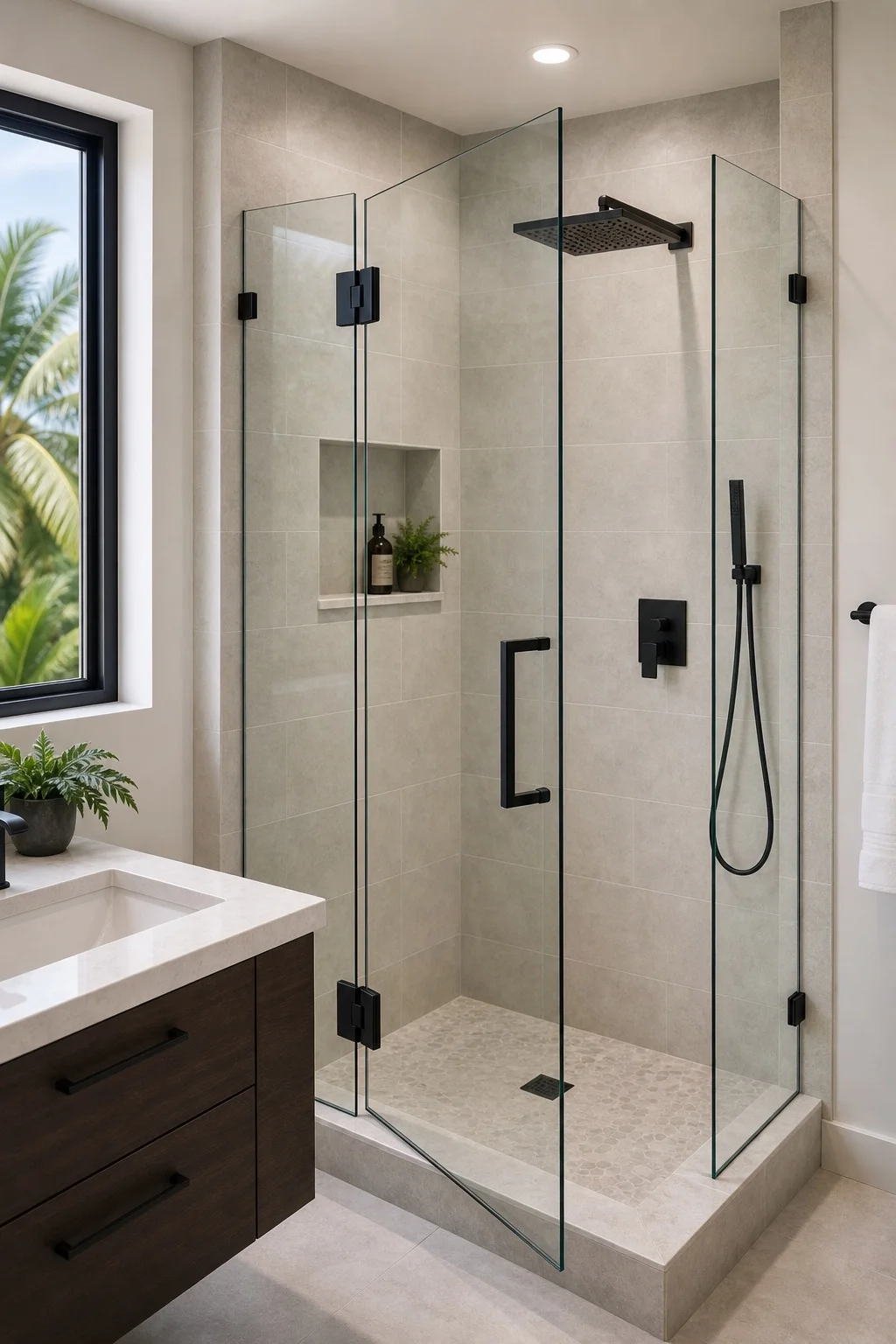
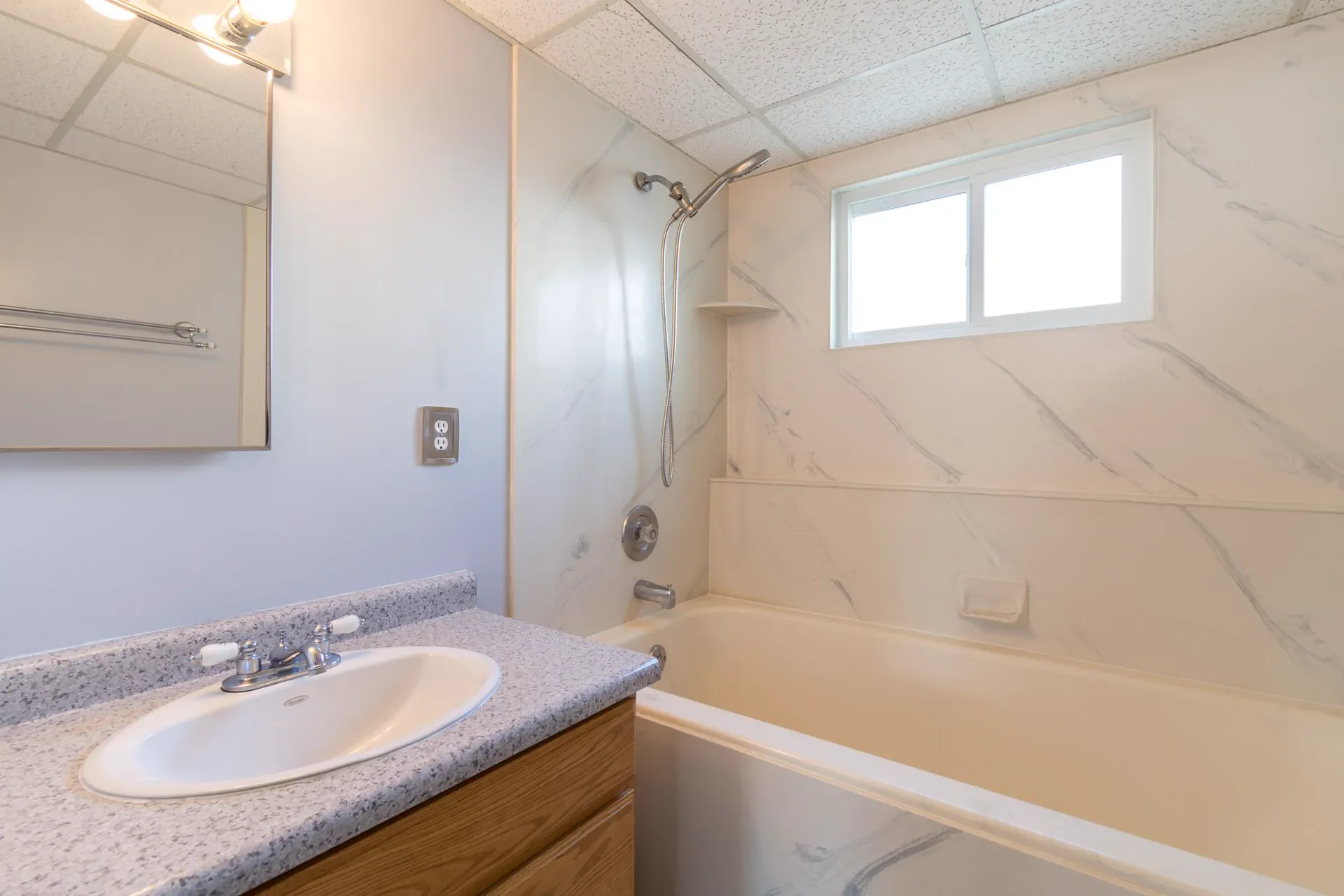
Three things separate a solid-surface wall from the insert you're picturing: the fit, the finish, and the trim and built-ins.
Fit to your measured bathroom
A design consultant measures your tub or shower area at the first visit. The base, walls and trim are fabricated to those numbers before install day, so what arrives is built to your alcove's measurements instead of a stock size trimmed to fit. In a 1968 ranch in Anderson Township, where the framer built the alcove to whatever the lumber allowed that week, fit is most of what you see. The same people who measured come back to install.
The finish: marble, travertine and tile-look patterns
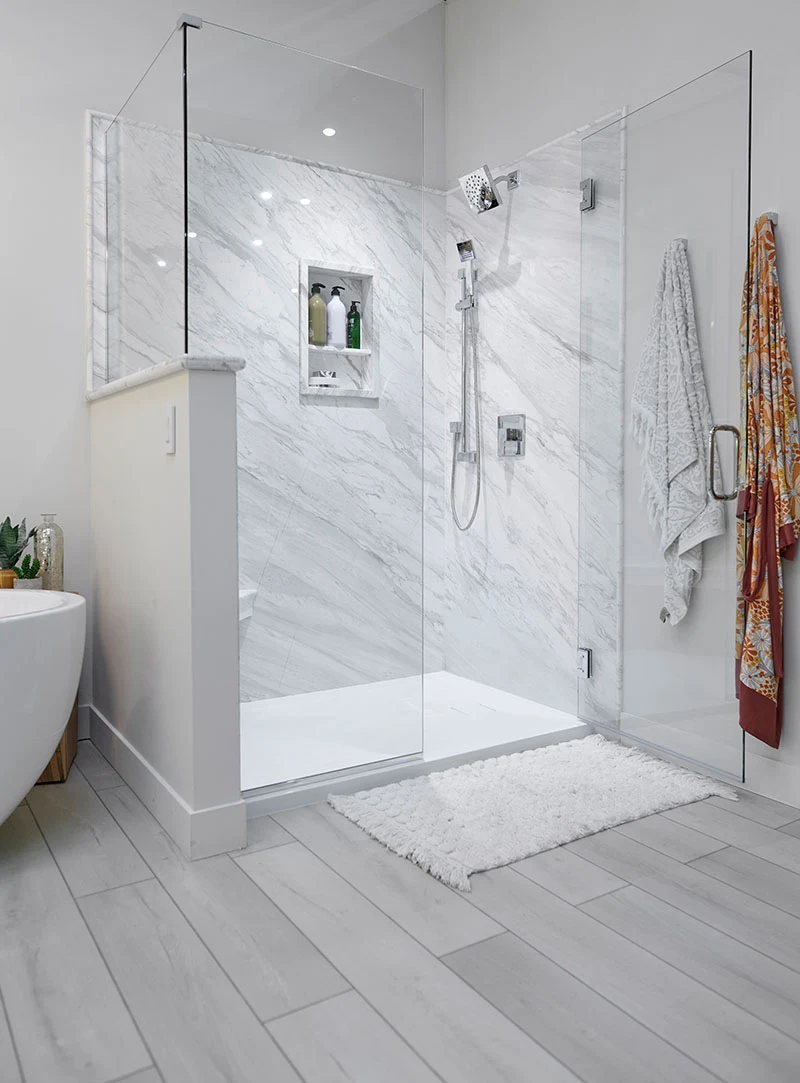
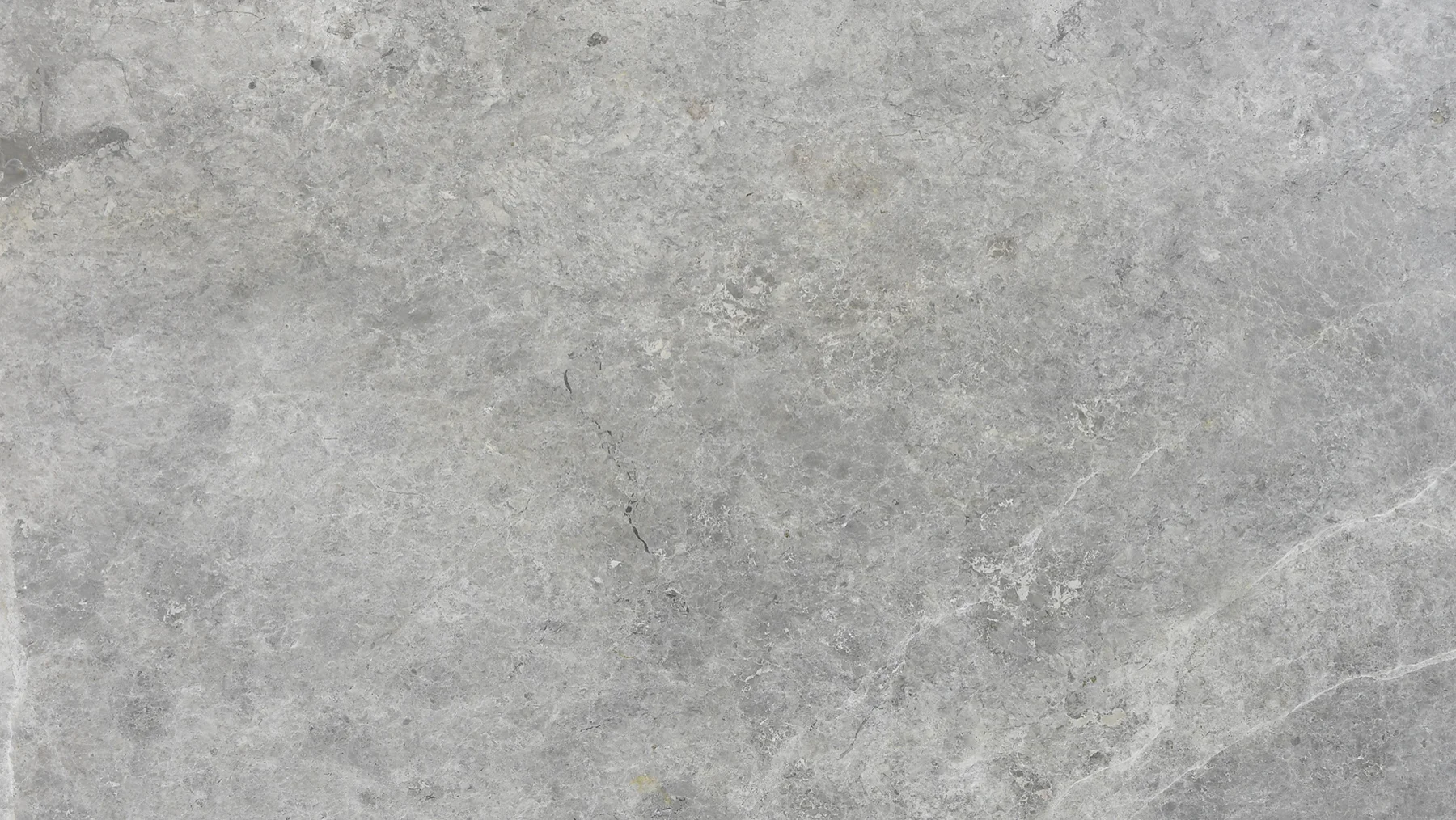
The marble and travertine looks are what most of our customers pick. Calcutta Marble, Santorini White Marble, Bianco Travertine and Travertine are in that group, along with granite looks like Madeira and stone patterns like River Rock. They are marble-look and travertine-look, a pattern in a solid-surface panel. They aren't stone, and we won't tell you they're identical to it. What they don't do is look like gloss white plastic, which is the thing you're worried about.
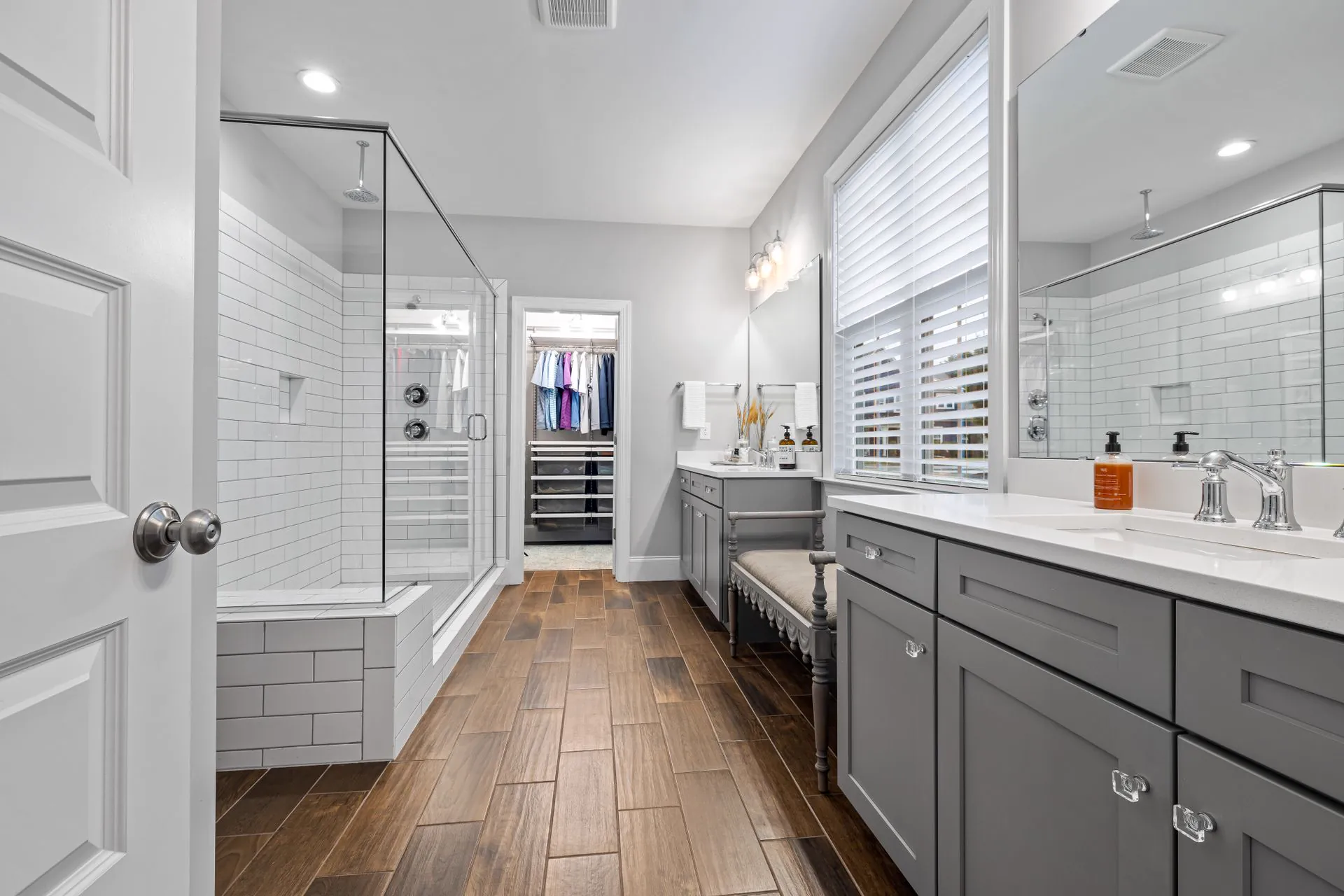
If you grew up with tile and you like the lines, the same material comes in tile-look patterns: 3x6 and 4x12 subway, hexagonal, herringbone, chevron and picket, among others. The lines are part of one non-porous panel, so you get the pattern without grout to scrub, seal or regrout. Solid colors come in matte or gloss, and you pick which.
Trim, borders and built-ins
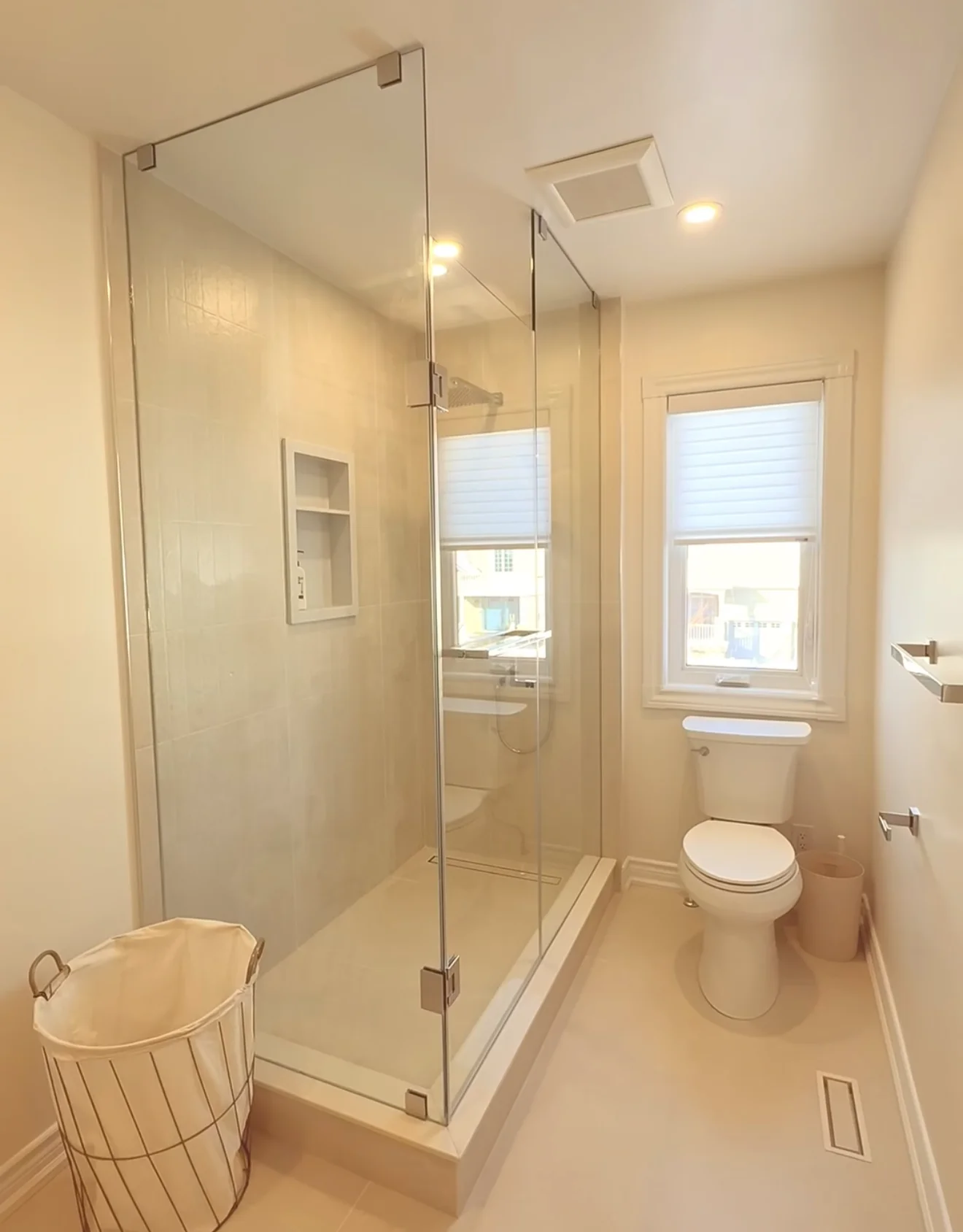
Accent trim and borders finish the edges, and recessed niches and shelves go in as part of the wall rather than as a caddy hung on the showerhead. A recessed niche at shampoo height does a lot to make a shower look built for the room. The base, door and hardware get picked the same way, piece by piece, like a vanity.
How to judge a panel shower before you buy one
Use the same test on our walls that you'd use on anyone's. A good one holds up to all six.
- Stand in the bathroom doorway and look at the shower the way a guest would. Then go stand six inches from it.
- Look at samples in your own bathroom light, in the morning and again at night. Our consultant brings the samples to your house for that reason.
- Hold the marble-look sample next to your vanity top and your floor. A travertine that looks right in a showroom can fight with an almond floor.
- Ask to see your bathroom before anything is ordered. Our designers can show you a 3D rendering with the color and pattern you chose.
- Ask the company, in plain words, whether the old wall comes out or stays behind the new one.
- Ask any company to show you a finished shower in a house like yours, not a showroom.
Before you sign: If the answer to number 5 is "it stays," you're buying a liner, whatever the brochure calls it.
When tile is still the better pick for the look you want
Tile is a good product, and some looks only tile does. A hand-set mosaic you've had your eye on, a curbless wet room with the floor running out into the bathroom, a feature wall with a design story behind it: hire a tile contractor for those, ask to see the waterproofing before the tile covers it, and plan for a longer install. Bulldog doesn't sell tile, so take that advice for what it's worth. It's still the right advice for that bathroom. Tile vs. acrylic shower walls compares the two over 20 years, cure times and grout included.
If what you want is a shower that looks like it belongs in this decade and cleans with mild soap and water, the marble-look wall is built for that. Put the scrub brush away, and keep abrasive pads and harsh cleaners off it.
What install day looks like for a marble-look panel shower
The look is decided at your kitchen table, weeks before the truck pulls up. On install day our crew guts the tub or shower area to the studs, sets the new base, puts up the walls, hangs the door and puts in the fixtures. The shower is in by evening, and you take your first shower the next morning once the caulk has set. That one day covers the wet area. If you want the floor, the vanity or the toilet replaced too, that's a separate, longer job, and we tell you how long before you sign.
We don't post job prices. A consultant measures, and you get a written quote, free. The warranty covers the product and the workmanship for as long as you own the home.
Start with the finishes. The colors and patterns page has the marble, travertine and tile-look options side by side. Pick two you'd put next to your vanity, and ask the consultant to bring those samples when they come to measure.
Grout-free shower walls: an honest guide covers the look, the care and how they hold up, in one place.