
Key takeaways
- Mildew that comes back after cleaning is growing below the surface or is being fed by a bathroom that stays damp.
- It lives in four places: the pores of the grout, inside and behind the caulk, the board behind the tile, and the air of a room the fan can't dry.
- Grout and caulk respond to cleaning, sealing and new silicone, and a weak fan is worth replacing whatever you decide about the shower.
- Mildew in the wall behind the tile can't be cleaned from the front.
You sprayed the corner of the shower on Saturday, scrubbed it with an old toothbrush, and it came up white. Three weeks later the same black specks are back on the same two grout lines and the same stretch of caulk. That pattern is the useful part. Mildew that keeps returning to one spot is growing somewhere your cleaner never reached, and there are four places it can be.
Why mildew comes back after you clean it
The Environmental Protection Agency's guide to mold in the home says no mold will grow without water or moisture, and that it's impossible to get rid of every mold spore indoors. Spores will land on your shower again however well you clean. What decides whether they grow is how long the surface stays wet.
The same guide speaks to this exact problem. For mold in the shower that seems to reappear, it says running a fan or opening a window, and cleaning more often, will in most cases stop it or keep it to a minimum. When that doesn't work, the moisture is coming from somewhere a fan and a sponge can't touch.
| Where it lives | What you see | What fixes it |
|---|---|---|
| Grout pores | Gray or black lines back in weeks | Oxygen-bleach clean, dry, seal |
| The caulk | Black spots under the surface of the bead | Cut it out, run new silicone |
| Behind the tile | Musty smell, dull tap, loose tile | The wall comes out |
| The room's air | Mirror fogged long after the shower | A fan that pulls, run for an hour |
Place 1: inside the grout
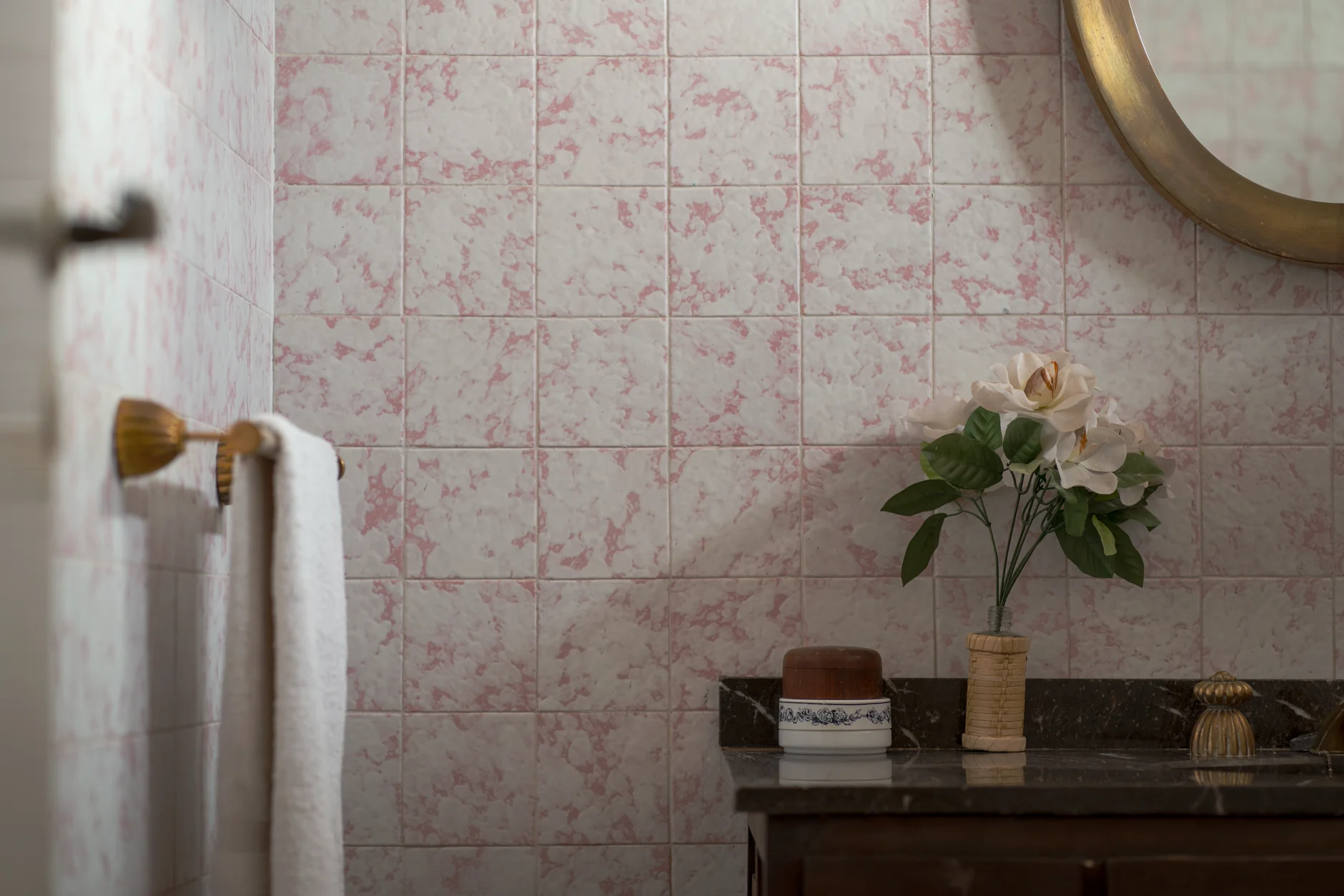
Standard grout is full of tiny pores, and water and soap soak into them every shower. Scrubbing cleans the face of the joint. The mildew growing below the face stays put and grows back up, and the bottom row and the corners go first because they stay wet longest.
Why your shower grout turns gray again covers what happens inside the joint and the weekend routine that holds it back for most of a year. If the black is only on the grout, start there.
Place 2: in and behind the caulk
Look at the caulk where the tub meets the wall, and at the inside corners. If the black wipes off, it's on the surface. If you can see it under the skin of the bead, like ink under clear tape, it has grown into the caulk and no cleaner will reach it. The same goes for a bead that has pulled away from the tile at its top edge, since water sits in that gap after every shower.
The EPA guide says not to paint or caulk over a moldy surface. A fresh bead run over the old one seals the mildew in. Cut the old caulk out with a razor, clean the joint, let it dry for a full day with the fan on, and run a new bead of 100 percent silicone.
Place 3: the wall behind the tile
The EPA lists the back side of drywall and the inside of walls around pipes as places mold may be hidden. In an older tiled shower, that's the board the tile is stuck to. Water that gets past the grout and caulk soaks it, and a board inside a wall has little chance to dry between showers.
You can't see this place, so check it another way:
- Tap every tile on the shower walls with a knuckle. A solid click is a sound wall. A dull, hollow sound means the tile has come loose from the board, often because water got behind it.
- Press on the tiles near the bottom corners. A tile that moves has let go of the board behind it.
- Smell the shower an hour after cleaning it. A musty smell that comes back once the bleach smell is gone points behind the tile.
- Look at the wall on the other side of the shower, and at the ceiling below if the bathroom is upstairs. A stain or bubbling paint is water that went through.
If any of these turn something up, more cleaning on the front of the wall won't change it. The EPA says absorbent materials that have gone moldy may have to be thrown away, because mold can be difficult or impossible to remove from them. A wet board behind tile is one of those materials. Your 20-year-old shower: what fails first walks through how a shower fails from the grout back into the wall, and where repairs stop paying.
Place 4: a bathroom that never dries
In a lot of 1960s and 70s ranches in Anderson Township and Fairfield, this is the main one. If the mirror is still fogged 20 minutes after the shower and the towels are damp the next morning, the whole room is holding water, and the mildew has all day to grow.
The Department of Energy's Building America Solution Center says a bathroom fan should move at least 50 cubic feet of air per minute, should vent outdoors, not into an attic, and should run for an hour after a shower, on a timer switch so it shuts itself off. The CDC adds that indoor humidity should stay no higher than 50 percent.
Three checks you can do tonight:
- Turn the fan on and hold a square of toilet paper to the grille. If it doesn't stick, the fan isn't pulling.
- Go up in the attic with a flashlight and find where the fan's duct ends. A duct that stops in the insulation is putting wet air into your attic.
- Buy a humidity meter at the hardware store and leave it in the bathroom for a week. The EPA's target is between 30 and 50 percent.
A new fan, ducted outside and on a timer, is worth doing whether you keep the shower or replace it. A new shower in a room that never dries will still grow mildew on the caulk and the ceiling.
Two habits that bring it back faster
- Running the fan for five minutes. The Building America guide says an hour, and a timer switch takes the remembering out of it.
- Closing the door or curtain after you get out. Leave the door open or the curtain pulled back so the walls can dry.
When cleaning stops working
If you've fixed the fan, replaced the caulk and sealed the grout, and the mildew still returns to the same spot within a month, it's coming from behind the tile. The EPA says a homeowner can handle a moldy area smaller than about 10 square feet, but a wet board behind tile can't be reached without taking the wall off.
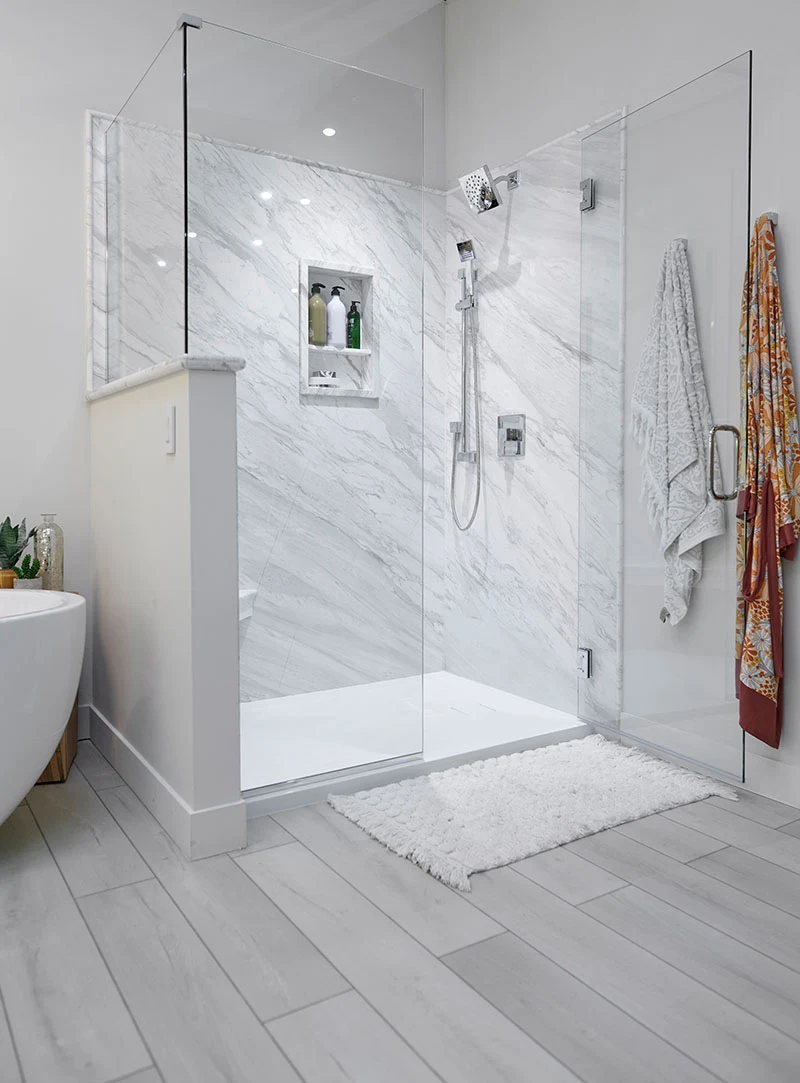
Once the wall comes out, a tile contractor can rebuild with cement backerboard and a waterproofing layer, and done right, that shower lasts. It still has grout joints to seal. The other route is grout-free solid-surface walls: no grout lines, and nothing for mildew to grow in. Bulldog builds that kind: our crew takes the tub or shower area to the studs in the morning and has the new walls, base and fixtures in by evening, with your first shower the next morning. The rest of the bathroom (floor, vanity, toilet) is a separate, longer job.
The colors and patterns page shows what those walls look like. If you're not there yet, test the fan tonight and redo the caulk this weekend, and watch which corner the black comes back to.