
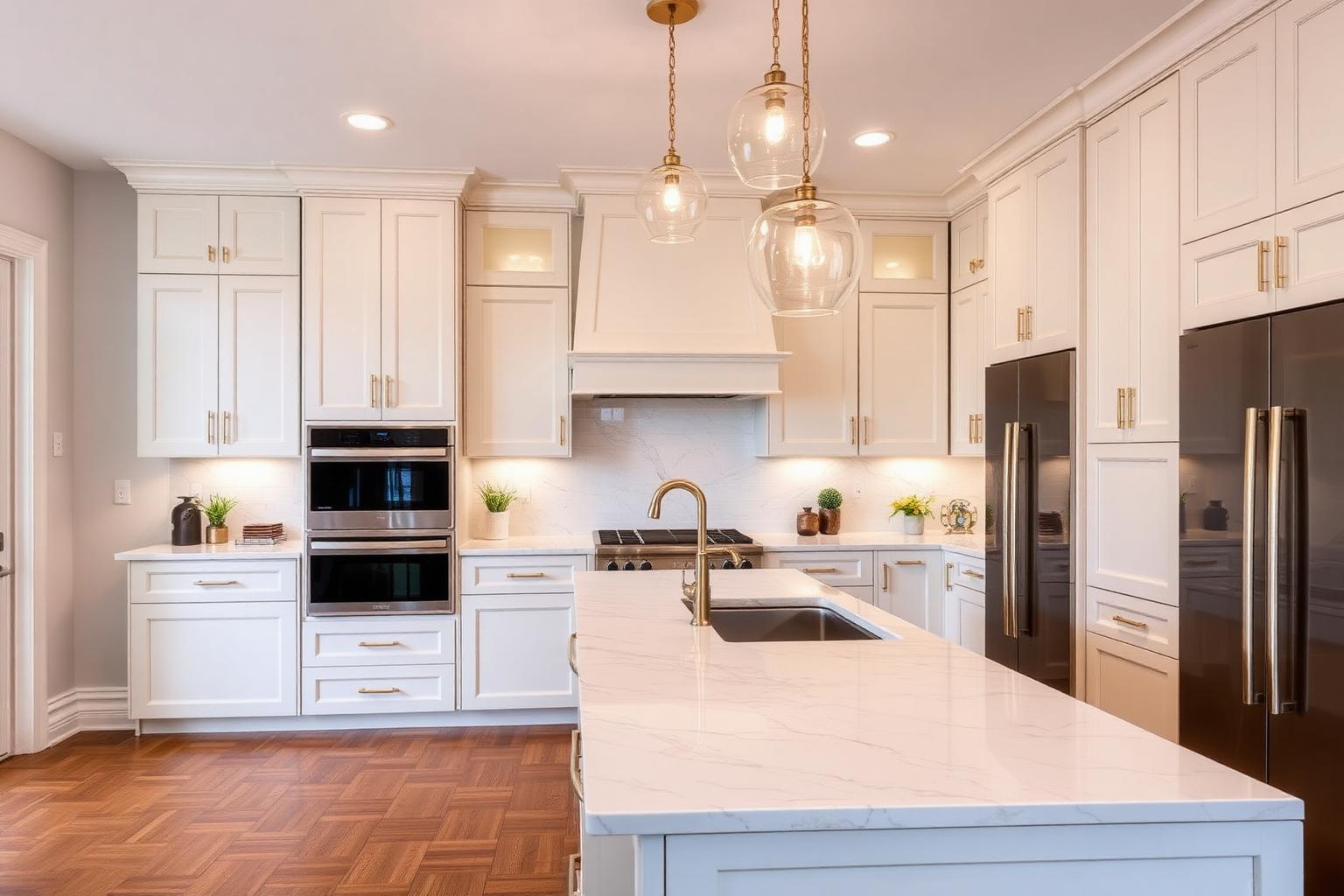
Kitchen Remodeling for Older Homes in Cincinnati
Pre-war bungalows, mid-century ranches, century-old farmhouses — they all share one thing: a kitchen built for a very different way of living. Here's how we bring them into the present without erasing the character that made you love the house.
Older-home kitchen remodels in Cincinnati typically run $40K–$95K and take 6–10 weeks on-site once demo begins. The biggest variables aren't finishes — they're the wiring, plumbing and structural surprises hiding behind the plaster. A team that opens up the walls early, prices the unknowns honestly, and pulls the right Cincinnati permits is the difference between a project that lands on budget and one that doesn't.
An older kitchen is really three projects in one.
In a 1990s build, a kitchen remodel is mostly a finish job — pull cabinets, set new ones, swap counters, paint. In a 1925 Hyde Park bungalow or a 1955 Cheviot ranch, the same scope of work is layered on top of two other projects that have to happen first: an electrical update so your appliances stop tripping breakers, and a plumbing update so the new sink and dishwasher don't fail in three years.
The good news is that older Cincinnati homes were built with materials and framing you just can't buy anymore. Once we sort out what's behind the walls, the bones are usually excellent — and the finished kitchen feels like it belonged there all along.
Signs your older kitchen is past a cosmetic refresh
Two people can't pass
Original floor plans assumed one cook. If the fridge door blocks the stove, no new countertop fixes that — the layout itself has to change.
Lights flicker with the microwave
A sign the kitchen is still sharing one or two original circuits. Modern appliances need dedicated lines and a panel that can carry them.
Slow drains, low pressure
Galvanized supply lines corrode from the inside. We almost always recommend swapping them for PEX or copper while the walls are open.
Bouncy or sloping floors
Subfloor rot or undersized joists. Quartz and porcelain are heavy — uneven floors have to be addressed before new cabinets go in.
Cabinets you can't actually use
Shallow uppers, dead corners, no pull-outs. Refinishing keeps the same problem — a redesigned cabinet plan solves it.
No GFCI, no range hood vent
Pre-1980 kitchens rarely meet current code. Anything more than a like-for-like swap triggers updates — better to plan them in.
The four issues we plan for on every pre-1980 Cincinnati kitchen
1. Undersized electrical
Most older Cincinnati kitchens were wired with two general-purpose circuits and a handful of outlets. Today's code calls for dedicated circuits for the range, fridge, dishwasher, microwave and disposal, plus GFCI and AFCI protection along the counter. Panel upgrades and a sub-panel run typically add $2,500–$6,000 depending on how much rewiring the rest of the house needs.
2. Aging supply and drain lines
Galvanized supply lines, cast-iron drains and old shut-offs that fuse open. We replumb the kitchen back to a main accessible shut-off using PEX or copper, swap drains where rot is visible, and re-vent the sink correctly. Most kitchen replumbs run $1,500–$4,500.
3. Settled floors and out-of-square walls
A century of settling means very few older homes have a perfectly level floor or a truly plumb wall. We shim cabinets in 1/16" increments and scribe end panels so the finished install looks tight everywhere — even when the room itself isn't. Significant subfloor or joist work is quoted separately and only when we find it.
4. No exterior range vent
Recirculating hoods were standard for decades and they don't actually remove moisture or grease. Cutting in a proper exterior vent — through a sidewall or up through the roof — is one of the highest-impact upgrades in an older kitchen, and it's now required by code for most range installs.
What's usually worth saving
- Original hardwood floors — almost always refinishable
- Solid plaster walls with crisp original trim and casing
- Built-in china cabinets, breakfast nooks, butler's pantries
- Quarter-sawn oak or maple cabinets if the layout still works
- Wide original baseboards and door casings
- Period light fixtures that can be rewired
What's usually worth changing
- Cabinets with shallow uppers, dead corners and no soft-close
- Galvanized supply lines and old gate-valve shut-offs
- Fuse boxes, knob-and-tube runs, two-prong outlets
- Recirculating hoods with no exterior vent
- Single-pane casement windows over the sink (with permits)
- Worn vinyl or laminate flooring over rotted subfloor
How long an older-home kitchen actually takes
Design & selections — 3 to 5 weeks
Field measure, cabinet layout, plumbing and electrical plan, and material selections. Custom or semi-custom cabinetry adds 4–8 weeks of lead time, so we order early and stage everything before demo.
Permits — 1 to 3 weeks
Cincinnati and Hamilton County require permits for any work that touches structure, electrical or plumbing. We pull and coordinate them so you're not chasing inspectors.
Construction — 6 to 10 weeks on-site
Demo, rough-in electrical and plumbing, inspections, drywall, flooring, cabinets, counters, backsplash, paint, hardware, final inspection. In an older home, plan for a few days of unknowns once the walls open — almost always resolvable inside the same week.
What older-home kitchens actually cost in Cincinnati
Refresh + Systems
Same footprint, updated wiring and plumbing, new cabinets and counters.
Layout Reset
Wall removed or relocated, fully replumbed and rewired, semi-custom cabinetry.
Full Restoration
Structural work, custom cabinetry, restored period details, premium finishes.
Every number above is line-itemed in your proposal and locked with our Price Guarantee — what you sign is what you pay, even when we find surprises behind the plaster.
What we inspect before we quote your project
- Electrical panel capacity and existing circuit load
- Wiring type — knob-and-tube, cloth-jacket, aluminum, modern romex
- Supply lines — galvanized, copper, PEX
- Drain and vent layout under the kitchen floor
- Subfloor and joist condition (moisture, rot, span)
- Load-bearing wall locations and header sizing
- Existing ventilation and ductwork routing
- Insulation, air sealing, and any signs of pest or mold
Frequently Asked Questions
How much does it cost to remodel a kitchen in an older Cincinnati home?
Most projects we take on fall between $40,000 and $95,000. The wider range vs. a newer home reflects what we usually find behind the walls — electrical, plumbing and minor structural work that almost always needs updating.
How long will my kitchen be out of service?
Plan on 6–10 weeks on-site once demo begins, plus 4–6 weeks of design and material lead time before we start. We stage everything in advance so the days the room is unusable are as few as possible.
Do I always need to upgrade my electrical panel?
Not always — but if your panel is 100A or smaller, or still has fuses, we'll typically recommend an upgrade so the new kitchen circuits have room to live. We'll tell you straight after the walk-through.
Can I keep my original hardwood floors and trim?
Almost always yes. Original oak floors usually refinish beautifully, and period trim and built-ins can be carefully removed, stored, and reinstalled. That kind of detail is what makes an older kitchen feel like it belongs in the house.
Do you pull the permits?
Yes. We pull every required Cincinnati and Hamilton County permit and meet the inspectors on-site. You don't deal with the building department at all.
Ready to bring your older Cincinnati kitchen into this century?
We'll walk the space with you, open up the questions that matter, and put a real, line-itemed number on the table — backed by our Price Guarantee and lifetime workmanship warranty.