Key takeaways
- Most granite countertops don't need a sealer to do their job, and dark, dense slabs often take little or none.
- Lighter, more porous granite benefits from one.
- Leave a little hot water on the counter for 10 to 20 minutes, and if the stone darkens, it's absorbing and due for a penetrating sealer.
- A neutral stone cleaner keeps a good sealer working for years, while vinegar, bleach and scouring powder wear it down.
Congratulations on the new counters. About a week after install, the question at the kitchen table is the sealing one: does granite need to be sealed, and if it does, how often? The Natural Stone Institute, the stone industry's trade association, says most granite countertops do not need to be sealed. Many still benefit from a sealer, since it slows moisture moving into a surface that already resists it. Whether yours is one of them depends on the slab, and a test on your own counter answers it.
Everything below applies to a granite vanity top too.
Does granite need to be sealed? It depends on the slab
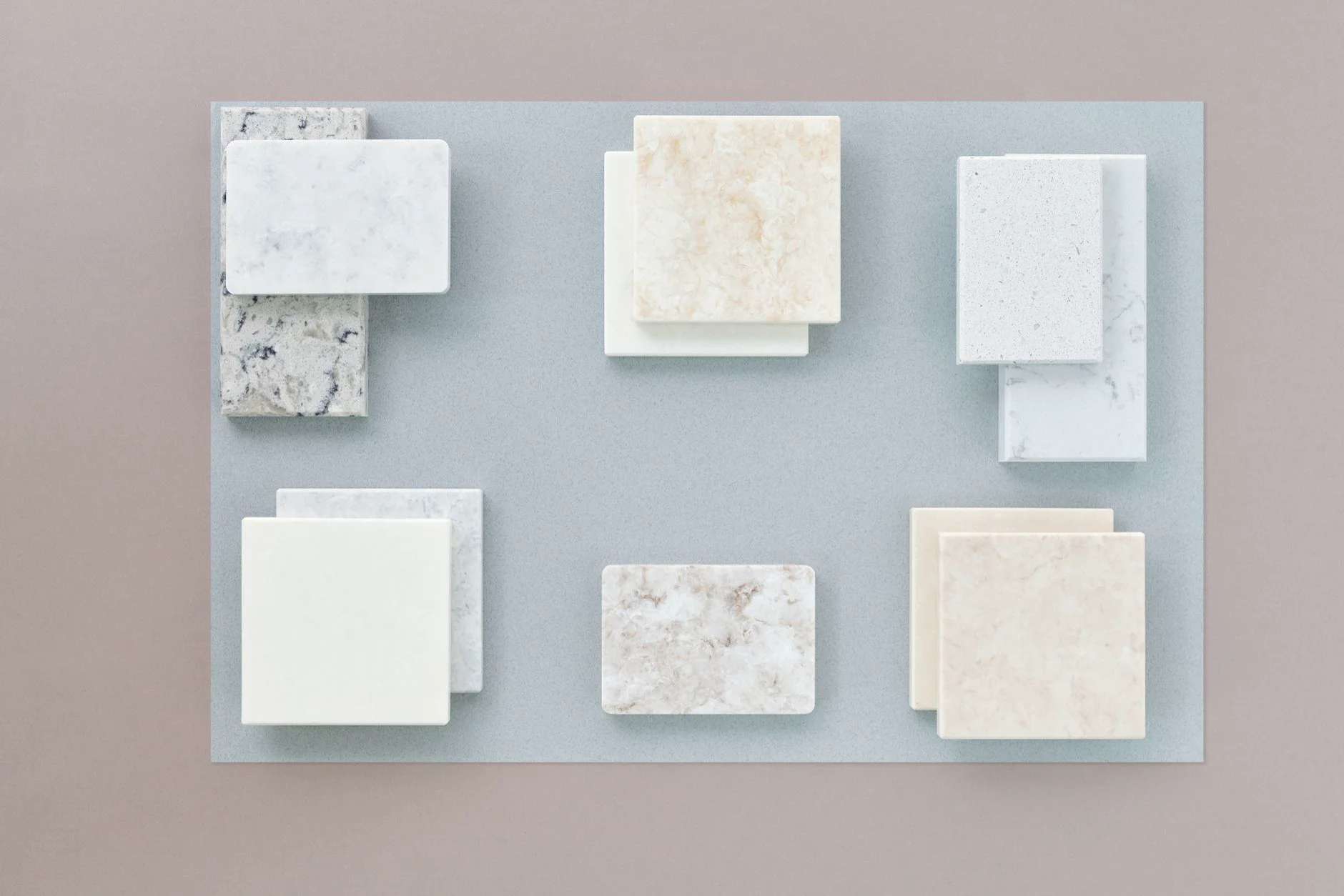
Granite has pores. Liquid left sitting on it can soak in, and the Institute's consumer site notes it can also evaporate back out. How much soaks in depends on the stone. The same page says darker granites are dense and sometimes don't need a sealer at all, while lighter granites are more porous and can need several coats before they resist stains.
The spread is wide. The Institute's granite care guide says a slab like Absolute Black may need no sealer or one application, and a slab like Juparana Columbo may need four to six applications.
Two more things change the answer for a new counter. Many granites get a resin treatment at the factory. And most fabricators apply a sealer before install. If you don't know what went on yours, ask your project coordinator before you buy a bottle of anything.
The hot-water test, step by step
The test comes from the Institute's granite care guide, and you need a cup of hot tap water and a towel.
- Pick two spots: next to the sink and beside the stove. Those spots see the most water and grease.
- Pour a little hot water on each spot, a puddle about the size of a coaster.
- Leave it for 10 to 20 minutes.
- Wipe it dry and look at the stone in good light.
- If the spot is darker than the stone around it, the granite is still absorbing and needs a sealer. If it looks the same, the stone isn't taking in water, and it doesn't need a sealer yet.
A dark spot from the test is only water, and granite lets water evaporate back out. Leave it alone and let it dry.
A dark, dense slab may not darken at all. A light slab is the kind worth testing every year.
How often to reseal granite
There's no fixed calendar. The granite care guide says the timing depends on how hard the counter gets used and which sealer went on, and that a good sealer can last up to 10 years when you clean with the right products. The Natural Stone Institute recommends a sealer with a life expectancy of ten to fifteen years.
So run the test once a year, the same week you change the furnace filter. When a spot darkens, reseal with a penetrating sealer, the kind that soaks into the pores. Follow the label on the bottle; most go on as a spray and get wiped off, according to the care guide. For a kitchen, the Institute's care page says to pick a sealer that's non-toxic and safe for food areas.
A sealer makes granite stain resistant. The same care page is plain that it does not make stone stain proof, so wipe up wine, oil and coffee when they land.
Cleaners that wear sealer down
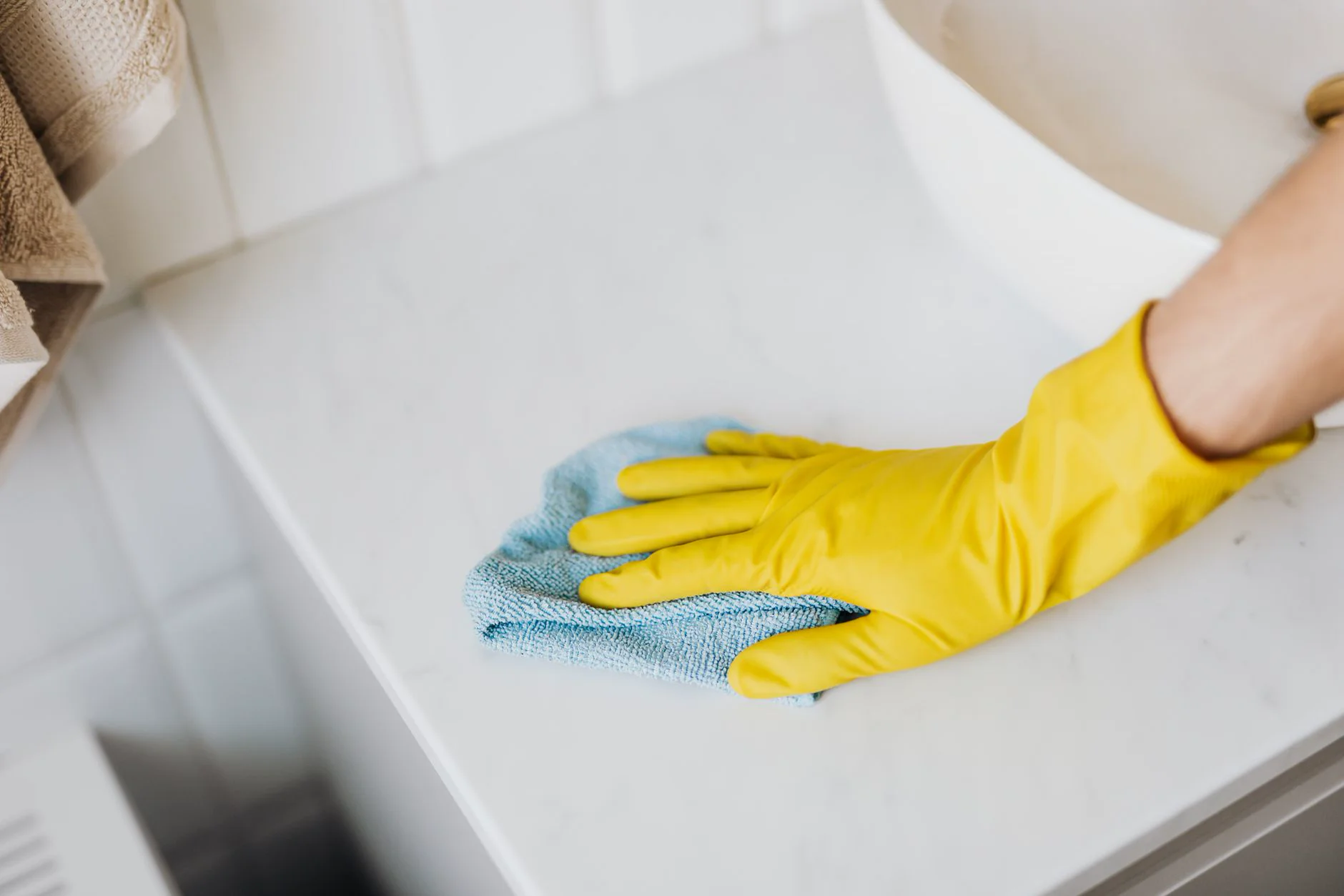
Wipe the counters after meals. The Natural Stone Institute says a homeowner who does that "will rarely, if ever, have staining or cleanability issues with granite". Use a neutral cleaner made for stone, one that leaves no residue. Mild dish soap and warm water is on the Institute's list of acceptable cleaners, though its granite guide warns that soap can leave a film that dulls or streaks the stone, so rinse and dry after.
Keep these away from the counter:
- Vinegar and lemon cleaners. The Institute doesn't recommend acidic cleaners on stone. A chemical that leaves granite alone can still break down the sealer, and then you reseal more often.
- Bleach. The Institute's consumer site warns that vinegar and bleach are harsh enough to etch or burn some natural stone. Never mix bleach with ammonia; the Institute warns the combination makes a toxic gas.
- Ammonia sprays. Frequent use can dull the surface of some stone.
- Scouring powder and cream cleansers. Powders and creams carry abrasives that can scratch stone.
Cutting boards, trivets and coasters do the rest, along with drying spills around the faucet, which the care guide lists for everyday care. If a stain has already set in, don't go at it with a pad. The Institute's site says stains and etches are best left to a professional.
Water at the sink edge and the cabinet below
Water that keeps running off the front edge at the sink, or a slow drip at the faucet base, can end up in the cabinet floor below. The soft floor under your kitchen sink covers what a slow leak does to that cabinet and how to check it with a flashlight.
A review, and the next room
If the counters went in the way your project coordinator said they would, a short review helps the next couple in Montgomery, or in Fort Thomas, Kentucky, decide who to call.
And if the cabinets under the new granite are the next thing that bothers you, can my cabinets be refaced walks through a five-minute check of the boxes. Our countertops page shows the quartz, granite and solid-surface options, along with the backsplash, sink and faucet that go with them. Many kitchen updates take a few days, not months, and a design consultant measures and gives a written quote. Call (513) 657-3750 when you're ready.
A new-looking kitchen in days, not months walks through every part of the kitchen in order: what to keep and what to replace.