
Key takeaways
- Quartz makers say a damp cloth, warm water and a little mild soap handle everyday cleaning, and quartz never needs sealing.
- For dried-on food, scrape with a plastic putty knife and use a nonabrasive pad with a surface cleaner.
- Hot pans go on a trivet, knives go on a cutting board, and oven cleaner, strong bleach and abrasive powders stay off the counter.
Congratulations on the new counters. The question that comes up at the kitchen table a week or two later is how to clean quartz countertops without hurting them, and the answer is less than most people expect. Quartz is crushed stone bound with resin, and the makers' own care guides ask for a damp cloth, a trivet and a cutting board, and not much else. What follows comes from those guides.
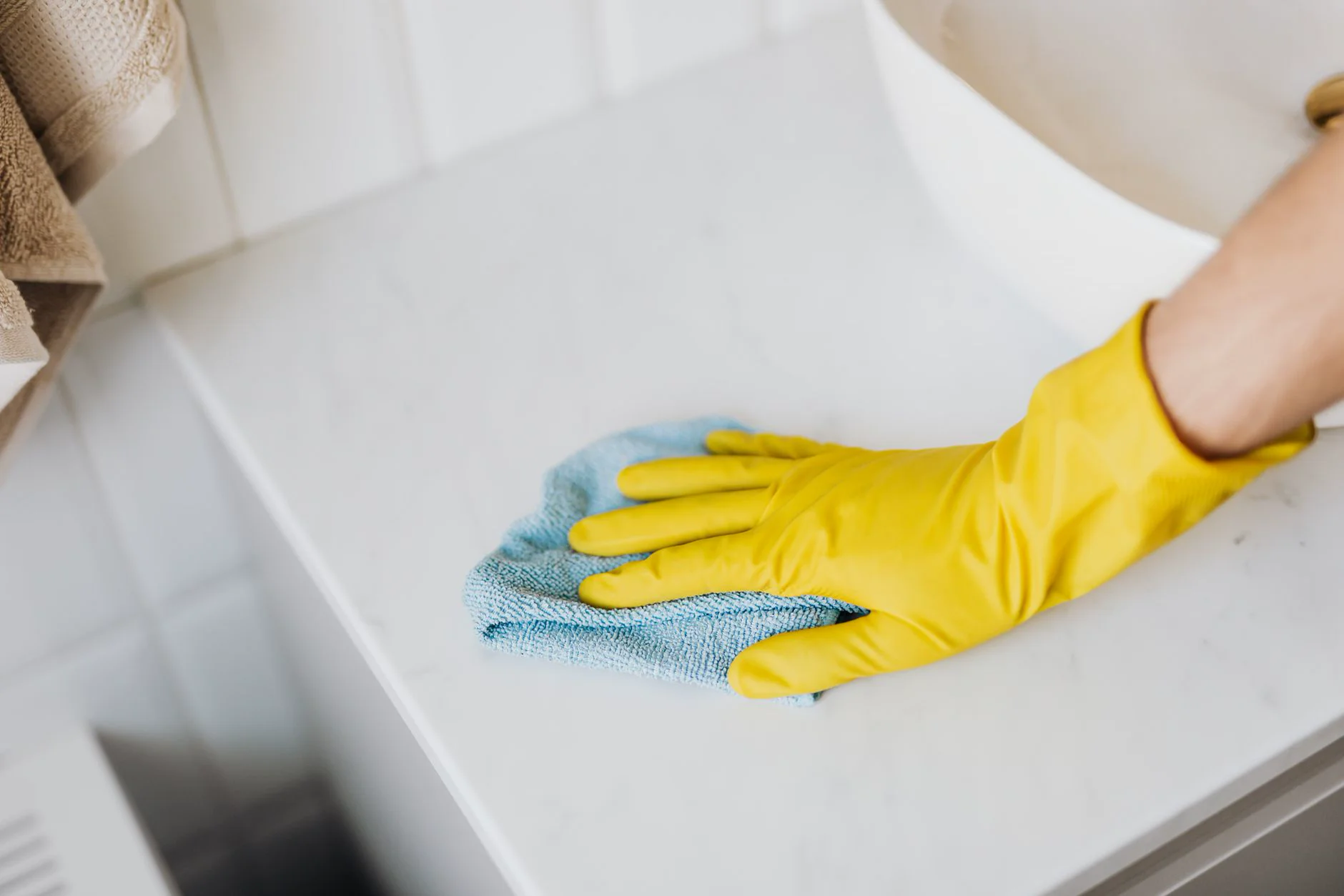
Daily cleaning: a damp cloth and mild soap
For routine cleaning, DuPont's care sheet for Corian Quartz says to wipe the counter down with a damp cloth or paper towel, adding a small amount of non-bleach, non-abrasive cleanser if it needs one. Cambria's care page says the same thing in fewer words: warm water, a soft cotton cloth and mild soap, if you want it.
Wipe up spills when they land, even the ones that won't stain. Caesarstone's US care page says liquid spills and splashes should be wiped immediately and the surface kept dry.
Skip the sealer and the polish. Quartz is nonporous, and the DuPont sheet says it doesn't need sealants or waxes. Cambria goes further and says not to apply sealers, penetrants or topical treatments at all, because they wear off and leave the gloss looking dull or uneven. If you moved from granite, put the granite sealer in the garage.
Dried-on spills and cooking grease
Oatmeal that sat through lunch, a drip of pancake batter, the gum a grandchild left by the toaster: these harden as they dry. The DuPont sheet says to scrape the excess away gently with a plastic putty knife.
Then clean what's left. The order that works:
- Scrape off the hardened part with the plastic putty knife.
- Spray a glass and surface cleaner on the spot.
- Work it with a nonabrasive pad, the white kind DuPont names in its care sheet. Skip the green scouring side of a kitchen sponge.
- Rinse with a damp cloth and dry the spot.
Grease from the stovetop gets a degreaser. The same sheet says to use a degreasing product and follow the cleaner maker's instructions. Caesarstone suggests a basic kitchen or glass cleaner for greasy sauces and oil.
Everyday drinks are less of a worry. DuPont says its quartz resists permanent staining from wine, vinegar, tea, lemon juice and soda.
Heat: hot pans go on a trivet
All three makers agree on this one. Caesarstone says hot cookware should always go on trivets and hot pads. DuPont says its quartz is heat-resistant but not heat-proof, and to use trivets or pads under hot skillets and roasting pans. Cambria recommends a closed-weave hot pad or a solid trivet, such as a breadboard, under pots and pans.
Keep a trivet on the counter beside the stove, where the Thanksgiving roaster is going to land whether you planned for it or not.
Knives get the same treatment. DuPont's sheet says to always use a cutting board and never chop or slice food directly on the counter.
Chemicals and scrub pads to keep off quartz
The makers agree on most of this list, and they differ on bleach, so here's where each one lands.
- Oven cleaner. DuPont says highly alkaline cleaners, such as oven cleaners and concentrated bleach, aren't recommended. Cambria lists oven cleaners among the products to avoid.
- Strong bleach. DuPont says casual contact with diluted bleach won't damage its quartz, but to avoid cleaners with high concentrations of bleach. Caesarstone, on the other hand, suggests a soft scrub gel with bleach for a stubborn coffee or wine stain. Your own maker's sheet settles it.
- Scouring powder and abrasive pads. Cambria says not to use abrasive or harsh scrub pads, and lists Comet, S.O.S. pads and products with pumice among those to avoid.
- Solvents. DuPont says to keep paint removers, nail polish remover and oil soaps away from the counter, and to rinse with water right away if any of them gets on it.
- Permanent markers. The same sheet says to keep markers and inks off the counter.
Before you use any new cleaner, Caesarstone says to test it on a spot nobody sees, such as the counter behind the coffee maker. The same page says stains and patina show more on dark quartz, and that cream-textured cleaners aren't recommended on dark colors.
If you don't know which maker's slab you have, ask your project coordinator, and keep that maker's care sheet in the kitchen drawer.
Quartz, granite, and the counter next to it
If part of the house has granite (a vanity top in the hall bath, say), its care is different: does a granite countertop need sealing walks through the hot-water test and the cleaners that wear sealer down. And if a neighbor asks why you picked quartz, quartz, granite or solid surface lays out how the three handle heat, stains and scratches.
A review, and the next room
If the counters went in the way your project coordinator said they would, a short review helps the next couple in Anderson Township, or in Florence, Kentucky, decide who to call.
If the cabinets under the new quartz are the next thing that bothers you, can my cabinets be refaced covers a five-minute check of the boxes, and our cabinets page shows the door styles and organizers. Many kitchen updates take a few days, not months, and a design consultant comes to the house, measures and gives a written quote. Call (513) 657-3750 when you're ready.
A new-looking kitchen in days, not months walks through every part of the kitchen in order: what to keep and what to replace.