Key takeaways
- Shaker doors fit the widest range of older houses and take paint or stain well, with a small ledge to wipe.
- Flat doors suit a 1960s ranch and clean in one pass, but show every ding and brush mark.
- Raised-panel doors suit a 1990s two-story or a formal kitchen, hold the most grease in their grooves, show hairlines at the joints under paint, and go darker at the bevels under stain.
- Pick the style for the house first, then the finish, then think about which doors sit next to the range.
You've decided the cabinet doors are going, whether the boxes stay and get refaced or the whole run gets replaced. Now you have to pick a style. Shaker vs raised panel cabinet doors is the choice most people stall on, with flat doors as the third option. The answer depends on the house the kitchen sits in, which doors are next to the stove, and whether you want paint or wood grain.
In the 2023 Houzz Kitchen Trends Study, a survey of 3,627 renovating homeowners fielded in the summer of 2022, 61 percent chose shaker doors, 20 percent flat-panel and 13 percent raised-panel. Your 1968 ranch gets a vote too.
The three door styles, in plain terms
All three hang on the same boxes and hinges. Only the front changes.
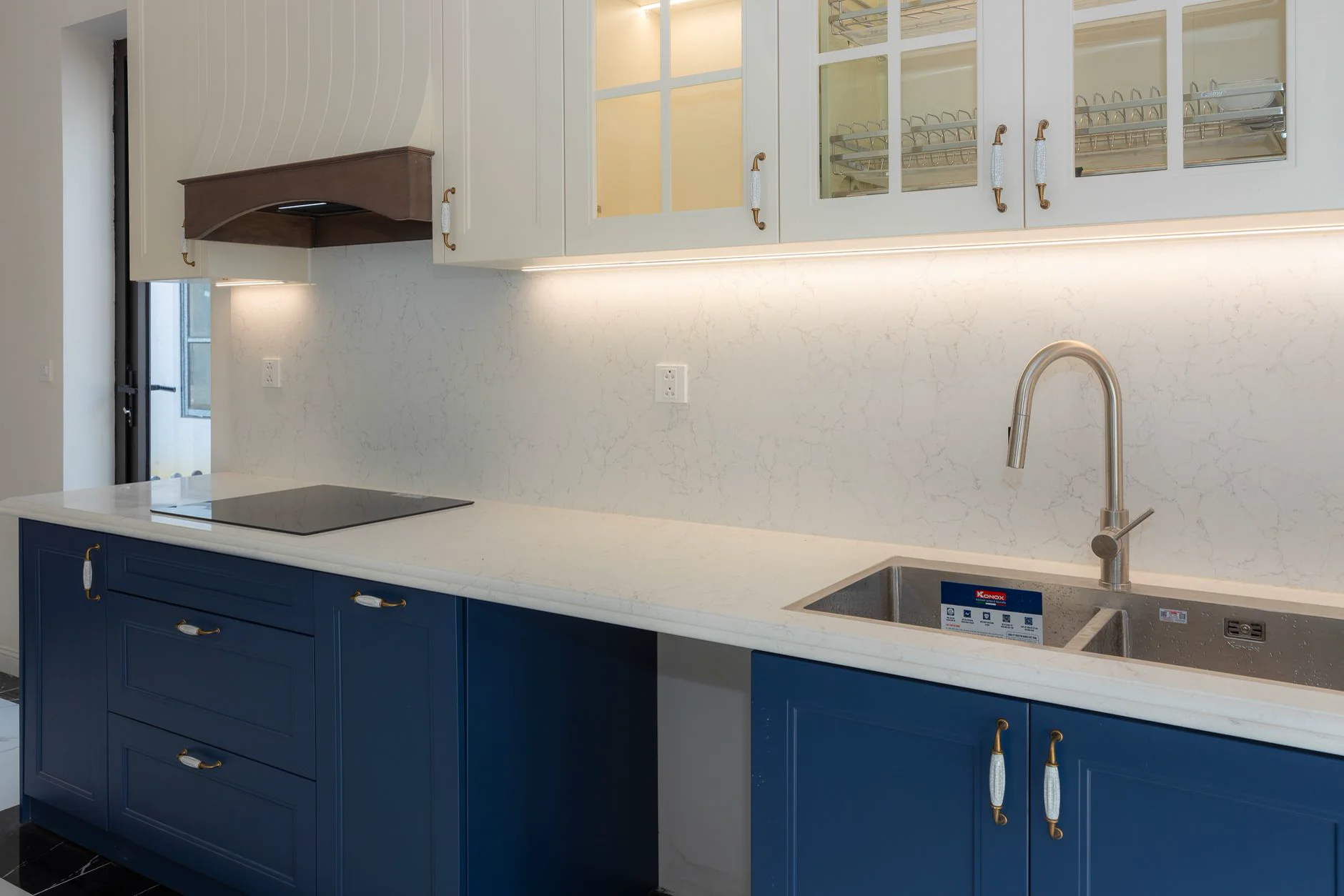
- Shaker is a five-piece door: four flat boards around the outside (two rails across, two stiles up the sides) and a flat panel set back in the middle. The name comes from the Shakers, a religious community known for plain furniture.
- Flat-panel is a plain, flat front with no frame and no recess, sometimes called a slab door.
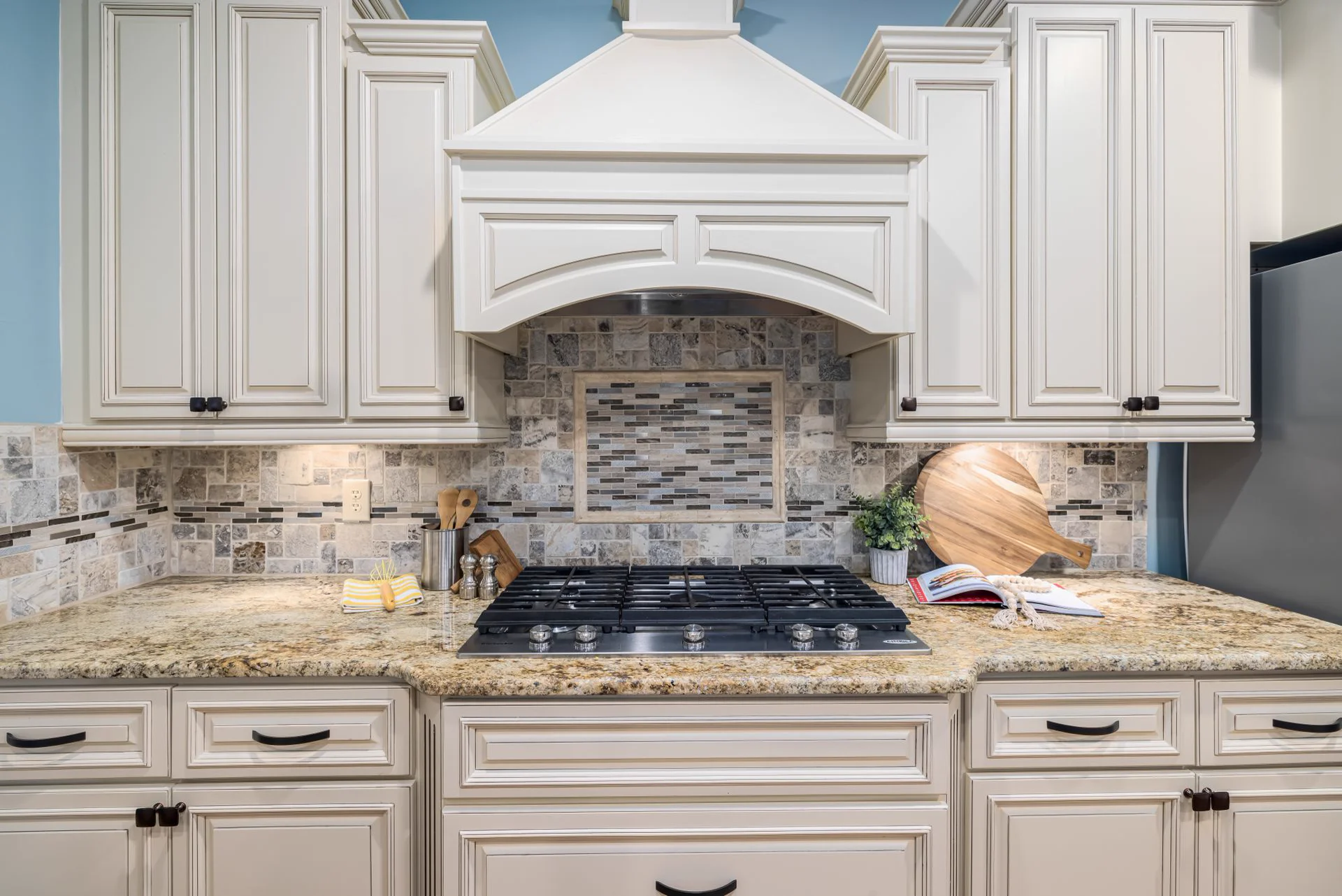
- Raised-panel uses the same frame as a shaker, but the center panel is thicker in the middle and cut down to a bevel at its edges, so it stands out toward you. Many have a curved or arched top rail.
| Shaker | Flat | Raised-panel | |
|---|---|---|---|
| Fits best | Almost any house, 1920s to 1990s | 1960s ranch, split-level | 1990s two-story, formal kitchens |
| Grease and dust | A ledge at the bottom of the panel | Nowhere to collect | The bevel and the profile grooves |
| Painted | Good; hairlines can show at the corner joints | Good; shows dings and brush marks | Hairlines at joints; a solid wood panel can show a bare edge |
| Stained | Good; grain reads on the flat panel | Good; reads like one board of furniture | The bevels soak up more stain and go darker |
What each style looks like in a 1960s ranch
Many ranches in Anderson Township, Sharonville and Fort Mitchell, Kentucky, went in with flat doors, often a light wood with a simple pull, to match low rooflines and plain trim. A flat door puts that look back, and in a painted finish it makes a small galley kitchen read cleaner.
Shaker works in a ranch too. The frame adds one step of detail, which suits a ranch where someone has already put in crown molding or a more traditional floor. Raised-panel can look borrowed from a different house in a ranch, since its bevels and arches belong to a more formal Colonial look.
What each style looks like in a 1920s Tudor
A Tudor in Hyde Park or Wyoming has heavy trim, plaster walls and often arched doorways. Its original kitchen was plainer than the rest of the house. Arts & Crafts Homes describes inset doors, set flush inside the frame, as the 1920s norm, and notes that cabinets then were often painted, in white and even pastels.
Painted shaker is the nearest of the three to that kitchen. It has the frame-and-panel look of the period without the bevels. Raised-panel can work if the rest of the house leans formal, though it looks busier than the original kitchen did.
What each style looks like in a 1990s two-story
Many 1990s two-stories in West Chester and Mason came with oak raised-panel doors, often with an arched top. Those are the doors that look tired now: orange-toned finish, worn through by the handles.
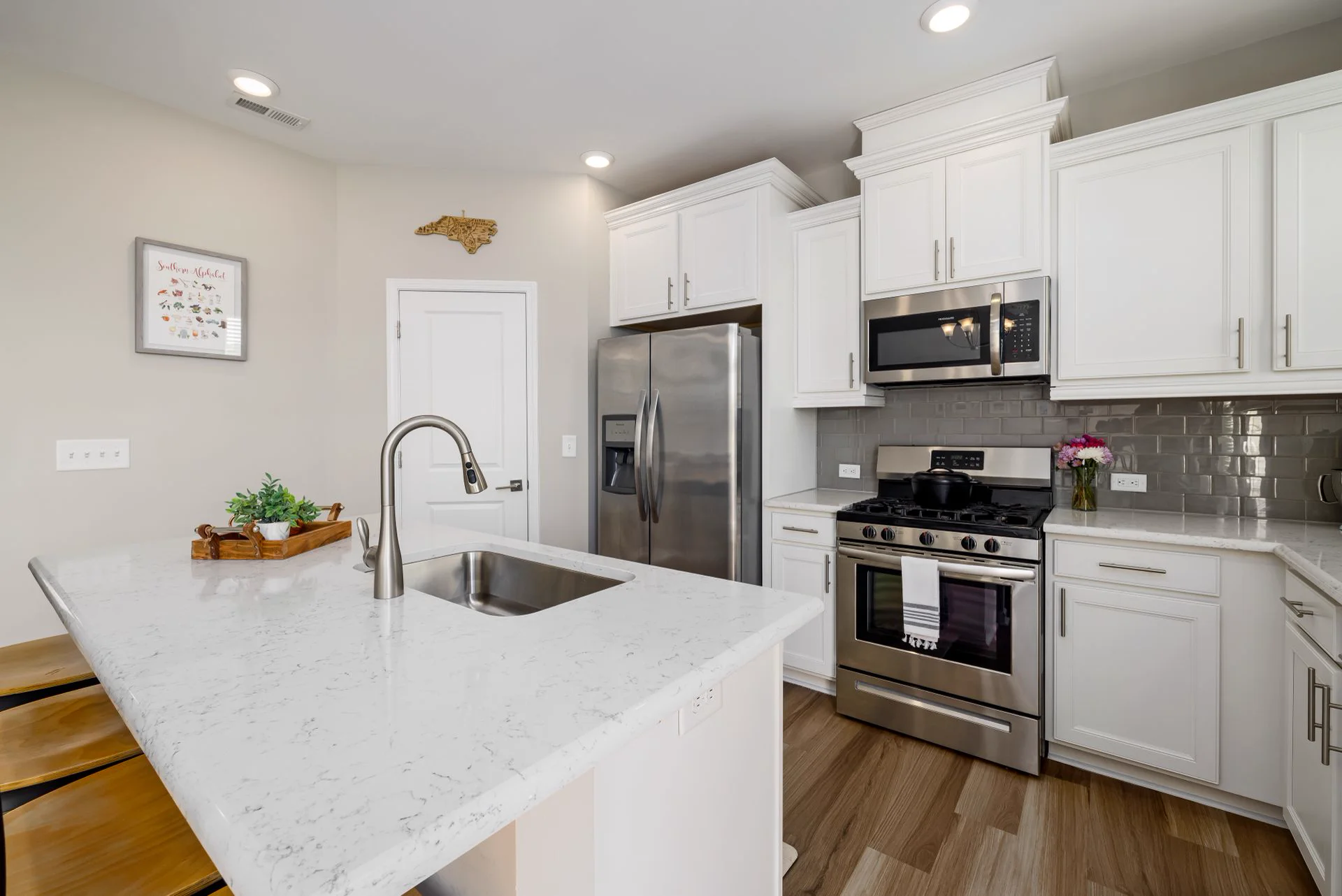
A raised-panel door in a painted or darker stained finish keeps the house's character and changes the color, which is the smallest step. Shaker sits well next to the colonial trim and six-panel interior doors these houses tend to have. Flat doors are a bigger change and look right when the counters, backsplash and hardware all move in that direction too.
Which doors collect grease and dust in the corners
Cooking puts oil in the air, and it settles with dust on the doors nearest the range. The shape of the door decides where it collects.
Flat doors have no corners on the face. A damp cloth with a drop of dish soap clears one in a single pass.
Shaker doors have one weak spot: the ledge where the bottom rail meets the recessed panel. Dust and grease settle on that ledge, and on the doors beside the range it turns into a tacky line. A damp cloth along it each time you wipe keeps it clean.
Raised-panel doors collect the most. The bevel, the step at the frame and any decorative groove all hold grease, and a cloth rides over them. Next to the range, plan on a soft toothbrush and warm soapy water now and then.
If you love raised panels but cook a lot, consider a shaker or flat door on the two or three cabinets around the range and hood. Those are the doors you would otherwise scrub, and a mixed run reads fine when the finish matches.
How each style takes paint
White is the most common main cabinet color in the same Houzz study, at 40 percent of renovated kitchens, and each style takes paint in its own way.
Shaker paints well, but watch the four corners where the rails meet the stiles. The Wood Handbook from the Forest Products Laboratory says wood shrinks and swells most in the direction of the growth rings and least along the grain, and that heated indoor air in northern winters can drop wood's moisture content to 4 to 5 percent, against about 8 percent for most of the country. At a shaker corner, a rail running sideways meets a stile running up and down, so the two pieces move by different amounts. In a dry January a hairline can open in the paint along that joint. That is seasonal movement, and the door is still sound.
Flat doors paint the smoothest, since there's one face and no joints across it. The Wood Handbook also notes that the higher the gloss, the more a finish shows imperfections. On a flat painted door every ding, fingerprint and brush mark sits in plain view, so a satin sheen is easier to live with than a gloss.
Raised-panel doors show the corner hairline too, plus one more that a shaker with a solid wood panel can show too: a solid wood center panel floats loose in a groove so it can move, and in winter it shrinks across its width. On a painted door that can show a thin unpainted strip along the edge of the panel, where the wood was hidden in the groove when it was painted.
If you're thinking of painting the 1990s oak doors you already have, oak has open pores. The Wood Handbook says the pores in most ring-porous hardwoods (oak is one) need to be filled before paint for a smooth surface. Skip that step and the grain shows through the paint. Reface, refinish or paint a 1990s oak kitchen compares the three ways to change those doors.
How each style takes stain
The Wood Handbook says stains accentuate grain because they soak into different parts of the wood at different rates, so the grain becomes part of the look.
Shaker in stain gives you a frame of straight grain around a center panel, which reads warm and plain. The corner hairline doesn't show, since there's no paint film across the joint to crack.
Flat doors in stain look like a piece of furniture, one board of grain from edge to edge.
Raised-panel doors in stain take on more color at the bevels, where the cut runs across the grain and the wood soaks up more stain. That darker edge is part of the traditional look, and a lighter stain keeps it small.
One thing stain asks of you: wood changes color as it ages indoors. The Wood Handbook says dark wood gets lighter and light wood gets darker with exposure to light. A new stained door won't match a 20-year-old one, so plan on replacing every door and drawer front at once.
Which door to pick for each house
- A ranch you want to look like itself: flat, painted or in a light stain. Shaker if the house has already gone more traditional.
- A Tudor or an older house with heavy trim: painted shaker, the closest of the three to the original kitchen.
- A 1990s two-story with oak raised panels: raised-panel in a new finish keeps the same kitchen in a new color; shaker gives you a different kitchen. Both are fair calls.
Getting the doors you picked, new or refaced
Bulldog offers all three styles (shaker, flat-panel and raised-panel) in painted, stained and two-tone finishes, and you get them two ways. If your cabinet boxes are solid, refacing puts new doors, new drawer fronts and new veneer on the face frames, and the boxes stay on the wall. Can my cabinets be refaced? walks through a five-minute check of the boxes. If the boxes are worn or damaged, we replace the cabinets, and the new ones carry the same door styles.
Refacing doesn't lock you into the style you have. Every door and drawer front comes off and the frames get new veneer, so oak raised panels from 1995 can come off and painted shaker can go on the same boxes.
The door on our cabinets page is listed as 3/4-inch solid wood with a 12mm MDF center panel (MDF is a fiberboard with no grain, so ask your design consultant what center panel a stained door uses), hung on a 3/4-inch solid hardwood face frame with soft-close hinges. While the doors are off, we can add the organizers people ask for: pull-out shelves, a trash pull-out by the sink, a lazy Susan in the corner. New pulls and knobs come in finishes that match your faucet and lighting. On a shaker or flat door the pulls set much of the style.
Refacing takes days, not months, and many kitchen updates take a few days. A full kitchen with new cabinets takes longer, and your project coordinator gives you a schedule before work starts. The same crew that comes for the consultation does the install, and the products and the work carry a lifetime warranty for as long as you own the home. Financing is available on approved credit.
You see cabinet colors in person during the design consultation, so ask to see a shaker and a raised-panel door side by side and think about the cabinets next to your range. The quote is written and comes after the measuring. Before you sign with anyone, the three questions to ask a contractor before a deposit work as well on a kitchen quote as on a bathroom one. Call (513) 657-3750 or request an estimate.
A new-looking kitchen in days, not months walks through every part of the kitchen in order: what to keep and what to replace.