Key takeaways
- For stiff or sore hands, a single lever is the easiest faucet to work, since you push it instead of gripping and twisting.
- A pull-down sprayer suits a deep sink and tall pots, and a pull-out suits a low window or a cabinet that hangs close over the sink.
- Count the holes under your sink before you shop, and measure your tallest pot against the spout.
- Brushed nickel hides fingerprints and small scratches better than polished chrome, which shows water spots.
The faucet in your Anderson Township kitchen went in with the oak cabinets around 1995: two round knobs and a side sprayer that dribbles out of a cracked hose. Shutting off the hot knob takes a grip your hand doesn't like first thing in the morning, and the stockpot won't fit under the spout unless you tip it. For most people in an older house, the best kitchen faucet type is a single lever with a pull-down sprayer, a spout tall enough for the biggest pot you own, and a brushed nickel finish. The six choices below explain why, and where the other answer is the right one for your kitchen.
The list draws on the federal accessibility standards, the EPA's faucet guidance and the sinks we see in Cincinnati kitchens. We don't name brands, since most makers sell every type here.
1. One lever or two handles: one lever, for hands that ache
A single lever sets the temperature and the flow in one motion, and you can push it with the back of your wrist when your fingers are covered in raw chicken. Round knobs make you grip and twist, and that's the motion stiff knuckles complain about.
The federal accessibility standards give a fair test. Section 309.4 of the 2010 ADA Standards says controls have to work with one hand, without tight grasping, pinching or twisting of the wrist, and with no more than 5 pounds of force, and section 606.4 of the same standards applies that rule to faucet controls. A lever you push is the kind of control that test is written for. A round knob you have to squeeze and turn doesn't. Those rules are written for public buildings, not your house, but they describe what a sore hand can work.
Two handles still have their place. Some people like setting hot and cold on their own, and a bridge faucet with two handles looks right on a farmhouse sink in a 1920s Hyde Park kitchen. If you go that way, pick lever handles, not crosses or knobs.
Touch and sensor faucets are a third option. The EPA describes touch and no-touch models that turn on without pulling the handle. They need power, so ask how a model is powered before you buy one.
2. Pull-down or pull-out: pull-down for a deep sink, pull-out for a low window
Both put the sprayer inside the spout, on a hose, so the side sprayer and its hole go away. The EPA notes that both designs are common. The difference is which way the head moves.
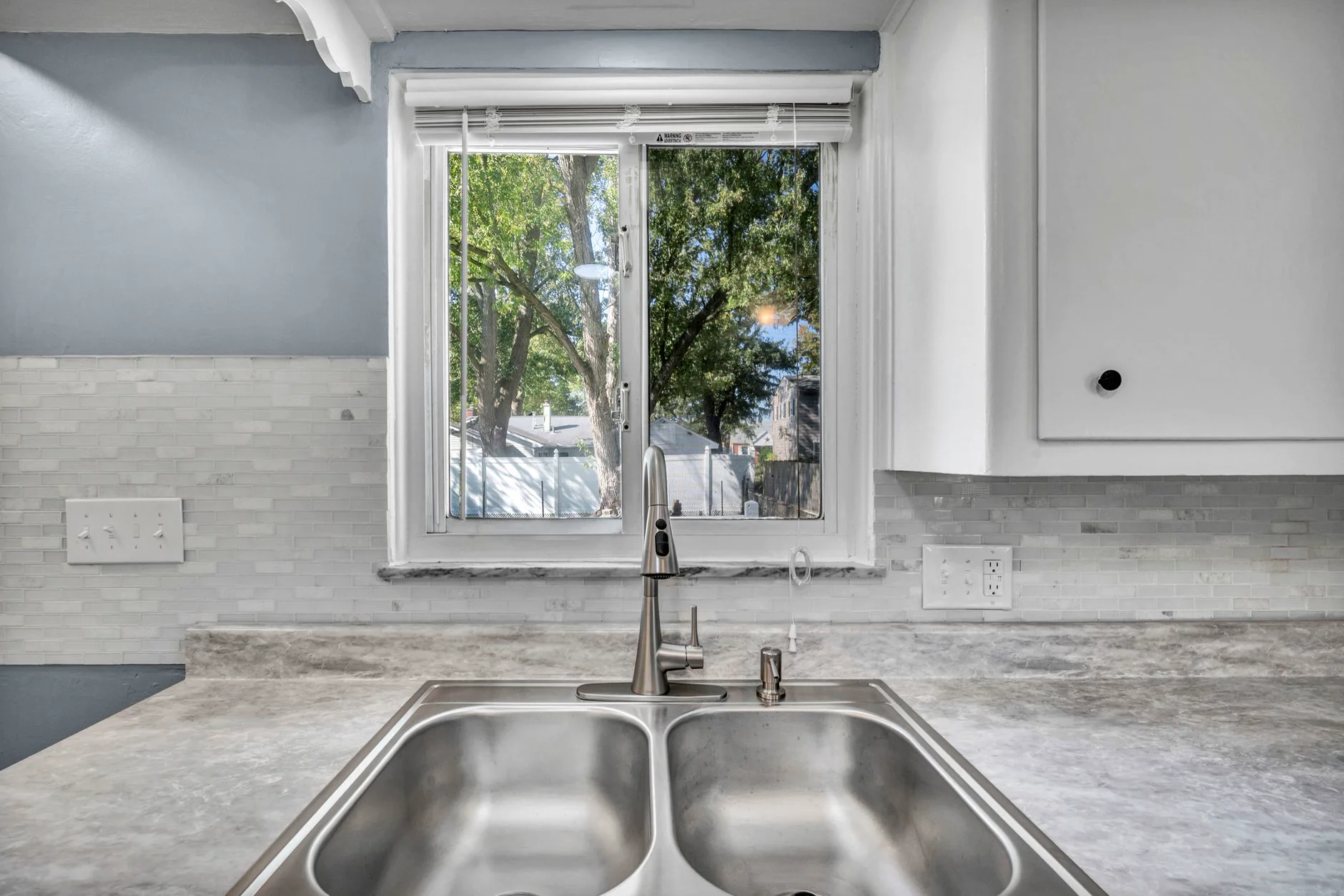
A pull-down has a tall arched spout, and the spray head comes straight down into the sink. It's the better match for a deep single bowl, for rinsing a tall pot. A weight on the hose under the sink pulls the head back into the spout. Ask to see the head dock, because a head that sags out of the spout gets old fast.
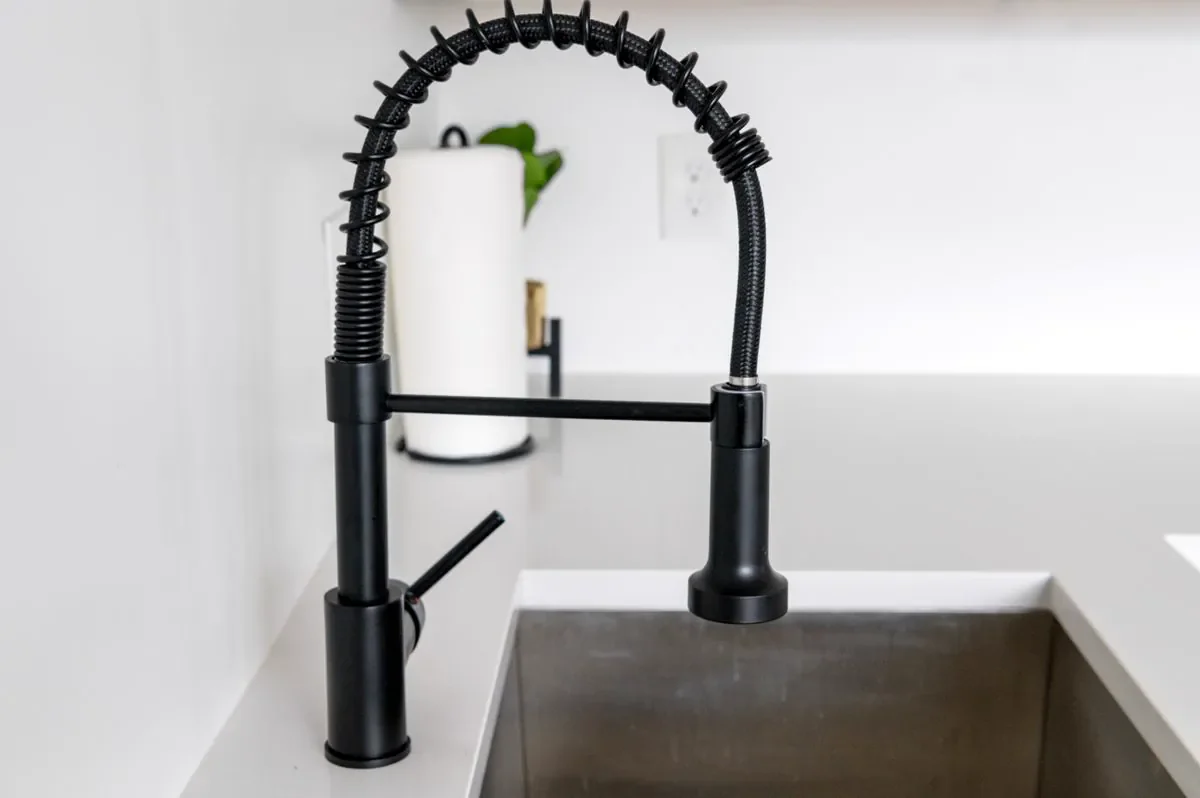
A pull-out has a shorter spout, and the wand pulls out toward you. It reaches farther past the edge of the sink, which helps when you fill a pot sitting on the counter. It also fits under a window set low behind the sink or a cabinet that hangs close above it, which is the layout in plenty of 1960s ranch kitchens.
Whichever you pick, press the spray button in the store. Some take a hard push with the thumb, and that's the same pinch a round knob asks for.
3. Spout height and reach: measure your tallest pot first
Spout height is how high the opening sits above the sink deck (the flat rim or counter the faucet stands on). Reach is how far the stream lands from the faucet's base. Look for both numbers on the faucet's spec sheet.
Stand your tallest pot in the sink and measure from the bottom of the sink to the top of the pot. The spout should clear that with room to tip the pot in and out. Then look up. A tall arch can hit a cabinet that hangs low over the sink, or a window that cranks open inward, so measure from the sink deck to the lowest thing above it before you fall for a high spout.
Reach matters most on a double bowl. The stream should land near the middle of each bowl when you swing the spout, not against the back wall of the sink, where it splashes onto the backsplash.
Think about where the lever sits, too. If you're on the shorter side or reaching is hard on your shoulder, a lever on the side of the faucet body, or a faucet set toward one corner of the sink, means less leaning over a deep bowl to turn the water off.
4. Count the holes before you shop
Get down under the sink with a flashlight and count the holes your current faucet uses, plus any with a sprayer, a soap pump or a cap in them. One major maker's FAQ says its single-handle kitchen faucets come in versions that mount through one, two, three or four holes, and its two-handle faucets through three or four. A deck plate (a flat cover, also called an escutcheon) hides holes a one-hole faucet doesn't use. On a drop-in sink, the holes are in the sink's own rim, so the sink decides what fits. Our post on undermount vs. drop-in kitchen sinks compares the two. On an undermount sink, the sink hangs below the counter and the faucet holes go through the countertop itself. If you're replacing the counter, those holes get drilled for the faucet you choose, which is a good reason to pick the faucet before the counter gets cut. Our post on quartz, granite and solid surface countertops covers the counter side of that decision, and replacing laminate countertops in an older kitchen covers what comes off first.
5. Finish: pick one that hides spots
Water drops dry on a faucet and leave a mark, and the finish decides how much you see it. Bob Vila's comparison says polished chrome is more likely to show scratches, fingerprints and water spots, and that brushed nickel's matte surface helps hide fingerprints and small scratches. For cleaning, use mild dish soap and water, and blot the faucet dry. Skip abrasive pads on any finish.
Match the faucet to the cabinet pulls and the light over the sink if you can. A brushed nickel faucet next to brass knobs from 1995 makes both look like leftovers.
6. Flow: the federal cap is the ceiling, not the target
Federal efficiency standards cap kitchen faucets at 2.2 gallons per minute at 60 pounds per square inch of pressure, according to EPA WaterSense. You may look for the WaterSense label and not find it: the same EPA sheet says WaterSense has no specification for kitchen faucets, only for bathroom ones.
EPA WaterSense points builders toward kitchen faucets rated at 1.5 to 1.8 gallons per minute to save water. The tradeoff is a slower fill on a big pot. Some faucets have a temporary boost mode for filling pots that drops back to the normal rate when you shut the water off. If you make soup on Sundays, a lower rate with a boost button covers both.
The short version
| Choice | Our pick for most older kitchens | Pick the other one if |
|---|---|---|
| Handles | Single lever | You want hot and cold set apart (choose two levers) |
| Sprayer | Pull-down | A low window or cabinet sits over the sink |
| Spout | Clears your tallest pot | Something hangs low over the sink |
| Finish | Brushed nickel | You dry the faucet after use, or chrome matches the room |
| Flow | Lower rate with a boost mode | You fill big pots most days |
A 10-minute check at your sink
- Open the sink cabinet, count the holes and note what's in each one.
- Measure from the sink deck to the lowest cabinet or window above it.
- Measure your tallest pot, standing in the sink.
- Turn the old faucet on and off with your weaker hand, the way you would first thing in the morning.
- While you're down there, press on the floor of the sink cabinet. If it's soft or stained, read what water does under a kitchen sink before you put a new faucet on top of it.
Where we fit
If your counter and sink are in good shape and all you need is a new faucet, a plumber can swap it in an afternoon. You don't need a remodeler for that.
Bulldog installs sinks and faucets as part of kitchen work, either on their own or with new countertops, a backsplash or cabinets. Our countertops come in quartz, granite and solid surface with undermount sink cutouts, and we make a digital template of your layout before the top is fabricated, so the new counter fits the cabinets you have. Cabinet pulls and knobs come in finishes that match the faucet and the lighting. One team designs and installs the whole job, and many kitchen updates take a few days, not months. Your project coordinator gives you a schedule before work starts.
Every kitchen job gets a design consultant and a dedicated project coordinator. The work runs in four steps: Discover, Design, Build and Enjoy. The consultant measures your kitchen, walks you through sink, faucet and counter options, and helps you choose what makes the biggest difference. The same crew that comes out at the start is the crew that installs, and our installers are background-checked. If the faucet you liked in the store won't clear your stockpot, we'd rather tell you at the kitchen table than after the counter is cut.
We don't post prices for kitchen work. The number depends on what you're replacing, the sink and faucet you choose, and what's under the old counter. A consultant measures your kitchen and gives you a written quote. Financing is available on approved credit, and the financing page has the details. Homeowners 65 and older get a discount, and the design consultant has the details. The work carries our lifetime warranty on products and workmanship, for as long as you own the home.
Bring the hole count and the pot measurement to the consultation, and tell the consultant how your hands feel on a cold morning. The countertops page shows the sinks, counters and backsplashes we install together.
A new-looking kitchen in days, not months walks through every part of the kitchen in order: what to keep and what to replace.