Key takeaways
- Painted doors give you a solid, even color and a smooth surface to wipe, but a chip shows, and hairline cracks can open at the door joints as the wood moves with the seasons.
- Stained doors let the grain show, and the grain hides small dings and the film that builds up near the range.
- Both need a soft cloth and quick drying, not scouring pads.
- If you cook every day and want white, a two-tone kitchen with stained lower doors and island under painted uppers is a fair middle road.
You cook supper most nights, and on Sundays the big pot of chili goes on the front burner. The doors on either side of the range have a tacky film you can feel with a fingertip, and the finish is worn through by the pull on the drawer you open 20 times a day. New doors are coming, either on the old boxes or on new cabinets, and the last thing to decide is the finish. Painted vs stained kitchen cabinets is the choice, and in a kitchen that gets used hard it comes down to how each one wears in year five and year fifteen.
This post is about factory-finished doors you buy new or get with refacing. If you're thinking about painting the oak doors you have now, reface, refinish or paint: what each does to a 1990s oak kitchen covers that job.
What paint and stain are on a factory-finished door
A stained door has color that soaks a little way into the wood, with a clear coat over it. The Wood Handbook from the USDA Forest Products Laboratory says stains accentuate grain because they soak into different parts of the wood at different rates.
A painted door has an opaque, pigmented coat that sits on the surface and hides the grain. The same handbook says paint conceals some surface defects, gives a cleanable surface, and is the only finish that can give a bright white. One cabinet maker's finish guide puts the trade-off this way: paint sits on the surface rather than soaking in like stain, so it is more susceptible to water damage.
| In a kitchen that cooks daily | Painted door | Stained door |
|---|---|---|
| A chip or ding | Shows as a light or dark spot against solid color | Blends into the grain, more so in medium and dark stains |
| The door joints | Hairline cracks can show in winter | Joint lines show less |
| Grease by the range | Shows on white and light colors | Hides on medium tones until you touch it |
| Color choices | Any color, including bright white | Wood tones, light to dark |
Chips and touch-ups on a painted door
A painted door shows damage as contrast. When a pot lid knocks a chip out of a white door, you see what's underneath against a solid field of color, from across the room. The knocks land on the lower doors and the drawer fronts by the dishwasher.
A paint pen in the factory color fills a chip. Pick satin or matte over gloss: the Wood Handbook says the higher the gloss, the more a finish accentuates imperfections, and a touch-up is one of them. Ask whoever supplies your doors whether a touch-up kit in your color comes with the job.
Stained doors take the same knocks, and a stain marker plus the grain hides most of them. Stain has its own limit: in its section on wood floors, the Wood Handbook says staining worn spots to match the surrounding color is difficult. A small ding blends; a wide worn patch by a handle won't.
Hairline cracks at the joints of a painted door
A shaker or raised-panel door is five-piece: a frame of four solid wood boards (two rails across, two stiles up the sides) around a center panel. At each corner a rail meets a stile, and those two pieces run in different directions.
Wood shrinks and swells with the moisture in the air, most of all across the grain. The Wood Handbook says heated indoor air in northern winters can drop wood's moisture content to 4 to 5 percent, against about 8 percent for most of the country. In a Cincinnati January, with the furnace running, the rail and the stile move by different amounts, and a painted film stretched across that corner can open in a thin line.
Cabinet makers expect this. The same finish guide says hairline cracks in a painted finish can occur at the joints and calls them normal, most often seen where the stiles meet the rails. That maker's wood finish expectations sheet says wood movement creates fractures in joint lines regardless of the finish, and that the lines are more noticeable in painted product.
On a stained door the line falls where the grain changes direction, and your eye already expects a break there. On a white painted door it reads as a crack. A flat slab door, with no joints across its face, avoids it; shaker, flat or raised-panel doors goes through how each style takes paint.
A hairline at the corner of a painted door in February is wood moving with the season, and the door is still sound.
How a stained door hides wear
Stain hides wear because the surface was never one even color to begin with. Grain has light and dark streaks, and a scratch, a fingerprint or a dull spot by a pull lands among them.
How much it hides depends on the color. The expectations sheet says darker stains conceal more variation than lighter stains. A medium stain is the forgiving middle.
The catch with stain is light. The Wood Handbook says wood changes color as it ages indoors, finished or not: dark wood gets lighter and light wood gets darker, from visible light. A stained door by the window will drift a shade from the one in the corner. The expectations sheet says painted cabinets may mellow or shift in color too, depending on how much light they get. Either way, replace every door and drawer front at once so they start the same.
Grease and cleaning near the range
Grease lands on both finishes; what differs is when you notice it. On white or a pale gray, the amber film on the doors beside the range shows up as a tint. On a medium stain you won't see it until you touch the door and it feels tacky.
The finish has to take the cleaning. Cabinets certified to ANSI/KCMA A161.1, the kitchen cabinet industry's standard, have their finish durability tested, and the same finish guide lists coffee, vinegar, olive oil and mustard among the household substances its finish meets that standard for. The Wood Handbook says products cleaned often, and it names kitchen cabinets, need enough film thickness for a long service life. Ask anyone selling you doors what the finish is and whether it's rated for a kitchen.
The routine is the same for paint and stain:
- A soft cloth wrung out in warm water with a drop of dish soap.
- Wipe the doors beside the range and the shaker ledge, if you have one, once a week.
- Dry with a clean towel. The finish guide says to wipe spills and splatters on painted doors with a clean, dry towel.
- Leave the scouring pad and the powdered cleanser under the sink.
Color: white, wood and two-tone
White is still the most common choice. The 2023 Houzz Kitchen Trends Study, a survey of renovating homeowners, found 40 percent picked white for the main cabinets and 24 percent picked a wood tone. In the same study, 46 percent of those adding or upgrading an island chose an island color that contrasts with the main cabinets.
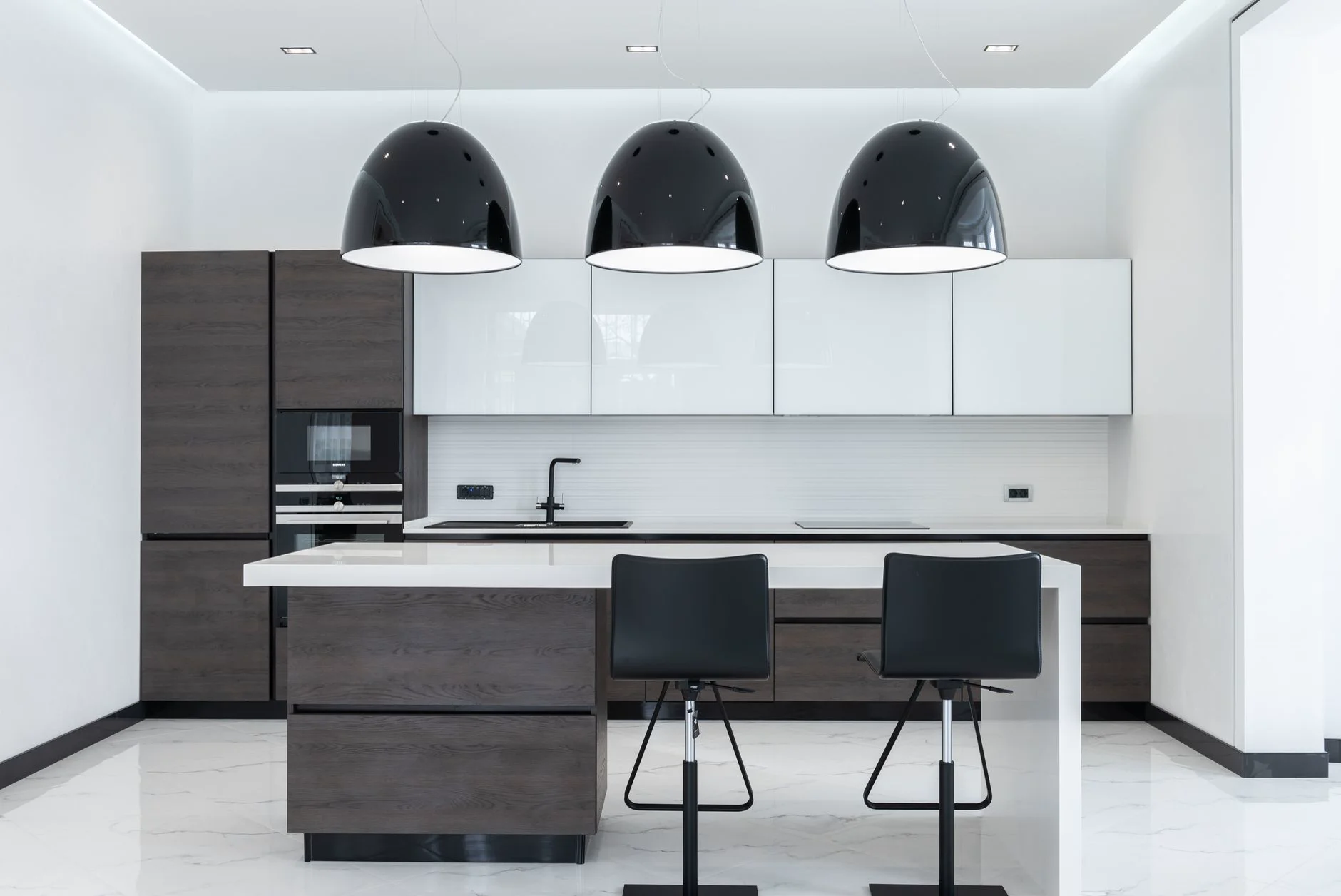
Two-tone lets you put the finish that forgives where the wear is. Painted uppers over stained lowers keeps the top of the room light and puts the grain down where the chairs, the dog and the vacuum hit. A stained or darker painted island does the same for the piece of the kitchen everyone leans on. Two-tone is one of the three finish options Bulldog offers, alongside all-painted and all-stained.
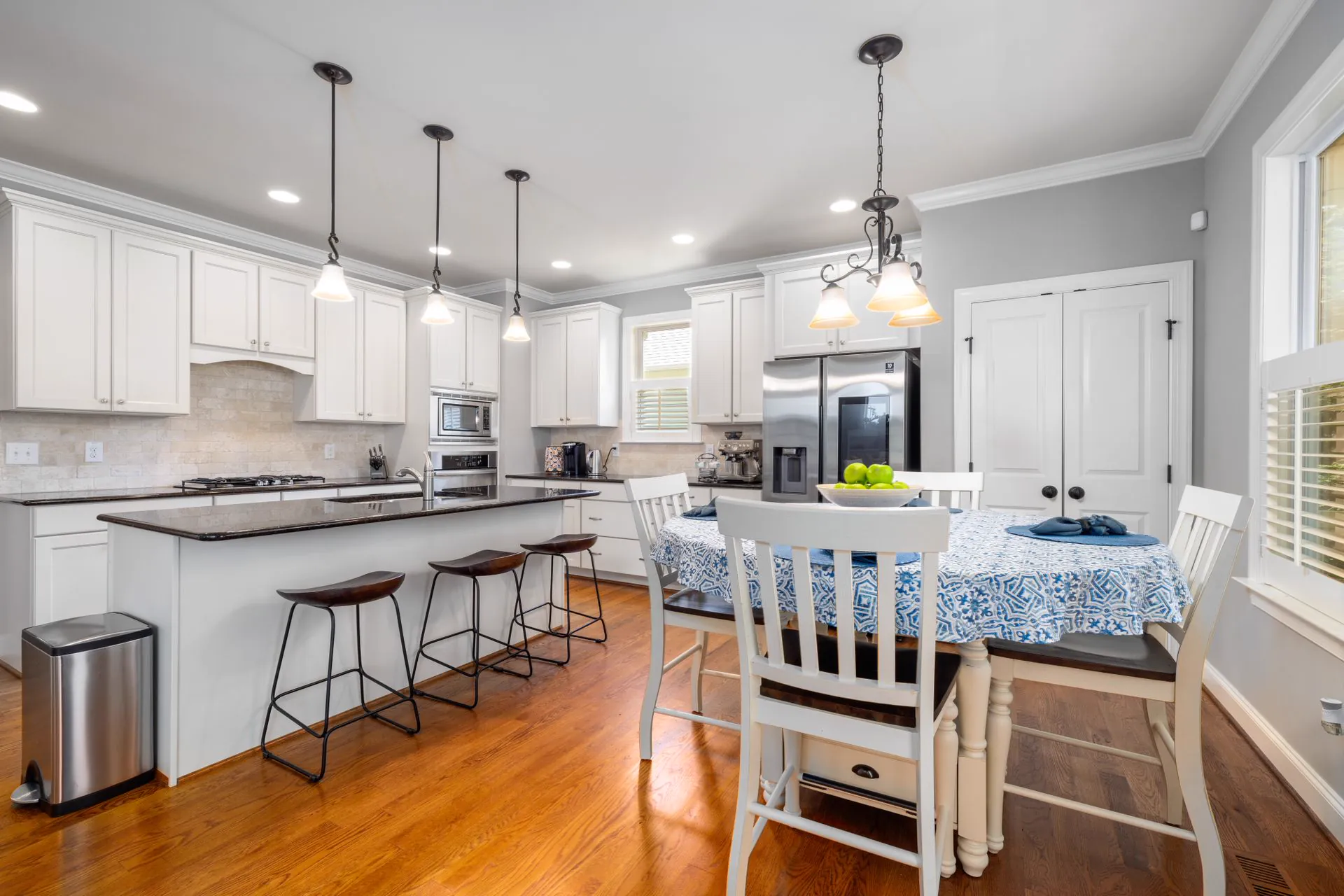
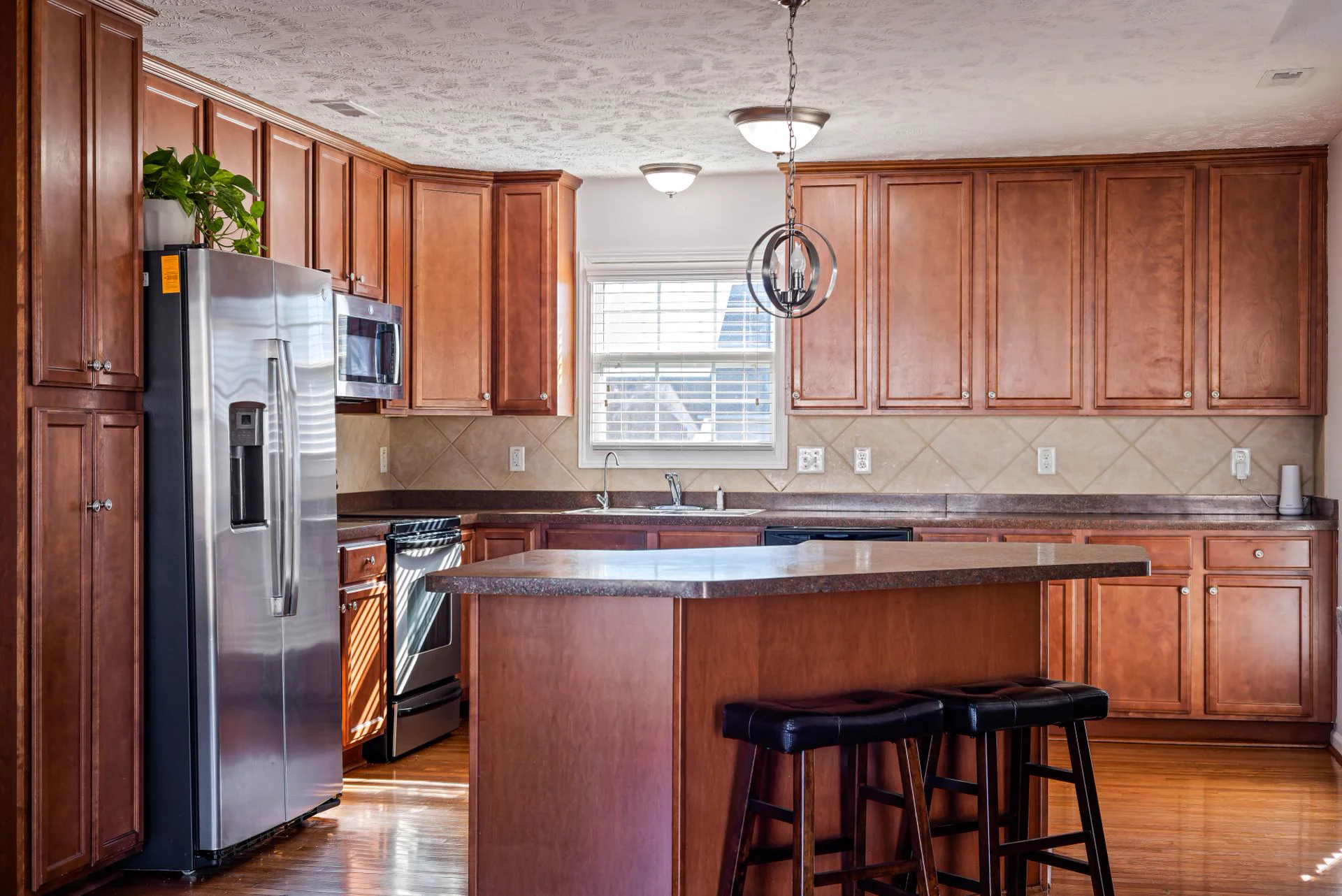
In a 1968 ranch in Anderson Township with a small galley, white uppers and a medium stain below keep the room from closing in. In a 1990s two-story in West Chester with oak cabinets, a mid-brown stain keeps the warmth of the wood without the orange, and a painted island gives you the color.
Painted vs stained kitchen cabinets: which fits your kitchen
If you cook every day and want the room to look kept with little touching up, pick a medium stain. It hides dings, the film by the range and the wear by the pulls better than paint.
If you want white, or a color like sage or navy, paint is the only way to get it. Pick satin or matte over gloss, keep a touch-up pen, and expect a hairline or two at the door corners in winter.
If you want both, go two-tone, with the stain on the lower doors and the island and the paint up top. It's the choice we'd make in a kitchen where the stove gets used every night. Our design consultant brings samples of each finish to your house, measures the kitchen and gives you a written quote.
"Will white cabinets look dingy in five years?"
That's a fair worry. A weekly wipe of the three or four doors around the range keeps them from building up a film you have to scrub, and the rest of the kitchen needs far less. The bigger risk is picking a white under showroom lights. Our design consultant brings finish samples to your house so you can compare them in your own light, and you can hold a painted sample and a stained sample up next to your range, where the wear will be.
Getting painted, stained or two-tone doors from Bulldog
Bulldog offers shaker, flat-panel and raised-panel doors in painted, stained and two-tone finishes. The door on our cabinets page is 3/4-inch solid wood with a 12mm MDF center panel (MDF is a fiberboard with no grain), on a 3/4-inch solid hardwood face frame. The plywood boxes are finished on the outside to match the door, so the end of a run carries the same finish. Every cabinet has soft-close hinges with door and drawer bumpers, so doors close quietly instead of banging into the frame.
You get the doors two ways. If your boxes are solid, refacing replaces the doors, drawer fronts and veneers, and the boxes stay on the wall; can my cabinets be refaced? walks through a five-minute check. If the boxes are worn or damaged, we replace the cabinets. Refacing is done in days, not months, and many kitchen updates take a few days. A full kitchen with new cabinets takes longer, and your project coordinator gives you a schedule before work starts.
The same crew that comes for the consultation does the install, and the products and the work carry a lifetime warranty for as long as you own the home. Financing is available on approved credit. Your design consultant measures and gives you a written quote. Call (513) 657-3750 or request an estimate, and ask to see painted and stained samples side by side.
A new-looking kitchen in days, not months walks through every part of the kitchen in order: what to keep and what to replace.